Programmable smart material controls heat like a microchip
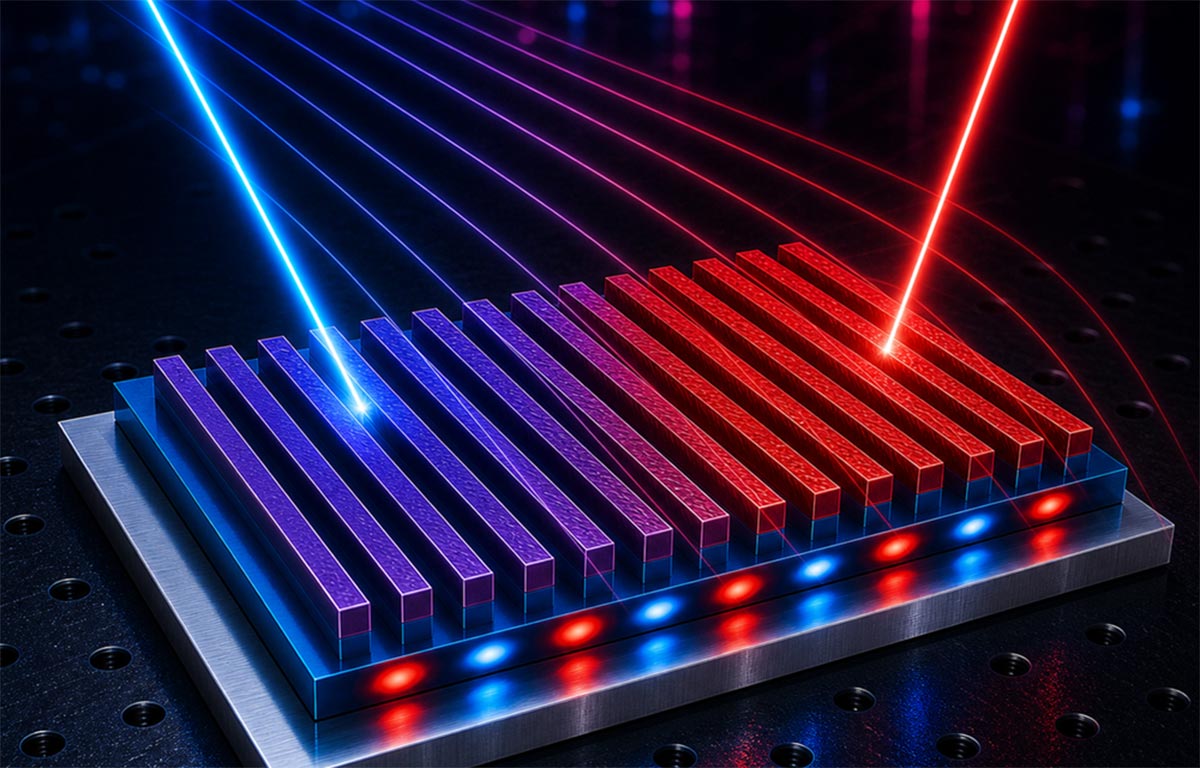
💡New thermal control material could solve heat bottlenecks in next-gen AI hardware and data centers.
⚡ 30-Second TL;DR
What Changed
Developed by Osaka Metropolitan University researchers
Why It Matters
This technology could revolutionize thermal management in high-performance computing and AI hardware, potentially solving overheating issues in dense GPU clusters.
What To Do Next
Monitor advancements in thermal management materials to prepare for future hardware architectures that require advanced cooling solutions.
Key Points
- •Developed by Osaka Metropolitan University researchers
- •Enables precise manipulation and storage of thermal energy
- •Published in Laser & Photonics Reviews
- •Breaks traditional physical laws limiting heat control
🧠 Deep Insight
AI-generated analysis for this event — not the original article.
🔑 Enhanced Key Takeaways
- •The material utilizes a phase-change mechanism that allows it to switch between thermal insulation and thermal conduction states based on external stimuli.
- •Researchers leveraged a 'thermal transistor' concept, which mimics the switching behavior of electronic transistors to regulate heat flow.
- •The study demonstrates that the material can maintain a thermal gradient even in environments where heat dissipation is typically uniform.
- •The technology relies on the precise arrangement of nanostructures to manipulate phonon transport, the primary mechanism of heat conduction in solids.
- •This development addresses the 'thermal management bottleneck' in high-density integrated circuits, where traditional cooling methods are becoming physically insufficient.
🛠️ Technical Deep Dive
- The material architecture employs a periodic nanostructure array that acts as a phononic crystal to control heat propagation.
- It utilizes a programmable gate voltage to alter the thermal conductivity of the medium by several orders of magnitude.
- The system operates by modulating the scattering rate of phonons, effectively creating a 'thermal switch' that can be toggled on or off.
- The integration process is compatible with standard CMOS fabrication techniques, allowing for potential monolithic integration with existing microchips.
🔮 Future ImplicationsAI analysis grounded in cited sources
⏳ Timeline
Weekly AI Recap
Read this week's curated digest of top AI events →
👉Related Updates
AI-curated news aggregator. All content rights belong to original publishers.
Original source: cnBeta (Full RSS) ↗
This is a summary, not the original. Read the source, or get the weekly briefing.
The weekly digest
One email a week. Unsubscribe anytime.