Michigan Township Blocks Nuclear Research Data Center
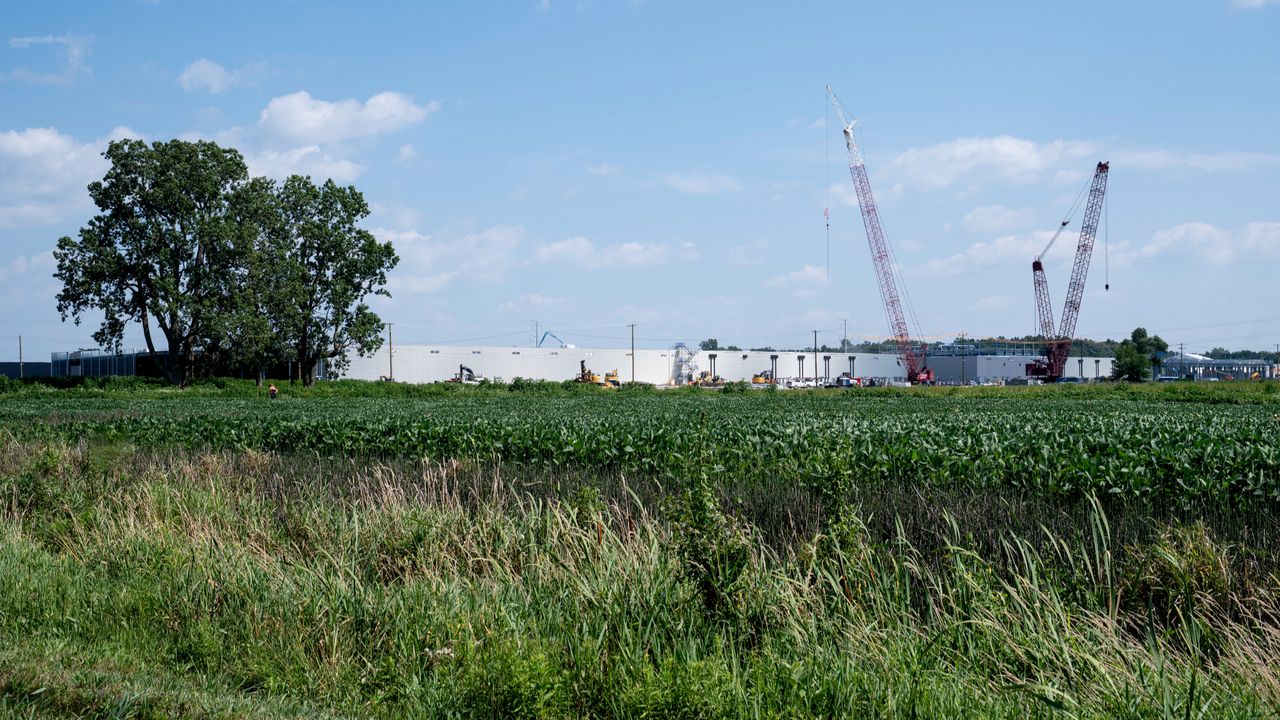
💡A real-world warning: AI-scale compute depends on local power, water, and political approval.
⚡ 30-Second TL;DR
What Changed
Ypsilanti Township passed a temporary ban affecting new electrical infrastructure for the project.
Why It Matters
The project could face delays, redesign costs, or relocation if power and water approvals remain blocked. For AI infrastructure planners, the case demonstrates that local utility capacity and community approval can be as important as compute hardware.
What To Do Next
Before committing to a GPU data-center site, model power-substation and water-connection approval risks with a local permitting timeline and fallback location.
Key Points
- •Ypsilanti Township passed a temporary ban affecting new electrical infrastructure for the project.
- •The 220,000-square-foot hyperscale data center is backed by University of Michigan and Los Alamos National Laboratory.
- •A separate one-year moratorium is blocking the facility’s water connection request.
- •The dispute highlights power and water dependencies for large-scale scientific computing facilities.
🧠 Deep Insight
Background and context from public sources — not the original article. 20 sources cited.
🔑 Enhanced Key Takeaways
- •The University of Michigan's research computing center project represents a significant $1.25 billion investment.
- •The facility is designed to house two distinct computing environments: one for University of Michigan's academic research and another for Los Alamos National Laboratory's federal research, specifically focusing on computational modeling for nuclear stewardship.
- •The University of Michigan plans to collaborate with DTE Energy to construct a dedicated, on-site electrical substation to support the data center project.
- •The Ypsilanti Community Utilities Authority (YCUA) approved its 12-month moratorium on new water and sewer commitments for data centers in April 2026.
- •The project received a $100 million grant from the state of Michigan, which Ypsilanti Township officials have formally requested be revoked.
🛠️ Technical Deep Dive
- The facility is characterized as a high-performance computing center, not a commercial data center.
- It is projected to use less than one-tenth of the energy typically required by many commercial data centers.
- The maximum energy consumption is estimated at 110 megawatts, to be phased in over 5 to 10 years, which is roughly equivalent to the power used by 80,000 homes.
- Biofuel-powered backup generators are planned to supply 20% of the project's energy needs during power outages.
- The facility could potentially use up to 500,000 gallons of water per day.
- The University of Michigan is exploring closed-loop water cooling systems and the use of reclaimed wastewater to significantly reduce fresh water consumption.
- The project explicitly states it will not draw water from or discharge water into the Huron River or local groundwater.
- The center's purpose is to enable scientists to model, simulate, and analyze massive data sets at high speeds to address complex scientific challenges.
🔮 Future ImplicationsAI analysis grounded in cited sources
⏳ Timeline
📎 Sources (20)
Factual claims are grounded in the sources below. Forward-looking analysis is AI-generated interpretation.
Weekly AI Recap
Read this week's curated digest of top AI events →
👉Related Updates
AI-curated news aggregator. All content rights belong to original publishers.
Original source: Tom's Hardware ↗
This is a summary, not the original. Read the source, or get the weekly briefing.
Weekly AI briefing
One email a week. Unsubscribe anytime.