Malware Data Scale: vx-underground vs VirusTotal
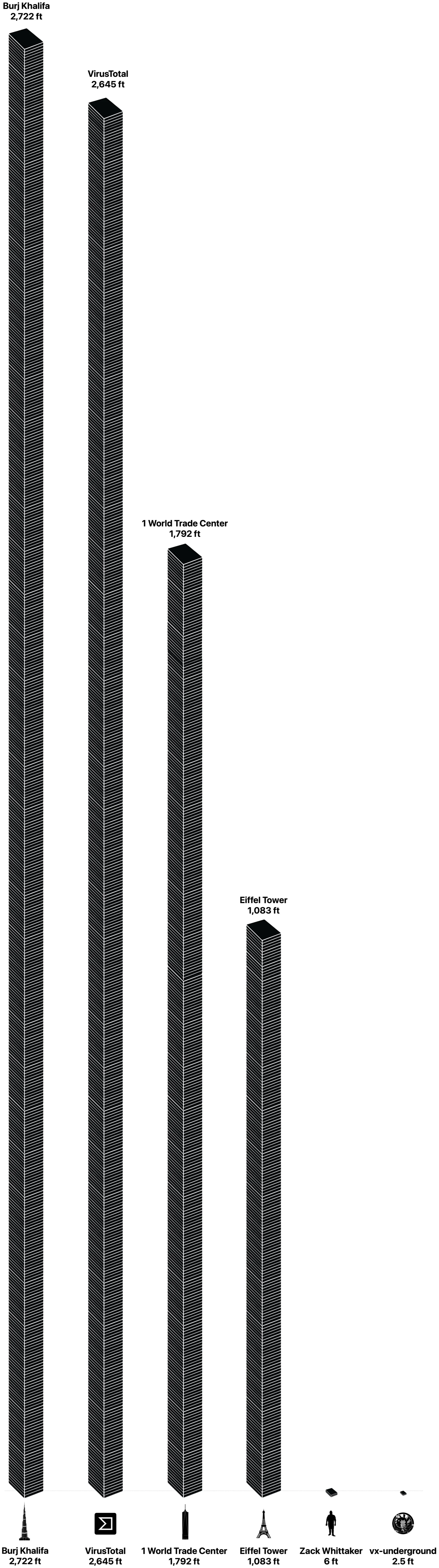
Understand the massive scale of malware data available for training next-gen cybersecurity AI models.
30-Second TL;DR
What Changed
vx-underground maintains a 30 TB repository of malware source code.
Why It Matters
These datasets serve as critical training grounds for AI-driven threat detection and automated malware analysis systems.
What To Do Next
Explore the VirusTotal API to integrate real-time threat intelligence into your security-focused AI pipelines.
Key Points
- •vx-underground maintains a 30 TB repository of malware source code.
- •VirusTotal has collected 31 PB of malware samples over many years.
- •The massive scale of these datasets underscores the importance of big data in cybersecurity AI.
Deep Insight
Background and context from public sources — not the original article. 23 sources cited.
Enhanced Key Takeaways
- •vx-underground, founded in May 2019 by an individual known as "smelly," was established as a successor to the defunct vxHeaven repository, aiming to create a centralized, free platform for malware source code, samples, and research papers for educational and defensive cybersecurity purposes.
- •VirusTotal, initially launched in June 2004 by Hispasec Sistemas, was acquired by Google in September 2012, providing it with Google's cloud computing infrastructure and financial stability to enhance its analysis capabilities.
- •Beyond simple scanning, VirusTotal employs a distributed scanning infrastructure utilizing over 70 antivirus engines, dynamic behavioral analysis, static code analysis, network traffic analysis, and YARA rules to provide comprehensive threat detection.
- •VirusTotal leverages artificial intelligence (AI) to generate natural language summaries of code functionalities within submitted executable files, including scripts, Microsoft Office documents, and binaries, to assist malware analysts in understanding threat capabilities.
- •While VirusTotal offers extensive API access with public (rate-limited) and premium tiers for commercial use, vx-underground operates as an unfunded, community-driven initiative, relying on donations and contributions to maintain its vast, freely accessible archive.
Competitor Analysis
- VirusTotal
- Multi-engine file/URL scanning, threat intelligence aggregation
- OPSWAT Metadefender Cloud
- Multi-scanning, file sanitization, vulnerability detection
- ANY.RUN Sandbox
- Interactive dynamic/static malware analysis
- Intezer Analyze
- Code reuse detection, malware protection
- MalwareBazar
- Community-driven malware sample sharing, behavioral insights
- VirusTotal
- 70+
- OPSWAT Metadefender Cloud
- 30+
- ANY.RUN Sandbox
- N/A (focus on sandbox analysis)
- Intezer Analyze
- N/A (focus on genetic analysis)
- MalwareBazar
- N/A (focus on sample sharing)
- VirusTotal
- Static, dynamic, behavioral, network, memory, YARA rules, AI summaries
- OPSWAT Metadefender Cloud
- Multi-scanning, Deep CDR, vulnerability scanning
- ANY.RUN Sandbox
- Dynamic, static, network traffic, memory dumps
- Intezer Analyze
- Code reuse, genetic analysis, detection accuracy
- MalwareBazar
- Behavioral analysis, botnet tracking
- VirusTotal
- User submissions, partners, internal systems
- OPSWAT Metadefender Cloud
- User submissions, internal engines
- ANY.RUN Sandbox
- User submissions, internal sandboxes
- Intezer Analyze
- User submissions, proprietary genetic database
- MalwareBazar
- Community submissions, abuse.ch, Spamhaus
- VirusTotal
- Public (rate-limited) & Premium (higher limits, advanced features)
- OPSWAT Metadefender Cloud
- Yes (for integrations)
- ANY.RUN Sandbox
- Yes
- Intezer Analyze
- Yes
- MalwareBazar
- Yes (for SIEM integration)
- VirusTotal
- Google (Chronicle Security Operations)
- OPSWAT Metadefender Cloud
- OPSWAT (Commercial)
- ANY.RUN Sandbox
- Commercial
- Intezer Analyze
- Commercial
- MalwareBazar
- abuse.ch & Spamhaus (Community-driven)
- VirusTotal
- AI-powered code summaries, Retrohunt, relationship graph analysis
- OPSWAT Metadefender Cloud
- Deep Content Disarm and Reconstruction (CDR)
- ANY.RUN Sandbox
- Interactive analysis, full process graphs, network streams
- Intezer Analyze
- Malware genetic analysis, family identification
- MalwareBazar
- Vetted samples, SIEM integration
| Feature / Platform | VirusTotal | OPSWAT Metadefender Cloud | ANY.RUN Sandbox | Intezer Analyze | MalwareBazar |
|---|---|---|---|---|---|
| Primary Function | Multi-engine file/URL scanning, threat intelligence aggregation | Multi-scanning, file sanitization, vulnerability detection | Interactive dynamic/static malware analysis | Code reuse detection, malware protection | Community-driven malware sample sharing, behavioral insights |
| Antivirus Engines | 70+ | 30+ | N/A (focus on sandbox analysis) | N/A (focus on genetic analysis) | N/A (focus on sample sharing) |
| Analysis Types | Static, dynamic, behavioral, network, memory, YARA rules, AI summaries | Multi-scanning, Deep CDR, vulnerability scanning | Dynamic, static, network traffic, memory dumps | Code reuse, genetic analysis, detection accuracy | Behavioral analysis, botnet tracking |
| Data Sources | User submissions, partners, internal systems | User submissions, internal engines | User submissions, internal sandboxes | User submissions, proprietary genetic database | Community submissions, abuse.ch, Spamhaus |
| API Access | Public (rate-limited) & Premium (higher limits, advanced features) | Yes (for integrations) | Yes | Yes | Yes (for SIEM integration) |
| Ownership/Funding | Google (Chronicle Security Operations) | OPSWAT (Commercial) | Commercial | Commercial | abuse.ch & Spamhaus (Community-driven) |
| Unique Features | AI-powered code summaries, Retrohunt, relationship graph analysis | Deep Content Disarm and Reconstruction (CDR) | Interactive analysis, full process graphs, network streams | Malware genetic analysis, family identification | Vetted samples, SIEM integration |
Technical Deep Dive
- VirusTotal's Multi-Engine Analysis: The platform operates a distributed scanning infrastructure that integrates over 70 different antivirus engines and URL/domain blocklisting services. This includes a combination of signature-based detection, heuristic analysis, and customizable YARA rules for identifying specific malware characteristics.
- Advanced Analysis Techniques: Beyond basic signature matching, VirusTotal performs dynamic behavioral analysis by executing samples in sandboxed environments to observe their runtime actions, static code analysis to inspect code without execution, network traffic analysis to monitor communications, and memory pattern detection.
- AI Integration for Context: VirusTotal incorporates AI engines into its analysis pipeline to automatically generate natural language summaries of the functionalities found within executable files, such as scripts, Microsoft Office documents, and binary files. This feature helps analysts quickly grasp the potential capabilities of a piece of malware.
- Data Structure and API: The VirusTotal dataset, which forms the backbone of the platform, structures artifact-related information into objects and represents relationships between them. Its API returns JSON-formatted data, allowing users to programmatically submit files/URLs, retrieve scan reports, and perform complex queries.
- vx-underground's Repository Content: vx-underground maintains a vast collection of malware artifacts, including approximately 35 million samples as of 2022. Its source code repository,
MalwareSourceCodeon GitHub, contains code for various platforms and in multiple programming languages such as Assembly, C, and C++. The repository is organized into categories like binders, botnets, crypters, exploit kits, and ransomware.
Future ImplicationsAI analysis grounded in cited sources
Timeline
- 2004-06VirusTotal launched by Hispasec Sistemas.
- 2012-09VirusTotal acquired by Google.
- 2018-01VirusTotal ownership switched to Google Security Operations (Chronicle).
- 2019-05vx-underground launched by 'smelly'.
- 2019-08vx-underground Twitter account created, accelerating community engagement and growth.
- 2022vx-underground amassed approximately 35 million malware samples.
Sources (23)
Factual claims are grounded in the sources below. Forward-looking analysis is AI-generated interpretation.
Weekly AI Recap
Read this week's curated digest of top AI events →
Related Updates


AI-curated news aggregator. All content rights belong to original publishers.
Original source: cnBeta (Full RSS) ↗
This is a summary, not the original. Read the source, or get the weekly briefing.
The weekly digest
One email a week. Unsubscribe anytime.