Majority of Americans Support Social Media Ban Under 16
💡Regulatory shifts on age-gating will impact how AI-driven social platforms handle user data and verification.
⚡ 30-Second TL;DR
What Changed
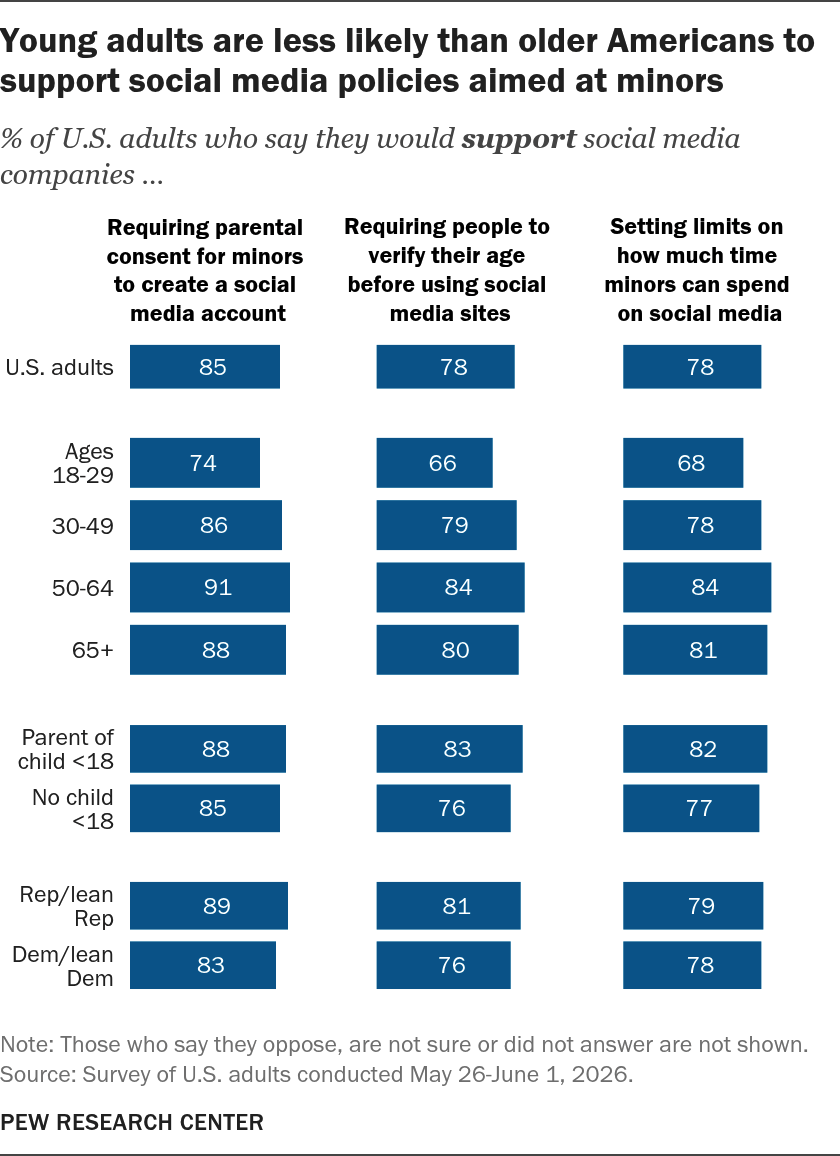
Nearly 60% of US adults favor a ban for users under 16
Why It Matters
Potential legislative changes could force social media platforms to implement stricter age verification technologies, impacting user acquisition and data collection strategies.
What To Do Next
If building consumer apps, evaluate your age-verification compliance roadmap to prepare for potential global regulatory shifts.
Key Points
- •Nearly 60% of US adults favor a ban for users under 16
- •Growing public consensus on stricter oversight of social media platforms
- •Concerns center on youth mental health, online safety, and platform responsibility
🧠 Deep Insight
AI-generated analysis for this event — not the original article.
🔑 Enhanced Key Takeaways
- •Bipartisan support for age-gating legislation has been driven by the Kids Online Safety Act (KOSA), which gained significant momentum in the U.S. Senate during 2024.
- •Public support is heavily stratified by political affiliation, with older demographics and conservative-leaning voters showing higher approval rates for restrictive age-based bans.
- •Major social media platforms have increasingly implemented 'teen accounts' or default privacy settings as a preemptive measure to stave off more aggressive federal legislative bans.
- •Mental health advocates cite the correlation between algorithmic content delivery and increased rates of anxiety, depression, and body dysmorphia in adolescents as the primary driver for these policy demands.
- •Legal experts have raised significant First Amendment concerns regarding age-gating, noting that previous attempts to restrict internet access for minors have faced immediate constitutional challenges in federal courts.
🔮 Future ImplicationsAI analysis grounded in cited sources
⏳ Timeline
Weekly AI Recap
Read this week's curated digest of top AI events →
👉Related Updates



AI-curated news aggregator. All content rights belong to original publishers.
Original source: cnBeta (Full RSS) ↗
This is a summary, not the original. Read the source, or get the weekly briefing.
Weekly AI briefing
One email a week. Unsubscribe anytime.