Kling AI Raises $3 Billion as Kuaishou Splits Strategy
💡Kling’s $3 billion raise signals both massive AI video ambition and rising pressure from open models.
⚡ 30-Second TL;DR
What Changed
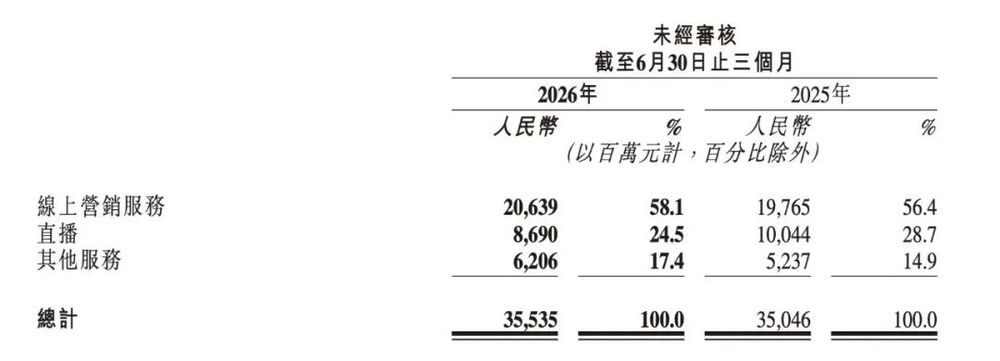
Kling AI reported more than RMB 850 million in quarterly revenue, up over 30% sequentially, but its ARR was no longer disclosed.
Why It Matters
The deal gives Kling capital and a more independent path to compete in the concentrated AI video market, but it also raises expectations for rapid commercialization and an eventual IPO. For the broader ecosystem, talent churn and lower-cost open models could accelerate price compression and make proprietary video-model differentiation harder.
What To Do Next
Run a cost-and-quality benchmark comparing Kling AI, Seedance, and MiniMax H3 on your production video tasks before committing to a proprietary model API.
Key Points
- •Kling AI reported more than RMB 850 million in quarterly revenue, up over 30% sequentially, but its ARR was no longer disclosed.
- •Kuaishou’s R&D spending rose 34.7% year over year to RMB 4.6 billion, contributing to a 30.3% decline in adjusted net profit.
- •Kling’s financing valued the business at $15 billion pre-money and $18 billion post-money, with a 2031 IPO obligation.
- •Kling’s user scale trails ByteDance’s Jimeng AI, while Seedance and MiniMax’s open-source models pressure pricing and performance.
🧠 Deep Insight
Background and context from public sources — not the original article. 23 sources cited.
🔑 Enhanced Key Takeaways
- •Kling AI's cumulative revenue for the first half of 2026 surpassed RMB 1.5 billion (approximately $223.0 million), demonstrating a year-over-year growth of over 200% in quarterly revenue.
- •The recent $3 billion funding round for Kling AI represents the largest single financing event for an AI video generation model company to date.
- •By June 2026, Kling AI had expanded its global user base to over 100 million across 224 countries and regions, serving nearly 50,000 enterprise customers.
- •Kling AI was initially conceived in late 2023 as a small internal Kuaishou project focused on generating 2-second GIFs, significantly expanding its scope after the emergence of OpenAI's Sora in 2024.
- •Kuaishou's stake in Kling AI was reduced from 100% to approximately 68% following the independent financing round, which included strategic investors such as Tencent, Alibaba, and Baidu.
📊 Competitor Analysis▸ Show
| Feature/Model | Kling AI (Kling 3.0/Omni/Turbo) | ByteDance Seedance (Seedance 2.0) | MiniMax H3 | Google Veo (Veo 3.1) | Wan 2.5 (Open Source) | Runway Gen-4.5 |
|---|---|---|---|---|---|---|
| Core Function | Text-to-video, Image-to-video | Text-to-video | Omni-modal (text, image, video, audio) | Text-to-video | Text-to-video | Text-to-video |
| Max Video Duration | 10s natively (up to ~3 min via extend) | 8 seconds | 15 seconds | 8 seconds | 5 seconds | Varies |
| Max Resolution | Native 4K editing | 1080p | 2K | Native 4K | 1080p | Varies |
| Native Audio | Yes, with sync (dialogue, sound effects, music) | Yes, maintains coherence across scenes | Yes, 32 kHz stereo output | Yes, high-quality environmental audio/SFX | Basic support | Varies |
| Motion Control | Superior camera control, physics-accurate motion, character consistency | N/A | N/A | Best physics simulation | N/A | N/A |
| Multi-scene Narrative | Multi-shot controls, prompt-based post-production editing | Groundbreaking multi-scene narrative generation | N/A | N/A | N/A | N/A |
| Open Source | No (Flagship, Closed Source) | No | No | No | Yes (Apache 2.0) | No |
| Pricing (10s 1080p API) | Free tier (66 credits/month), paid plans up to ~$130/month. API: ~$0.84/clip (Standard) | ~$0.60/clip (estimated) | $14.99/month subscription (cheapest at >20 videos/month) | $4.00/clip (Standard) | Free (self-hosted) | Pro plan $95/month (2,250 credits/month), unlimited at higher tiers |
| Key Strength | Balanced quality, features, cost, cinematic output, advanced editing | Multi-scene storytelling | Fastest generation, anime aesthetics, multimodal context | Photorealistic quality, native 4K | Full control, zero marginal cost | Unlimited generation (higher tiers) |
🛠️ Technical Deep Dive
- Kling AI utilizes a diffusion-based transformer (DiT) architecture, enhanced by Kuaishou's self-developed 3D variational autoencoder (VAE) network.
- The 3D VAE network enables synchronous spatiotemporal compression, improving video quality while maintaining training efficiency.
- The model incorporates a computationally efficient, full-attention mechanism that functions as a spatiotemporal modeling module, allowing it to capture complex motion and details, including fast-moving objects and drastic scene changes.
- Kling 3.0 employs a temporal conditioning architecture that processes spatial and temporal dimensions simultaneously, referencing multiple frames to maintain consistency across the video sequence.
- The Kling-Omni framework is a generalist generative system designed to synthesize high-fidelity videos directly from multimodal visual language (MVL) inputs, integrating instruction understanding, visual generation, and refinement into a holistic system.
- Kling-Omni accepts diverse user inputs, including text instructions, reference images, and video contexts, processing them through a unified interface to produce cinematic-quality video content.
🔮 Future ImplicationsAI analysis grounded in cited sources
⏳ Timeline
📎 Sources (23)
Factual claims are grounded in the sources below. Forward-looking analysis is AI-generated interpretation.
Weekly AI Recap
Read this week's curated digest of top AI events →
👉Related Updates

AI-curated news aggregator. All content rights belong to original publishers.
Original source: 虎嗅 ↗
This is a summary, not the original. Read the source, or get the weekly briefing.
Weekly AI briefing
One email a week. Unsubscribe anytime.