Iran Rapidly Restores Drone Production Capabilities
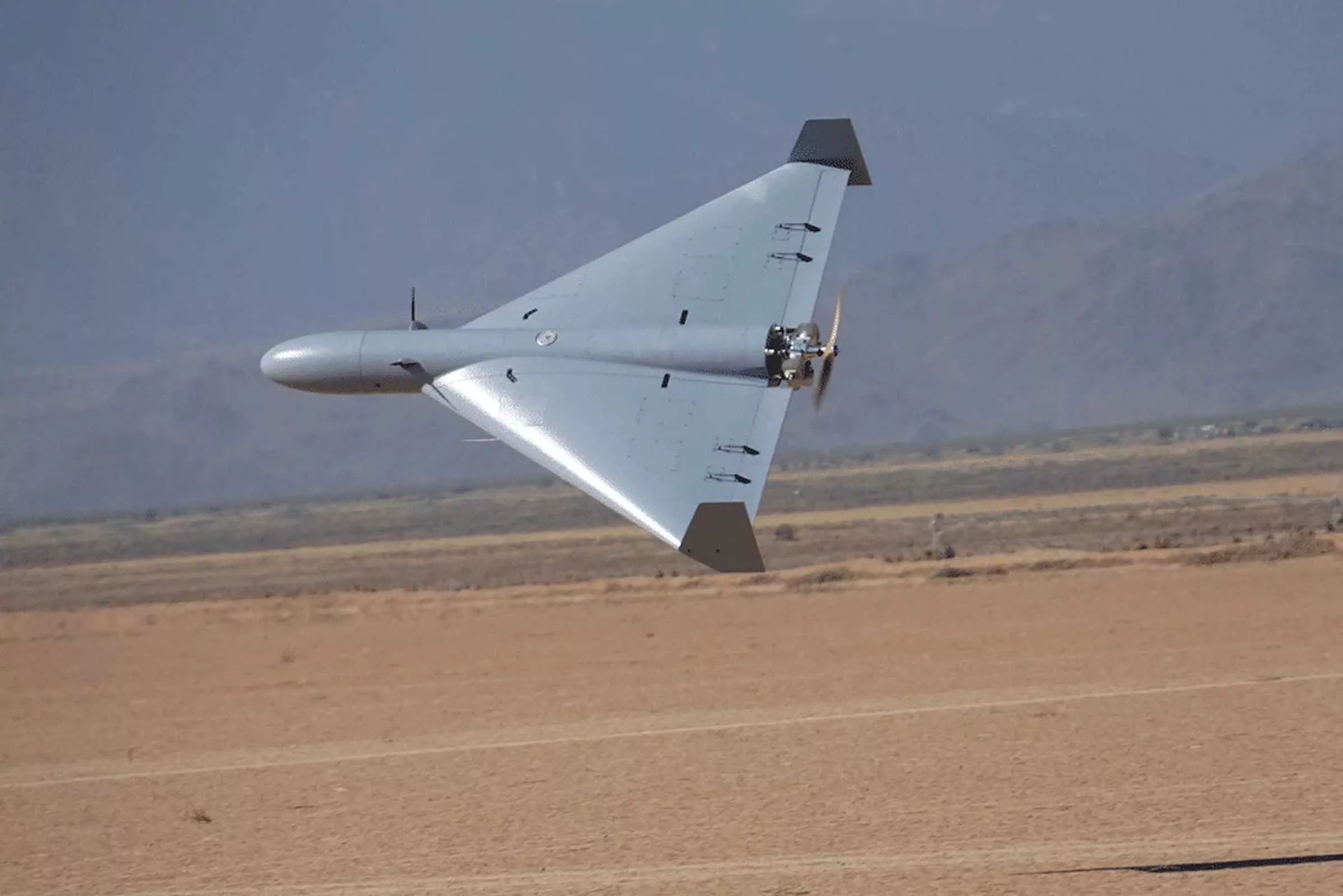
Understand how decentralized production models enable rapid recovery of autonomous drone systems despite military strike
30-Second TL;DR
What Changed
Iran restarted drone production during a six-week ceasefire in early April.
Why It Matters
The rapid recovery of drone manufacturing highlights the challenges of using kinetic strikes to permanently degrade autonomous weapons supply chains. It suggests that decentralized production models are becoming increasingly difficult to neutralize.
What To Do Next
Analyze the resilience of decentralized manufacturing supply chains to understand how autonomous systems can maintain production continuity under geopolitical pressure.
Key Points
- •Iran restarted drone production during a six-week ceasefire in early April.
- •Reconstruction speed of military capabilities exceeded initial US intelligence estimates.
- •The country has achieved autonomous mass production of drone systems.
Deep Insight
Background and context from public sources — not the original article. 31 sources cited.
Enhanced Key Takeaways
- •Iran's rapid restoration of drone production is partly attributed to assistance from Russia and China, with China allegedly supplying missile components.
- •US intelligence indicates that Iran could fully restore its pre-war drone capabilities within six months, significantly faster than initial estimates.
- •Iran's military-industrial infrastructure is strategically distributed across the country, utilizing both "visible and hidden" channels to ensure production continuity even under military strikes.
- •Iran claims to have increased its drone production tenfold since the escalation of the 2025-2026 conflict with the United States and Israel, aiming for mass strike capability to overwhelm air defense systems.
- •The US has recently imposed sanctions on individuals and companies, including those in China and Hong Kong, for their role in aiding Iran's procurement of components for its Shahed-series drones.
Technical Deep Dive
- Shahed-131: Length of 2.6 meters, wingspan of 2.2 meters, and a range of 700–900 km. It is powered by a smaller MDR 208 variant motor, which is a reverse-engineered version of the British AR 731.
- Shahed-136: Measures 3.5 meters long, 2.5 meters wide, and weighs 200 kg. It has a reported range of at least 2,000 km (some sources suggest up to 2,500 km) and a maximum speed of 185 km/h. It can carry up to 40 kg of warheads in its nose section. Propulsion comes from a Mado MD550 four-cylinder, two-stroke piston engine, an Iranian copy of the German Limbach L550E, driving a two-blade pusher propeller. Navigation relies on a commercial-grade inertial navigation system combined with GPS and GLONASS satellite navigation systems. It can be launched in salvo mode from a truck and deployed as a swarm drone.
- Shahed-129: A medium-altitude long-endurance (MALE) unmanned combat aerial vehicle (UCAV) with an endurance of 24 hours and a range of 1,700 km (over 1,000 miles). It is comparable in size, shape, and role to the American MQ-1 Predator and can carry up to eight precision-guided missiles or bombs.
- Shahed-191 (Saeqeh): A stealth flying-wing drone modeled after the captured American RQ-170 Sentinel UAV. It features internal weapon bays to reduce its radar signature, has a cruising speed of 300 km/h, a range of 450 km, and can carry two Sad-1 missiles internally.
- Shahed-149 Gaza: A high-altitude long-endurance (HALE) UAV capable of 24-hour flight endurance, a range of over 2,000 km, and a payload capacity of up to 500 kg. It is powered by a turbocharged engine and resembles the American MQ-9 Reaper in size and capability.
- Shahed-238: A turbojet-powered one-way attack drone capable of speeds up to 800 km/h.
- Rezvan: A short-range loitering munition designed for tactical battlefield use, with an estimated operational range of up to 20 km and an endurance of approximately 20 minutes. It weighs about 41 kg, with nearly 24 kg dedicated to a high-explosive anti-tank and fragmentation warhead. The drone is launched from cylindrical or canisterized tubes, uses a folding pusher propeller, and incorporates an electro-optical guidance system (likely a TV-based seeker) for operator-in-the-loop control.
Future ImplicationsAI analysis grounded in cited sources
Timeline
- 1985Iran begins using UAVs with Ababil-1 and Mohajer-1 for reconnaissance during the Iran-Iraq War.
- 1988Iran significantly increases investment in drones after realizing it cannot openly face the US by water.
- 2011-12Iran captures a US RQ-170 Sentinel UAV, influencing the design of its flying-wing drones like Shahed-191. The Shahed-129, a medium-altitude long-endurance drone, is introduced.
- 2020The UN conventional weapons embargo on Iran is lifted, allowing more active drone exports.
- 2022-08Iran begins supplying long-range Shahed-136 and Mohajer-6 drones to Russia for use in Ukraine.
- 2026-04Iran restarts drone production during a six-week ceasefire following recent military strikes.
Sources (31)
Factual claims are grounded in the sources below. Forward-looking analysis is AI-generated interpretation.
Weekly AI Recap
Read this week's curated digest of top AI events →
Related Updates


AI-curated news aggregator. All content rights belong to original publishers.
Original source: cnBeta (Full RSS) ↗
This is a summary, not the original. Read the source, or get the weekly briefing.
The weekly digest
One email a week. Unsubscribe anytime.