Inner Mongolia’s AI Compute Twin Cities
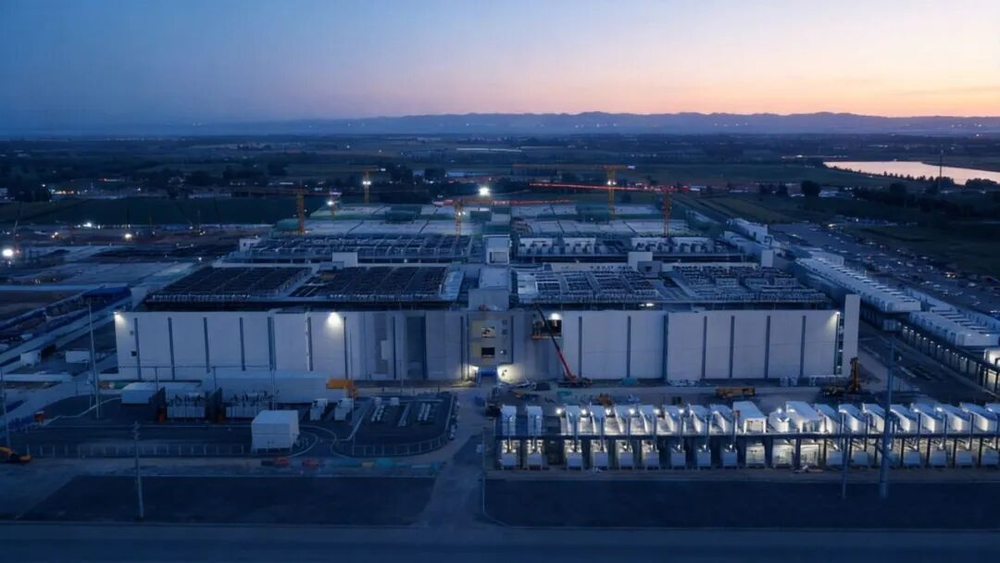
💡China’s leading compute region is moving from cheap green power to AI tokens, latency networks, and local value creation
⚡ 30-Second TL;DR
What Changed
Inner Mongolia reported national-leading compute capacity of 315,000P, including 297,000P of intelligent compute, in H1 2026.
Why It Matters
The development could lower the carbon and energy costs of large-scale AI inference and training in China while expanding western compute capacity. However, the region still needs stronger application ecosystems and local value capture because much of its capacity currently serves as compute supply for Beijing and other eastern markets.
What To Do Next
Benchmark your inference workloads against renewable-powered Chinese compute regions and evaluate whether sub-5ms intercity links fit your latency-sensitive deployment architecture.
Key Points
- •Inner Mongolia reported national-leading compute capacity of 315,000P, including 297,000P of intelligent compute, in H1 2026.
- •Ulanqab and Helingeer account for more than 90% of the region’s compute capacity, forming a northern AI infrastructure twin-city cluster.
- •Direct renewable-power delivery and source-grid-load-storage integration are major factors attracting AI infrastructure investment.
- •The region plans sub-2ms Hohhot–Ulanqab compute coordination and aims to develop a token economy with a trillion-yuan digital industry by 2028.
🧠 Deep Insight
Background and context from public sources — not the original article. 12 sources cited.
🔑 Enhanced Key Takeaways
- •The Envision Galaxy Campus in Ulanqab, launched in August 2026, is engineered to support a massive scale of up to one million GPUs operating in parallel, positioning it as a global leader in token output capacity.
- •Inner Mongolia has achieved a PUE (Power Usage Effectiveness) ratio as low as 1.1, significantly aided by the region's natural climate with an average annual temperature of 4°C, which minimizes mechanical cooling requirements.
- •The region has successfully implemented a 'green electricity-direct-to-compute' model, ensuring that over 80% of the energy consumed by data centers is sourced directly from dedicated wind and solar installations.
- •Major Chinese AI players, including DeepSeek and Moonshot AI, are utilizing the compute infrastructure in the Horinger-Ulanqab cluster to facilitate the training of their large language models.
- •The regional government has formalized the 'Token Economy' transition through the 'Measures for Promoting the High-Quality Development of the Token Economy,' an 18-point policy framework designed to integrate hardware manufacturing with AI data processing.
🛠️ Technical Deep Dive
- Infrastructure Architecture: Utilizes a source-grid-load-storage integration model to maintain high-density GPU clusters.
- Latency Metrics: Achieves sub-5ms data transmission latency between the Horinger New Area and the Beijing-Tianjin-Hebei economic cluster.
- Cooling Efficiency: Employs natural air cooling strategies leveraging the 4°C regional average temperature to achieve a PUE of 1.1.
- Capacity Scaling: Designed for massive parallelization supporting up to one million GPUs in a single campus environment.
🔮 Future ImplicationsAI analysis grounded in cited sources
⏳ Timeline
📎 Sources (12)
Factual claims are grounded in the sources below. Forward-looking analysis is AI-generated interpretation.
Weekly AI Recap
Read this week's curated digest of top AI events →
👉Related Updates

AI-curated news aggregator. All content rights belong to original publishers.
Original source: 虎嗅 ↗
This is a summary, not the original. Read the source, or get the weekly briefing.
Weekly AI briefing
One email a week. Unsubscribe anytime.