Hydra Adds RTX 50-Series VRAM Controls
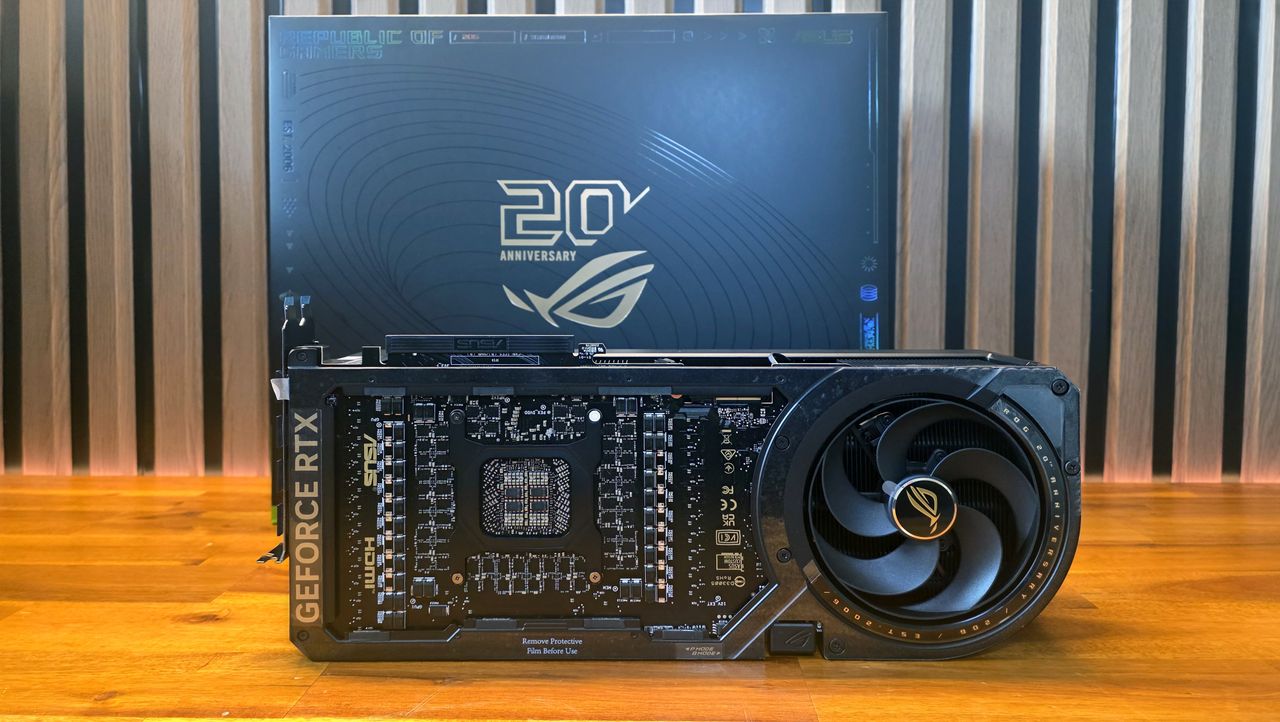
💡Push RTX 50-series inference GPUs further with new VRAM and power controls.
⚡ 30-Second TL;DR
What Changed
Hydra now provides VRAM tuning controls for RTX 50-series GPUs.
Why It Matters
The update may help AI developers extract more performance from local RTX 50-series inference or experimentation systems. Overclocking can also increase heat, power consumption, and instability, so production workloads should be validated carefully.
What To Do Next
Test Hydra on a non-production RTX 50-series system and benchmark your inference workload while logging temperature, power draw, and error rates.
Key Points
- •Hydra now provides VRAM tuning controls for RTX 50-series GPUs.
- •The update adds GPU power-limit controls for more aggressive tuning.
- •Users can configure memory offsets of up to +3000 MHz.
🧠 Deep Insight
AI-generated analysis for this event.
🔑 Enhanced Key Takeaways
- •The update specifically addresses the unique voltage regulation module (VRM) telemetry of the Blackwell architecture, allowing for more granular control than standard software.
- •1usmus has integrated a new 'Curve Optimizer' feature that automates the undervolting process for RTX 50-series cards to improve power efficiency without sacrificing stability.
- •The +3000 MHz memory offset capability is facilitated by Hydra's ability to bypass certain driver-level restrictions that typically cap VRAM frequency adjustments in standard tools like MSI Afterburner.
- •Hydra now includes a dedicated safety monitoring system that automatically reverts power limits if the GPU detects thermal throttling or excessive transient power spikes common in high-end Blackwell SKUs.
- •This version of Hydra introduces support for per-core voltage/frequency curve manipulation, a feature previously limited to CPU overclocking utilities, now adapted for GPU compute units.
📊 Competitor Analysis▸ Show
| Feature | Hydra | MSI Afterburner | EVGA Precision X1 |
|---|---|---|---|
| VRAM Tuning | Advanced/Automated | Manual/Basic | Manual/Basic |
| Power Limit Control | Aggressive/Custom | Standard | Standard |
| Pricing | Freemium/Paid Pro | Free | Free |
| Benchmark Integration | Native | None | None |
🛠️ Technical Deep Dive
- Hydra utilizes direct hardware-level communication with the GPU's SMBus to bypass standard driver limitations.
- The software implements a proprietary algorithm to calculate the optimal V/F curve by stress-testing the silicon at various load points.
- Memory offset implementation involves modifying the GDDR7 memory controller timings, which requires specific initialization sequences unique to the RTX 50-series.
- Power limit controls are achieved by manipulating the Power Management Integrated Circuit (PMIC) registers directly, allowing for limits beyond the manufacturer's BIOS-defined ceiling.
🔮 Future ImplicationsAI analysis grounded in cited sources
⏳ Timeline
Weekly AI Recap
Read this week's curated digest of top AI events →
👉Related Updates

AI-curated news aggregator. All content rights belong to original publishers.
Original source: Tom's Hardware ↗