China Targets 90% Domestic AI Accelerator Supply
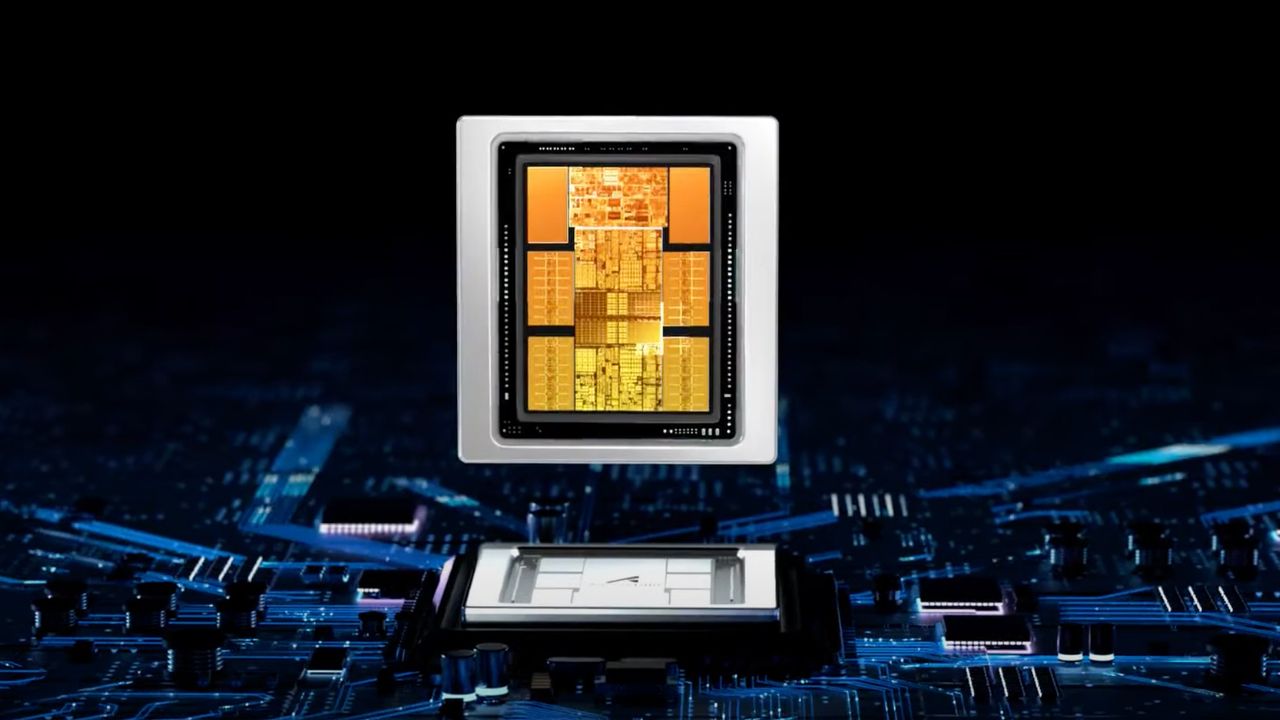
💡China's accelerator shift could change hardware choices, portability, and deployment strategy for AI teams.
⚡ 30-Second TL;DR
What Changed
Chinese AI accelerator suppliers could reach 90% coverage of the domestic market in 2026.
Why It Matters
A 90% domestic supply share would materially reshape China's AI infrastructure ecosystem and procurement choices. Global AI companies operating in China may need to support additional accelerator architectures and evaluate a more fragmented hardware stack.
What To Do Next
Benchmark your core inference workloads on available Huawei and Cambricon accelerators before committing to a China-region deployment architecture.
Key Points
- •Chinese AI accelerator suppliers could reach 90% coverage of the domestic market in 2026.
- •Huawei and Cambricon are identified as the likely biggest winners.
- •The shift reflects China's effort to reduce dependence on Nvidia and AMD.
🧠 Deep Insight
AI-generated analysis for this event.
🔑 Enhanced Key Takeaways
- •The Chinese government has implemented 'Xinchuang' (IT innovation) policies that mandate the replacement of foreign hardware with domestic alternatives in critical infrastructure and state-owned enterprises.
- •Huawei's Ascend 910 series has emerged as the primary alternative to Nvidia's H100/H200 series, with significant software ecosystem development centered around the MindSpore framework.
- •US export controls, specifically the expansion of restrictions on high-end GPU shipments to China, have accelerated the adoption of domestic chips by forcing Chinese cloud providers to optimize for non-Nvidia architectures.
- •Cambricon has shifted its focus toward edge computing and specialized inference chips, complementing Huawei's dominance in large-scale training clusters.
- •Domestic supply chain integration is being bolstered by advancements in 2.5D and 3D packaging technologies, which allow Chinese firms to bypass some limitations imposed by the lack of access to extreme ultraviolet (EUV) lithography.
📊 Competitor Analysis▸ Show
| Feature | Huawei Ascend 910B | Nvidia H20 | Cambricon MLU590 |
|---|---|---|---|
| Architecture | Da Vinci | Hopper | MLUv03 |
| Interconnect | Ascend Fabric | NVLink | MLU-Link |
| Software Stack | MindSpore | CUDA | BangPy |
| Target Market | Large-scale Training | Data Center Inference | Edge/Cloud Inference |
🛠️ Technical Deep Dive
- Huawei Ascend 910B utilizes a multi-die architecture to improve yield rates despite manufacturing constraints.
- The Da Vinci architecture employs a 3D Cube computing engine designed specifically for matrix multiplication operations common in Transformer models.
- Cambricon MLU590 chips utilize a proprietary chiplet-based design to scale performance for high-throughput inference tasks.
- Software compatibility remains a significant hurdle, with most domestic chips requiring custom kernels to bridge the gap left by the absence of CUDA support.
🔮 Future ImplicationsAI analysis grounded in cited sources
⏳ Timeline
Weekly AI Recap
Read this week's curated digest of top AI events →
👉Related Updates

AI-curated news aggregator. All content rights belong to original publishers.
Original source: Tom's Hardware ↗