Hu Xijin Opposes AI Dramas and Robotaxis
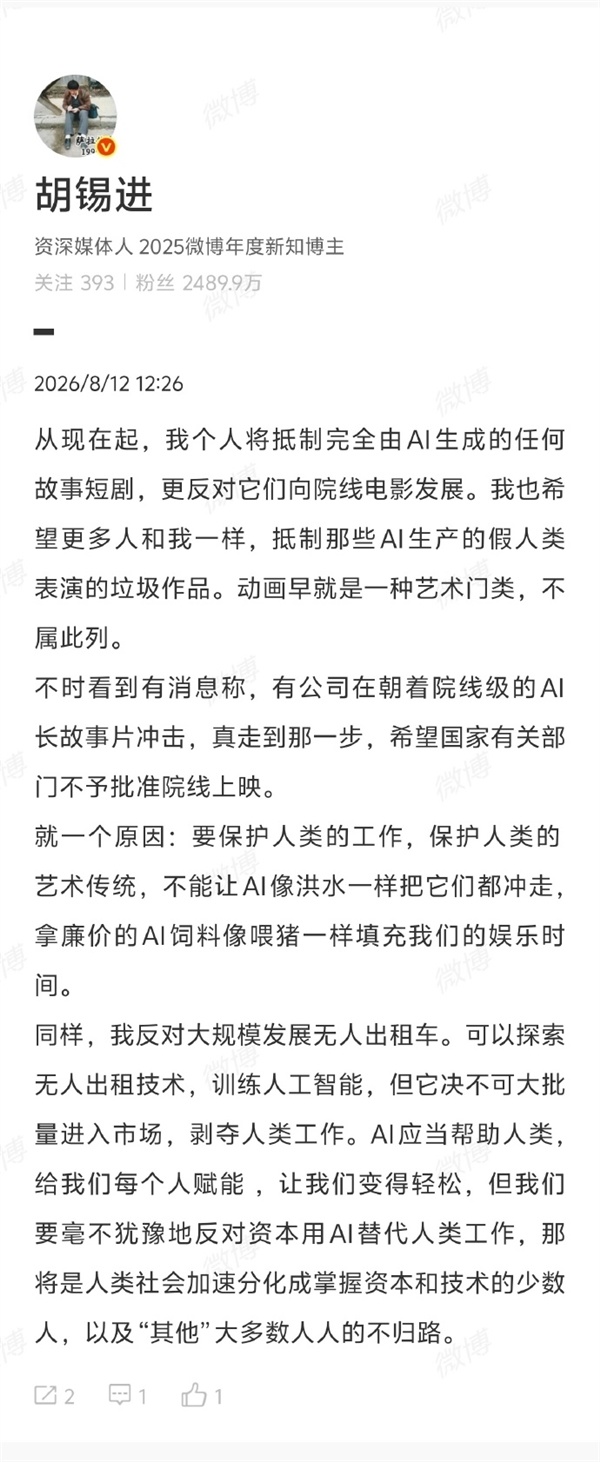
💡A prominent public critique signals the trust, quality, and adoption barriers facing AI media and robotaxis.
⚡ 30-Second TL;DR
What Changed
Hu Xijin called for a boycott of fully AI-generated story-based short dramas.
Why It Matters
The statement highlights public acceptance and cultural concerns that AI-content and autonomous-vehicle companies may face. For practitioners, it reinforces the importance of transparency, human oversight, quality standards, and public-engagement strategies.
What To Do Next
Add a human-review checkpoint and provenance label to your AI-generated video workflow before publishing any fully synthetic narrative content.
Key Points
- •Hu Xijin called for a boycott of fully AI-generated story-based short dramas.
- •He opposed the expansion of fully AI-generated content into theatrical films.
- •He criticized AI-produced works that use virtual human performers as low-quality content.
- •He also expressed opposition to large-scale deployment of unmanned robotaxis.
- •He explicitly excluded established animation from the scope of his boycott.
🧠 Deep Insight
AI-generated analysis for this event.
🔑 Enhanced Key Takeaways
- •Hu Xijin's stance reflects a broader ongoing debate in China regarding the 'AI-generated content' (AIGC) industry's impact on employment for traditional actors, screenwriters, and production staff.
- •The criticism of robotaxis aligns with growing public safety concerns in Chinese urban centers, where local governments are balancing rapid autonomous vehicle testing with strict regulatory oversight.
- •Hu Xijin specifically highlighted the 'dehumanization' of entertainment, arguing that AI-generated dramas lack the emotional resonance and cultural depth provided by human-led creative processes.
- •His commentary follows a trend of high-profile Chinese public figures expressing skepticism toward the rapid displacement of human labor by generative AI models in the creative and service sectors.
- •The distinction between 'mature animation' and AI content suggests Hu differentiates between tools used by human artists versus fully automated systems that bypass human creative intent.
🔮 Future ImplicationsAI analysis grounded in cited sources
⏳ Timeline
Weekly AI Recap
Read this week's curated digest of top AI events →
👉Related Updates
AI-curated news aggregator. All content rights belong to original publishers.
Original source: cnBeta (Full RSS) ↗