AI Star Duan Yan Sparks Voice Actor Debate
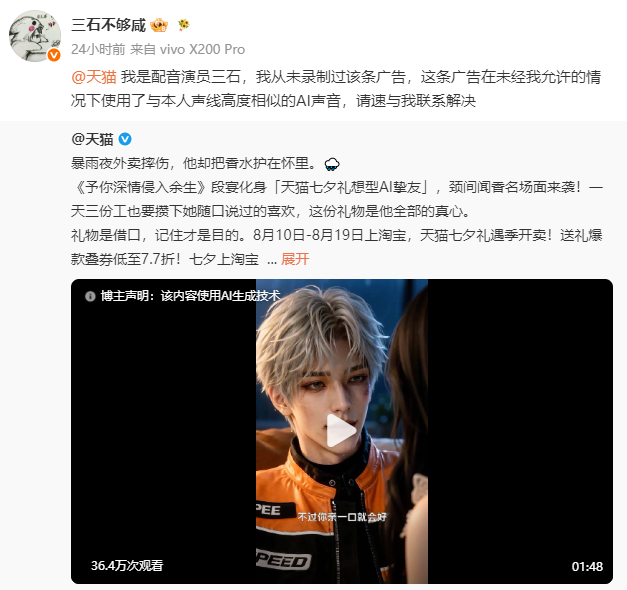
💡A commercial AI character exposes the voice, rights, and workflow challenges facing short-drama creators.
⚡ 30-Second TL;DR
What Changed
Tmall is using AI-generated character Duan Yan in advertising.
Why It Matters
The case could push brands and production teams to clarify voice ownership, attribution, and consent when deploying AI characters. It also signals growing commercial demand for AI-generated entertainment content.
What To Do Next
Before launching an AI short drama, check your generation tool’s voice-cloning consent and attribution settings and document all performer permissions.
Key Points
- •Tmall is using AI-generated character Duan Yan in advertising.
- •A voice actor proactively sought involvement in the project.
- •The incident highlights unresolved roles and rights issues in AI-generated short dramas.
🧠 Deep Insight
AI-generated analysis for this event.
🔑 Enhanced Key Takeaways
- •Duan Yan is part of a broader trend by Alibaba's Tmall to utilize 'AI digital humans' to reduce production costs and increase content output speed for e-commerce marketing campaigns.
- •The voice actor involved publicly claimed that their voice data was used or imitated without explicit consent, sparking a legal debate regarding 'voice rights' (personality rights) in Chinese civil law.
- •The incident has triggered calls from the China Film Association and other industry bodies for clearer regulations on the use of synthetic media in commercial advertising.
- •Tmall's use of Duan Yan is linked to the 'AI Short Drama' (AI微短剧) boom, where platforms are increasingly replacing human actors with AI avatars to bypass traditional talent management and scheduling constraints.
- •Legal experts in China are currently debating whether AI-generated voices that mimic specific human characteristics constitute an infringement of the 'right to portrait' or 'right to voice' under the Civil Code of the People's Republic of China.
🔮 Future ImplicationsAI analysis grounded in cited sources
⏳ Timeline
Weekly AI Recap
Read this week's curated digest of top AI events →
👉Related Updates


AI-curated news aggregator. All content rights belong to original publishers.
Original source: 钛媒体 ↗