Tesla Cybercab Integrates Starlink
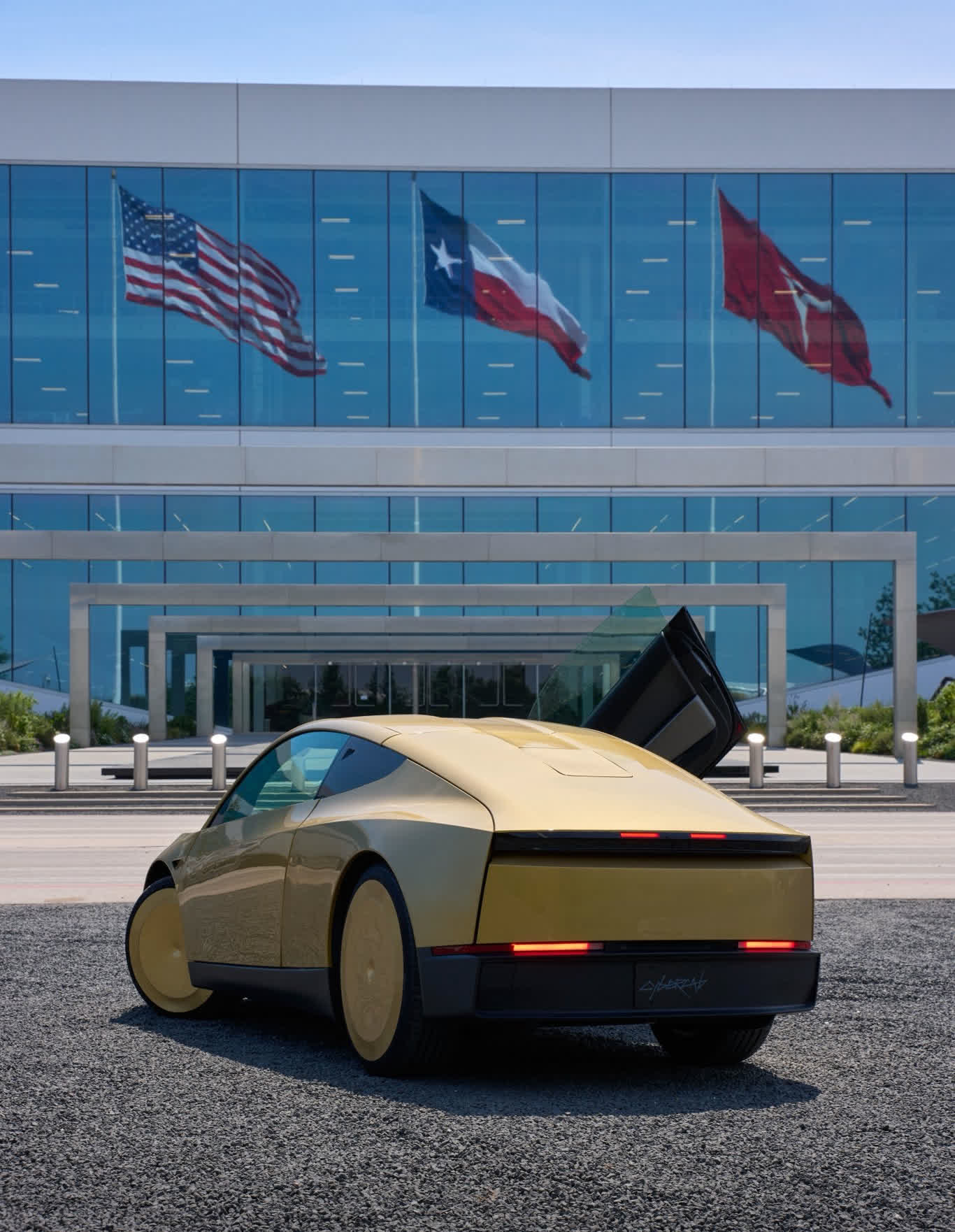
💡Tesla is testing satellite connectivity for robotaxis, a potential new layer in autonomous-fleet communications.
⚡ 30-Second TL;DR
What Changed
Cybercab is the first Tesla vehicle publicly shown with integrated Starlink hardware.
Why It Matters
Satellite connectivity could improve communications resilience for autonomous vehicles operating beyond reliable terrestrial networks. However, the article does not provide details about service availability, bandwidth, latency, or operational safety requirements.
What To Do Next
Evaluate Starlink or other satellite links as a backup channel in your autonomous-vehicle fleet communication architecture, then benchmark latency and failover behavior against cellular networks.
Key Points
- •Cybercab is the first Tesla vehicle publicly shown with integrated Starlink hardware.
- •The Starlink antenna is built into the rear roof area above the taillights.
- •A rectangular exterior panel conceals the antenna rather than leaving it exposed.
- •The integration is intended for a vehicle designed for autonomous robotaxi services.
🧠 Deep Insight
AI-generated analysis for this event.
🔑 Enhanced Key Takeaways
- •The integration utilizes a flat-panel phased array antenna design, optimized for high-speed mobility to maintain connectivity in remote areas or urban canyons where cellular signals may be degraded.
- •Tesla's implementation leverages the Starlink 'Direct to Cell' or mobile-optimized hardware architecture, allowing the Cybercab to maintain low-latency telemetry for fleet management systems.
- •The concealed antenna panel is constructed from specialized radio-transparent composite materials to ensure signal integrity while maintaining the vehicle's aerodynamic profile.
- •This connectivity suite is designed to support over-the-air (OTA) updates for autonomous driving models even when the vehicle is outside of traditional Wi-Fi or cellular coverage zones.
- •Regulatory filings suggest the Starlink integration is part of a broader 'Always-On' safety initiative, ensuring the robotaxi can transmit emergency diagnostics and location data independently of terrestrial networks.
📊 Competitor Analysis▸ Show
| Feature | Tesla Cybercab (Starlink) | Waymo (Cellular/V2X) | Zoox (Cellular/Dedicated) |
|---|---|---|---|
| Primary Connectivity | Satellite + Cellular | Cellular (5G/LTE) | Cellular (5G/LTE) |
| Remote Operation | High-bandwidth Satellite | High-bandwidth Cellular | High-bandwidth Cellular |
| Offline Reliability | High (Global Coverage) | Moderate (Network Dependent) | Moderate (Network Dependent) |
| Cost per Unit | Premium (Integrated) | Standard | Standard |
🛠️ Technical Deep Dive
- Antenna Type: Flat-panel phased array integrated into the roof substrate.
- Frequency Band: Ku-band for satellite communication, with potential multi-band support for terrestrial failover.
- Data Throughput: Optimized for telemetry, sensor data logging, and real-time fleet coordination rather than consumer-grade high-speed streaming.
- Power Management: Integrated with the Cybercab's high-voltage battery system to minimize parasitic drain during idle periods.
- Signal Processing: Onboard edge computing unit dedicated to satellite handoff and beamforming management.
🔮 Future ImplicationsAI analysis grounded in cited sources
⏳ Timeline
Weekly AI Recap
Read this week's curated digest of top AI events →
👉Related Updates




AI-curated news aggregator. All content rights belong to original publishers.
Original source: cnBeta (Full RSS) ↗