General Atomics Advances Fusion Energy Component Testing
💡Fusion energy breakthroughs are the ultimate long-term solution for AI's massive power consumption needs.
⚡ 30-Second TL;DR
What Changed
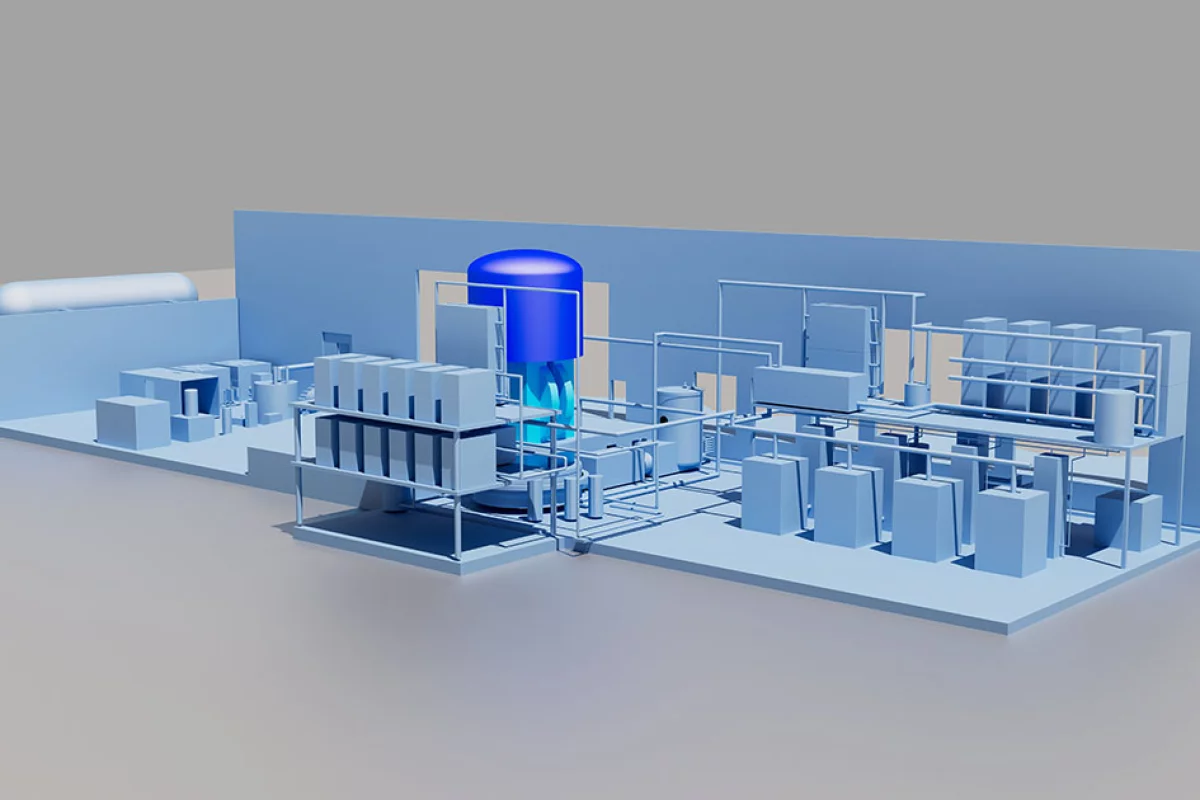
Facility focuses on testing fusion breeding blankets for self-fueling reactors
Why It Matters
This facility could accelerate the timeline for commercial fusion energy, which would provide virtually limitless clean power for energy-intensive AI data centers.
What To Do Next
Monitor energy infrastructure trends as fusion breakthroughs will eventually redefine the cost and availability of compute power.
Key Points
- •Facility focuses on testing fusion breeding blankets for self-fueling reactors
- •Supported by California state tax credits to boost next-gen energy tech
- •Aims to provide a critical engineering validation platform for commercial fusion
🧠 Deep Insight
AI-generated analysis for this event — not the original article.
🔑 Enhanced Key Takeaways
- •The facility is specifically designed to test tritium breeding blanket modules under high-heat flux and magnetic field conditions relevant to the ITER reactor and future DEMO-class fusion plants.
- •General Atomics is leveraging its experience with the DIII-D National Fusion Facility, which it operates for the U.S. Department of Energy, to inform the design of these blanket testing protocols.
- •The project addresses the 'tritium self-sufficiency' challenge, a critical bottleneck where fusion reactors must produce as much tritium fuel as they consume to remain commercially viable.
- •The California Competes Tax Credit award for this project is part of a broader state initiative to establish San Diego as a hub for clean energy manufacturing and fusion supply chain development.
- •The testing platform incorporates advanced materials science research, focusing on ceramic breeder pebbles and liquid metal coolants that can withstand the intense neutron irradiation environment of a fusion core.
📊 Competitor Analysis▸ Show
| Competitor | Focus Area | Key Technology | Benchmarks |
|---|---|---|---|
| Commonwealth Fusion Systems | High-field tokamaks | HTS magnets | SPARC reactor development |
| Tokamak Energy | Spherical tokamaks | HTS magnets | ST40 plasma temperature records |
| Helion Energy | Magnetic inertial fusion | Pulsed power | Polaris prototype development |
🛠️ Technical Deep Dive
- Focuses on Tritium Breeding Ratio (TBR) optimization to ensure fuel cycle closure.
- Utilizes high-heat flux testing loops to simulate the plasma-facing component (PFC) thermal loads.
- Evaluates magnetohydrodynamic (MHD) effects on liquid metal coolants flowing through complex blanket geometries.
- Integrates neutronics modeling validation to correlate experimental data with computational fluid dynamics (CFD) simulations.
- Employs advanced diagnostic suites for real-time monitoring of tritium permeation and recovery efficiency.
🔮 Future ImplicationsAI analysis grounded in cited sources
⏳ Timeline
Weekly AI Recap
Read this week's curated digest of top AI events →
👉Related Updates


AI-curated news aggregator. All content rights belong to original publishers.
Original source: cnBeta (Full RSS) ↗
This is a summary, not the original. Read the source, or get the weekly briefing.
Weekly AI briefing
One email a week. Unsubscribe anytime.