Film industry pivots to AI for cost efficiency
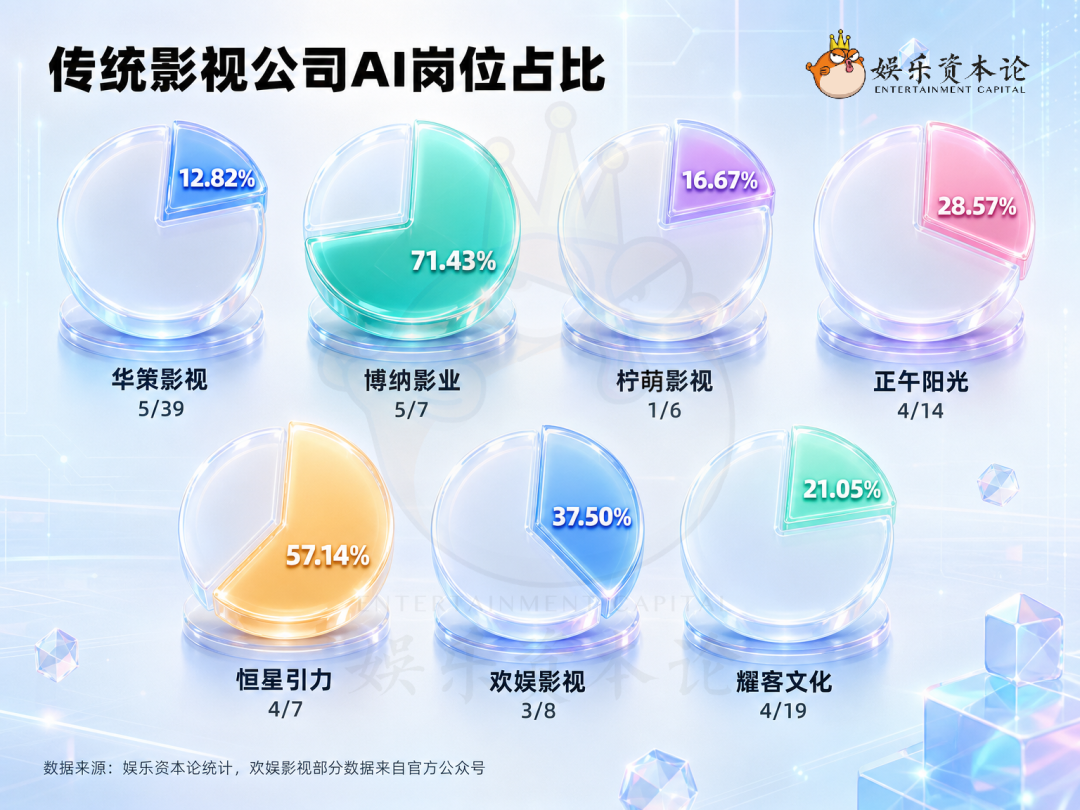
💡See how major Chinese film studios are integrating AI into their production pipelines.
⚡ 30-Second TL;DR
What Changed
Film companies are split into 'cost-reduction' (AI for storyboards) and 'value-add' (AI for new content like comics) strategies.
Why It Matters
The integration of AIGC is fundamentally changing the production pipeline of the Chinese entertainment industry, shifting from human-heavy to AI-assisted workflows.
What To Do Next
Experiment with building a standardized AIGC production workflow using ComfyUI and Dify to automate repetitive creative tasks.
Key Points
- •Film companies are split into 'cost-reduction' (AI for storyboards) and 'value-add' (AI for new content like comics) strategies.
- •High-end talent requirements: Some firms now demand 985/211 university degrees for AI roles.
- •MCNs are using AI to replace roles like live-stream operators and short-drama production staff.
🧠 Deep Insight
Web-grounded analysis with 26 cited sources.
🔑 Enhanced Key Takeaways
- •The Chinese micro-drama industry has become the world's first mass commercial application of AI-generated video, with tens of thousands of AI-native titles released monthly, drastically cutting production costs by 80-90% and reducing timelines from several months to just a few weeks.
- •AI is enabling 'infinite localization' and 'weaponized distribution' strategies in film, with tools like AI-Lip Sync (VisualDub) ensuring content is 'emotionally synchronized' for global markets and reducing localization costs by 50-70%.
- •Beyond basic storyboarding, AI is performing advanced pre-production tasks such as script audits to identify budget 'leakages,' real-time incentive mapping for filming locations, and generative pre-visualization to assess the return on investment (ROI) of a scene, leading to 30-40% pre-production compression.
- •The rapid deployment of AI in content creation has raised significant ethical and intellectual property concerns, including the unauthorized use of real individuals' likenesses for AI characters and the growing demand for transparent AI usage and watermarking.
- •Local governments in China are actively funding AI production hubs and offering substantial subsidies, up to two million yuan per drama, for AI-driven micro-dramas, while the National Radio and Television Administration (NRTA) is implementing a tiered content review system for AI-generated content.
🛠️ Technical Deep Dive
- Generative AI models leverage neural networks and deep learning to produce original content, including images, scripts, music, and video, by learning from vast datasets.
- Advanced AI video generation systems, such as ByteDance's Seedance 2.0, can create multi-shot film sequences from text-to-video prompts in approximately 60 seconds, achieving over 90% usability for generated footage.
- For character consistency in AI-generated content, specialized tools employ reference sheet technology and machine learning models trained on character continuity.
- AI-driven virtual actors and avatars are developed using deep learning, neural geometry, and motion priors to create hyper-realistic characters with expressive facial features, physically plausible movement, and high-resolution textures and skeleton rigs.
- AI-powered pre-visualization tools can analyze screenplays to generate detailed shot lists, including shot descriptions, camera angles, and character presence in each scene.
- AI-Lip Sync technologies, like those from Neural Garage and Deepdub, utilize neural networks to address "visual discord" in dubbed content, ensuring emotional synchronization across languages.
- In visual effects, AI integrates GAN-based neural rendering for tasks such as digital de-aging of actors.
- AI for virtual environments uses generative tools to automate texture painting and atmospheric effects.
🔮 Future ImplicationsAI analysis grounded in cited sources
⏳ Timeline
📎 Sources (26)
Factual claims are grounded in the sources below. Forward-looking analysis is AI-generated interpretation.
- yourstory.com
- scmp.com
- cri.cn
- techtimes.com
- thenextweb.com
- vitrina.ai
- vitrina.ai
- drawstory.ai
- cameracrewgermany.com
- mckinsey.com
- dataart.com
- gitnux.org
- beverlyboy.com
- dinopix.ai
- mstudio.ai
- animationguides.com
- llamagen.ai
- greggjaden.com
- arxiv.org
- substack.com
- virtualproduction.services
- livingip.xyz
- katevassgalerie.com
- databazaardigital.com
- substack.com
- imagine.art
Weekly AI Recap
Read this week's curated digest of top AI events →
👉Related Updates


AI-curated news aggregator. All content rights belong to original publishers.
Original source: 虎嗅 ↗