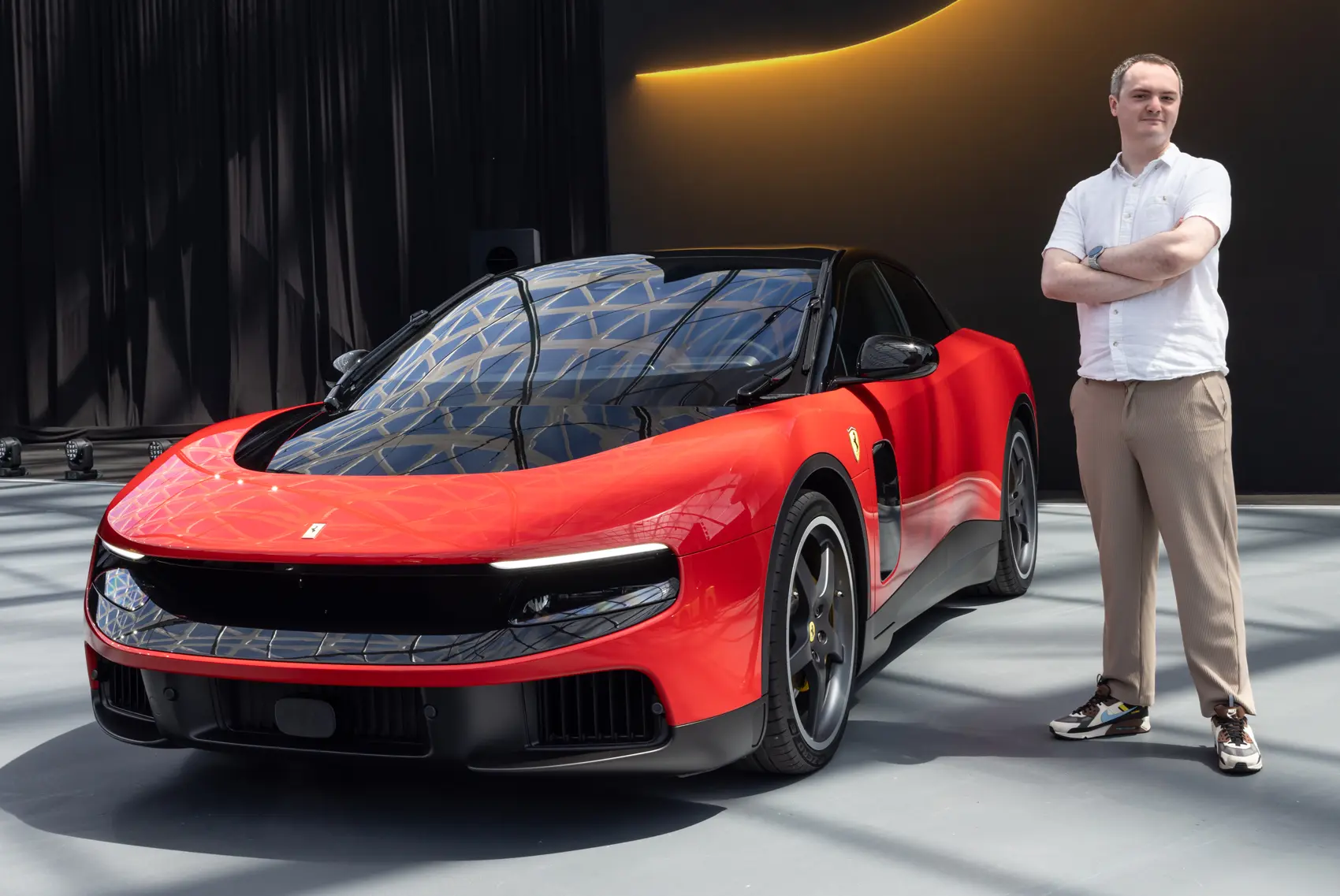
Ferrari launches first 5-seater electric vehicle Luce
💡Luxury automotive giants are pivoting to EV; watch how AI-driven software becomes the new differentiator for performance
⚡ 30-Second TL;DR
What Changed
Ferrari's first pure electric vehicle model
Why It Matters
This move signals the accelerating electrification of ultra-luxury automotive brands, which will likely drive demand for high-performance AI-integrated cockpit and autonomous driving software.
What To Do Next
Monitor the integration of advanced driver-assistance systems (ADAS) and AI-driven infotainment in luxury EVs to identify opportunities for automotive software development.
Key Points
- •Ferrari's first pure electric vehicle model
- •Five-seater configuration targeting luxury market
- •Priced at 550,000 euros (approx. $640,000 USD)
- •Represents a major shift from traditional internal combustion engines
🧠 Deep Insight
Web-grounded analysis with 16 cited sources.
🔑 Enhanced Key Takeaways
- •The Ferrari Luce is a four-door, five-seat liftback sedan, representing a new vehicle format and becoming the longest production car in Ferrari's history.
- •It is powered by four electric motors, delivering a combined output of 1,035 to 1,050 horsepower, and features an 800-volt architecture with a 122-kWh battery pack.
- •The design of the Luce was a collaboration with LoveFrom, the firm founded by former Apple designers Jony Ive and Marc Newson, resulting in a polarizing aesthetic that departs significantly from traditional Ferrari styling.
- •Ferrari has developed a unique sound system for the Luce, which amplifies real mechanical vibrations from the electric motors into the cabin and outside, aiming to preserve the brand's emotional driving experience.
- •Customer deliveries for the Luce are anticipated to commence in the fourth quarter of 2026 in Europe, with its arrival in the United States expected in the second quarter of 2027.
📊 Competitor Analysis▸ Show
| Feature / Model | Ferrari Luce | Porsche Taycan Turbo GT | Lucid Air Sapphire | Lucid Gravity |
|---|---|---|---|---|
| Price (approx.) | €550,000 ($640,000 USD) | ~$230,000 USD (estimated for 2026) | $249,000 USD | From $79,900 USD (available now) |
| Seating Capacity | 5 | 4 (no rear seats in Weissach Pack) | 5 | Up to 7 (varies by config) |
| Horsepower | 1,035 - 1,050 hp | 1,092 hp (with overboost) | 1,234 hp | Up to 800+ hp (estimated) |
| 0-60 mph (approx.) | 2.5 seconds | 2.1 seconds | 1.89 seconds | 3.5 seconds (estimated) |
| Range (WLTP/EPA est.) | 330 miles WLTP / 280 miles EPA | ~300 miles EPA (estimated) | 427 miles EPA | Up to 450 miles EPA |
| Battery Capacity | 122 kWh | 93.4 kWh | 118 kWh | 112 kWh (estimated) |
| Charging (DC Fast) | Up to 350 kW | Up to 320 kW | Up to 300 kW | Up to 350 kW |
| Curb Weight | 4,982 lbs (2,260 kg) | ~5,090 lbs (with Weissach Pack) | ~4,900 lbs | ~6,000 lbs (estimated) |
🛠️ Technical Deep Dive
- Powertrain: Four radial-flux permanent-magnet synchronous motors, one per wheel, delivering a combined output of 1,035 hp (772 kW) to 1,050 hp. The system is rear-biased, with front motors producing 282 hp and rear motors 831 hp.
- Battery System: Features a 122-kWh (gross) battery pack, designed and manufactured by Ferrari, which serves as a structural element of the chassis. It utilizes an 800-volt electrical architecture.
- Charging Capability: Supports DC fast charging at up to 350 kW.
- Performance Metrics: Achieves 0-62 mph (0-100 km/h) in 2.5 seconds and has a claimed top speed of 193 mph (310 km/h).
- Estimated Range: Offers an estimated range of 330 miles (530 km) under the European WLTP standard, which translates to approximately 280 miles via EPA methodology.
- Chassis and Suspension: Built on a dedicated electric-vehicle architecture, it incorporates four-wheel steering and an active suspension system derived from the F80, featuring adaptive dampers evolved from those in the Purosangue and F80. It also includes torque vectoring across the front and rear axles.
- Braking System: Equipped with 15.4-inch diameter brake rotors at the front and 14.6-inch at the rear.
- Wheels: Features staggered-size wheels, 23 x 9.5 inches at the front and 24 x 11.0 inches at the rear, which are the largest ever fitted to a roadgoing Ferrari. Two styles are available: a traditional five-spoke design and an aero-optimized turbine look.
- Interior Technology: The cabin merges physical and digital controls, with conventional switches on the steering wheel (instead of touchpads) and two manettino controls for vehicle dynamics and powertrain. A central touchscreen is paired with physical switchgear, and steering wheel paddles control five levels of regenerative braking and five steps of torque delivery.
- Dimensions & Weight: Measures 5.03 meters (197.9 inches) in length, 2 meters (78.7 inches) in width, and 1.54 meters (60.8 inches) in height, with a wheelbase of 2.96 meters (116.6 inches). It has a curb weight of 4,982 lbs (2,260 kg) and a center of gravity 95mm lower than the Purosangue.
🔮 Future ImplicationsAI analysis grounded in cited sources
⏳ Timeline
📎 Sources (16)
Factual claims are grounded in the sources below. Forward-looking analysis is AI-generated interpretation.
Weekly AI Recap
Read this week's curated digest of top AI events →
👉Related Updates
Same topic
Explore #electric-vehicle
Same product
More on ferrari-luce
Same source
Latest from cnBeta (Full RSS)

PACA: Open-source tool for ancient fossil coordinate mapping

First atmosphere detected on habitable-zone exoplanet

Samsung Secures $200B Broadcom AI Infrastructure Deal

How AMD's 2006 ATI Acquisition Built Today's AI Empire
AI-curated news aggregator. All content rights belong to original publishers.
Original source: cnBeta (Full RSS) ↗