Elon Musk Poised to Become World's First Trillionaire
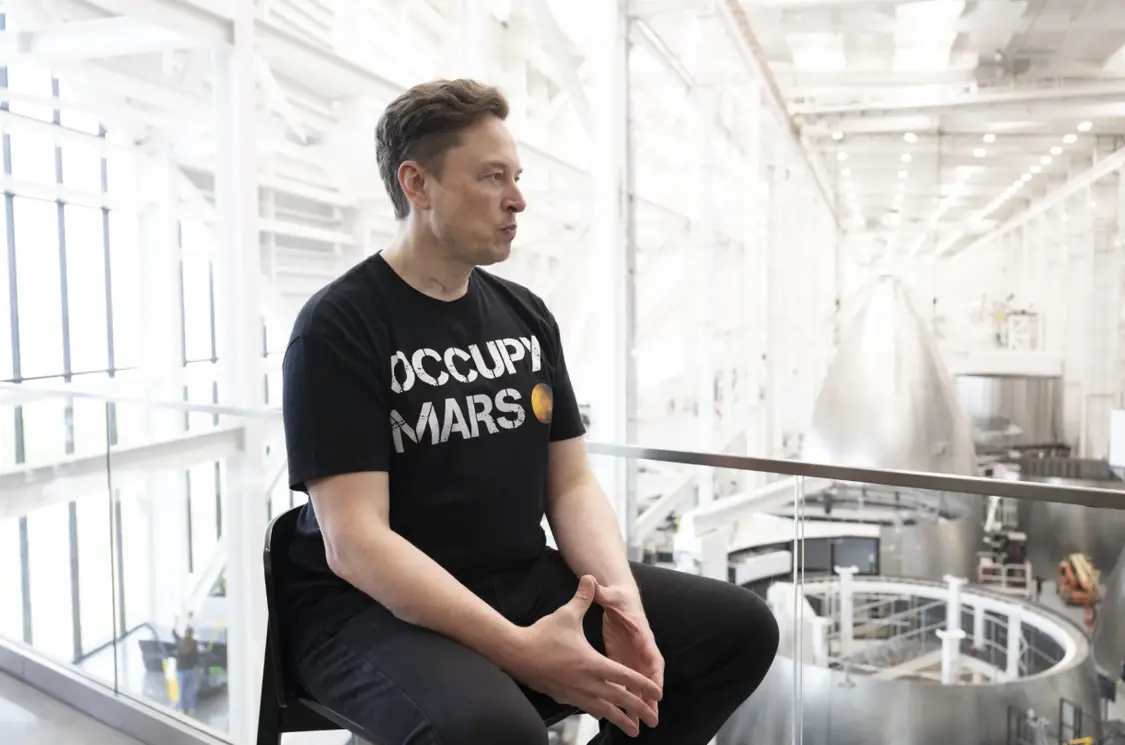
SpaceX's IPO is a major financial event that could reshape the funding landscape for deep-tech and AI infrastructure.
30-Second TL;DR
What Changed
SpaceX has officially filed its IPO prospectus.
Why It Matters
A successful SpaceX IPO will significantly impact the capital markets and provide massive liquidity for further space and AI-related R&D.
What To Do Next
Monitor the SpaceX IPO filing for insights into their AI-driven autonomous flight and satellite communication infrastructure.
Key Points
- •SpaceX has officially filed its IPO prospectus.
- •Elon Musk holds approximately 5.1 billion shares and 350 million options.
- •The valuation of SpaceX assets positions Musk as a potential trillionaire.
Deep Insight
Background and context from public sources — not the original article. 25 sources cited.
Enhanced Key Takeaways
- •SpaceX's IPO is projected to be the largest in history, aiming to raise between $40 billion and $80 billion and potentially valuing the company at over $1.75 trillion, significantly surpassing Saudi Aramco's previous record.
- •Elon Musk maintains substantial control over SpaceX through a dual-class share structure, holding approximately 42-43% of the equity while commanding roughly 79-85.1% of the voting rights, ensuring his decision-making authority post-IPO.
- •The valuation driving Musk's potential trillionaire status is bolstered by the February 2026 merger of SpaceX with his AI startup xAI, which valued the combined entity at $1.25 trillion and is the entity expected to go public.
- •SpaceX's financial performance in 2025 included an estimated $18.67 billion in revenue, with its Starlink satellite internet division being the sole profitable segment, generating $11.4 billion in revenue and $4.4 billion in operating income.
- •Musk's net worth experienced rapid growth, reaching $500 billion by October 2025, with his stakes in Tesla, SpaceX, and xAI being the primary drivers of this wealth accumulation.
Competitor Analysis
- SpaceX (Starlink)
- Satellite Internet, Launch Services
- Amazon (Project Kuiper)
- Satellite Internet
- OneWeb
- Satellite Internet
- SpaceX (Starlink)
10,020 (planned up to 34,400)
- Amazon (Project Kuiper)
- First satellites launched April 2025 (planned 3,236)
- OneWeb
500 (planned ~630)
- SpaceX (Starlink)
- 10 million
- Amazon (Project Kuiper)
- N/A (early deployment)
- OneWeb
- Providing service in select regions (e.g., Alaska, Canada, Northern Europe)
- SpaceX (Starlink)
- ~25-35 ms
- Amazon (Project Kuiper)
- Target: Low latency
- OneWeb
- Target: Low latency
- SpaceX (Starlink)
- Up to 1 Gbit/s
- Amazon (Project Kuiper)
- N/A (in development)
- OneWeb
- N/A (in development)
- SpaceX (Starlink)
- v1: 260 kg; v2 mini: 740 kg; v2: 1,250 kg
- Amazon (Project Kuiper)
- N/A
- OneWeb
- 150 kg
- SpaceX (Starlink)
- Krypton-powered ion thrusters (some sources say argon)
- Amazon (Project Kuiper)
- N/A
- OneWeb
- N/A
- SpaceX (Starlink)
- Falcon 9 (SpaceX's own)
- Amazon (Project Kuiper)
- ULA Atlas V, Arianespace Ariane 6, Blue Origin New Glenn
- OneWeb
- Russian Soyuz (historically), Indian rockets, SpaceX Falcon 9
| Feature/Service | SpaceX (Starlink) | Amazon (Project Kuiper) | OneWeb |
|---|---|---|---|
| Primary Service | Satellite Internet, Launch Services | Satellite Internet | Satellite Internet |
| Satellites in Orbit (as of early 2026) | 10,020 (planned up to 34,400) | First satellites launched April 2025 (planned 3,236) | 500 (planned ~630) |
| Subscribers (as of early 2026) | 10 million | N/A (early deployment) | Providing service in select regions (e.g., Alaska, Canada, Northern Europe) |
| Latency | ~25-35 ms | Target: Low latency | Target: Low latency |
| Max Speed | Up to 1 Gbit/s | N/A (in development) | N/A (in development) |
| Satellite Weight | v1: 260 kg; v2 mini: 740 kg; v2: 1,250 kg | N/A | 150 kg |
| Propulsion System | Krypton-powered ion thrusters (some sources say argon) | N/A | N/A |
| Launch Vehicles Used | Falcon 9 (SpaceX's own) | ULA Atlas V, Arianespace Ariane 6, Blue Origin New Glenn | Russian Soyuz (historically), Indian rockets, SpaceX Falcon 9 |
Technical Deep Dive
- Starlink Satellites:
- Feature a compact, flat-panel design to maximize launch efficiency on Falcon 9 rockets.
- Weigh approximately 260 kg for v1, 740 kg for v2 mini, and 1,250 kg for v2 versions.
- Utilize krypton-powered ion thrusters for orbit raising, maneuvering, and deorbiting. (Some sources also mention argon thrusters).
- Equipped with a single solar array (some designs feature dual arrays) and high-capacity batteries for power.
- Incorporate 5 advanced Ku-band phased array antennas and 3 dual-band (Ka-band and E-band) antennas for high-bandwidth connectivity.
- Include 3 space lasers (Optical Intersatellite Links or ISLs) operating at up to 200 Gbps to form a global internet mesh.
- Orbit at approximately 550 km to achieve low latency (around 25-35 ms).
- Designed for autonomous collision avoidance and active deorbiting at the end of their operational life, with 95% of components burning up in Earth's atmosphere.
- Starship System:
- A fully reusable, two-stage-to-orbit super heavy-lift launch system made of stainless steel.
- Comprises the Starship spacecraft (upper stage) and the Super Heavy booster (first stage).
- Starship Spacecraft: 50 meters (164 ft) tall, 9 meters (30 ft) in diameter, with a payload volume of approximately 1,000 cubic meters.
- Super Heavy Booster: 69-71 meters (230 ft) tall, 9 meters (30 ft) in diameter.
- Both stages are powered by Raptor engines, which use liquid methane (CH4) and liquid oxygen (LOX) as propellants (methalox).
- The Starship spacecraft has 6 Raptor engines (3 sea-level optimized, 3 vacuum-optimized).
- The Super Heavy booster is powered by 33 Raptor engines.
- Capable of transporting 100-150 metric tons to Low Earth Orbit (LEO) in a reusable configuration.
- Features a heat shield on the windward side composed of approximately 18,000 hexagonal black tiles, designed to withstand temperatures up to 1,400 °C (2,600 °F) during atmospheric reentry.
Future ImplicationsAI analysis grounded in cited sources
Timeline
- 2002-05Elon Musk founded Space Exploration Technologies Corp. (SpaceX).
- 2012Elon Musk first appeared on the Forbes Billionaires List.
- 2019-05SpaceX began launching its Starlink satellite constellation.
- 2025-10Elon Musk's net worth reached $500 billion, a historic milestone.
- 2026-02SpaceX merged with Elon Musk's AI startup xAI, valuing the combined entity at $1.25 trillion.
- 2026-05-20SpaceX officially filed its IPO prospectus with the U.S. Securities and Exchange Commission (SEC).
Sources (25)
Factual claims are grounded in the sources below. Forward-looking analysis is AI-generated interpretation.
Weekly AI Recap
Read this week's curated digest of top AI events →
Related Updates
AI-curated news aggregator. All content rights belong to original publishers.
Original source: cnBeta (Full RSS) ↗
This is a summary, not the original. Read the source, or get the weekly briefing.
The weekly digest
One email a week. Unsubscribe anytime.