來源cnBeta (Full RSS)•較早收集於 5h
Elon Musk 有望成為全球首位萬億富翁
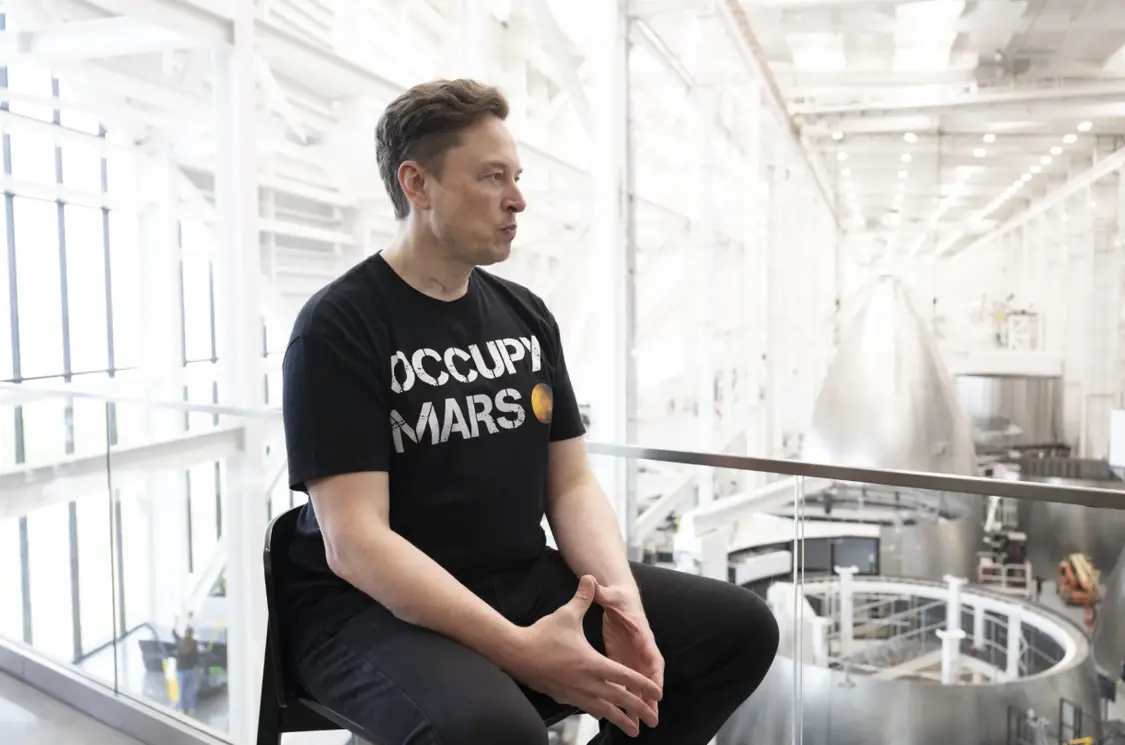
SpaceX 的 IPO 是重大的金融事件,可能重塑深科技與 AI 基礎設施的融資格局。
30 秒速覽
有什麼變化
SpaceX 已正式提交 IPO 招股書。
為什麼重要
SpaceX 的成功上市將對資本市場產生重大影響,並為後續的太空及 AI 相關研發提供龐大的流動資金。
下一步行動
密切關注 SpaceX 的 IPO 招股書,從中獲取關於其 AI 驅動的自動飛行及衛星通訊基礎設施的洞察。
誰應關注:Founders & Product Leaders
關鍵要點
- •SpaceX 已正式提交 IPO 招股書。
- •Elon Musk 持有約 51 億股 SpaceX 股票及 3.5 億份期權。
- •SpaceX 的資產估值使 Elon Musk 有望成為萬億富翁。
關鍵數字$40 billion$80 billion$1.7543%
深度解析
背景與延伸:來自公開資料,非原文內容。引用 25 個來源。
增強重點摘要
- •SpaceX's IPO is projected to be the largest in history, aiming to raise between $40 billion and $80 billion and potentially valuing the company at over $1.75 trillion, significantly surpassing Saudi Aramco's previous record.
- •Elon Musk maintains substantial control over SpaceX through a dual-class share structure, holding approximately 42-43% of the equity while commanding roughly 79-85.1% of the voting rights, ensuring his decision-making authority post-IPO.
- •The valuation driving Musk's potential trillionaire status is bolstered by the February 2026 merger of SpaceX with his AI startup xAI, which valued the combined entity at $1.25 trillion and is the entity expected to go public.
- •SpaceX's financial performance in 2025 included an estimated $18.67 billion in revenue, with its Starlink satellite internet division being the sole profitable segment, generating $11.4 billion in revenue and $4.4 billion in operating income.
- •Musk's net worth experienced rapid growth, reaching $500 billion by October 2025, with his stakes in Tesla, SpaceX, and xAI being the primary drivers of this wealth accumulation.
競品分析
Primary Service
- SpaceX (Starlink)
- Satellite Internet, Launch Services
- Amazon (Project Kuiper)
- Satellite Internet
- OneWeb
- Satellite Internet
Satellites in Orbit (as of early 2026)
- SpaceX (Starlink)
10,020 (planned up to 34,400)
- Amazon (Project Kuiper)
- First satellites launched April 2025 (planned 3,236)
- OneWeb
500 (planned ~630)
Subscribers (as of early 2026)
- SpaceX (Starlink)
- 10 million
- Amazon (Project Kuiper)
- N/A (early deployment)
- OneWeb
- Providing service in select regions (e.g., Alaska, Canada, Northern Europe)
Latency
- SpaceX (Starlink)
- ~25-35 ms
- Amazon (Project Kuiper)
- Target: Low latency
- OneWeb
- Target: Low latency
Max Speed
- SpaceX (Starlink)
- Up to 1 Gbit/s
- Amazon (Project Kuiper)
- N/A (in development)
- OneWeb
- N/A (in development)
Satellite Weight
- SpaceX (Starlink)
- v1: 260 kg; v2 mini: 740 kg; v2: 1,250 kg
- Amazon (Project Kuiper)
- N/A
- OneWeb
- 150 kg
Propulsion System
- SpaceX (Starlink)
- Krypton-powered ion thrusters (some sources say argon)
- Amazon (Project Kuiper)
- N/A
- OneWeb
- N/A
Launch Vehicles Used
- SpaceX (Starlink)
- Falcon 9 (SpaceX's own)
- Amazon (Project Kuiper)
- ULA Atlas V, Arianespace Ariane 6, Blue Origin New Glenn
- OneWeb
- Russian Soyuz (historically), Indian rockets, SpaceX Falcon 9
| Feature/Service | SpaceX (Starlink) | Amazon (Project Kuiper) | OneWeb |
|---|---|---|---|
| Primary Service | Satellite Internet, Launch Services | Satellite Internet | Satellite Internet |
| Satellites in Orbit (as of early 2026) | 10,020 (planned up to 34,400) | First satellites launched April 2025 (planned 3,236) | 500 (planned ~630) |
| Subscribers (as of early 2026) | 10 million | N/A (early deployment) | Providing service in select regions (e.g., Alaska, Canada, Northern Europe) |
| Latency | ~25-35 ms | Target: Low latency | Target: Low latency |
| Max Speed | Up to 1 Gbit/s | N/A (in development) | N/A (in development) |
| Satellite Weight | v1: 260 kg; v2 mini: 740 kg; v2: 1,250 kg | N/A | 150 kg |
| Propulsion System | Krypton-powered ion thrusters (some sources say argon) | N/A | N/A |
| Launch Vehicles Used | Falcon 9 (SpaceX's own) | ULA Atlas V, Arianespace Ariane 6, Blue Origin New Glenn | Russian Soyuz (historically), Indian rockets, SpaceX Falcon 9 |
技術深入
- Starlink Satellites:
- Feature a compact, flat-panel design to maximize launch efficiency on Falcon 9 rockets.
- Weigh approximately 260 kg for v1, 740 kg for v2 mini, and 1,250 kg for v2 versions.
- Utilize krypton-powered ion thrusters for orbit raising, maneuvering, and deorbiting. (Some sources also mention argon thrusters).
- Equipped with a single solar array (some designs feature dual arrays) and high-capacity batteries for power.
- Incorporate 5 advanced Ku-band phased array antennas and 3 dual-band (Ka-band and E-band) antennas for high-bandwidth connectivity.
- Include 3 space lasers (Optical Intersatellite Links or ISLs) operating at up to 200 Gbps to form a global internet mesh.
- Orbit at approximately 550 km to achieve low latency (around 25-35 ms).
- Designed for autonomous collision avoidance and active deorbiting at the end of their operational life, with 95% of components burning up in Earth's atmosphere.
- Starship System:
- A fully reusable, two-stage-to-orbit super heavy-lift launch system made of stainless steel.
- Comprises the Starship spacecraft (upper stage) and the Super Heavy booster (first stage).
- Starship Spacecraft: 50 meters (164 ft) tall, 9 meters (30 ft) in diameter, with a payload volume of approximately 1,000 cubic meters.
- Super Heavy Booster: 69-71 meters (230 ft) tall, 9 meters (30 ft) in diameter.
- Both stages are powered by Raptor engines, which use liquid methane (CH4) and liquid oxygen (LOX) as propellants (methalox).
- The Starship spacecraft has 6 Raptor engines (3 sea-level optimized, 3 vacuum-optimized).
- The Super Heavy booster is powered by 33 Raptor engines.
- Capable of transporting 100-150 metric tons to Low Earth Orbit (LEO) in a reusable configuration.
- Features a heat shield on the windward side composed of approximately 18,000 hexagonal black tiles, designed to withstand temperatures up to 1,400 °C (2,600 °F) during atmospheric reentry.
前景展望基於引用來源的 AI 分析
SpaceX's IPO will significantly reshape the public equity markets.
The IPO is projected to be the largest in history, aiming to raise $40 billion to $80 billion and valuing the company at over $1.75 trillion, dwarfing previous records set by companies like Saudi Aramco.
Elon Musk's control over SpaceX will remain largely unchallenged despite its public listing.
The dual-class share structure grants him 79-85.1% of voting power, and SpaceX will operate as a 'controlled company,' exempting it from some public company governance rules, thus limiting public shareholders' influence.
The integration of xAI into SpaceX will accelerate the convergence of space technology and artificial intelligence.
The February 2026 merger of SpaceX with xAI, valued at $1.25 trillion, indicates a strategic move to leverage AI for advanced space applications and potentially diversify revenue streams beyond traditional aerospace.
時間線
2002-05
Elon Musk founded Space Exploration Technologies Corp. (SpaceX).
2012
Elon Musk first appeared on the Forbes Billionaires List.
2019-05
SpaceX began launching its Starlink satellite constellation.
2025-10
Elon Musk's net worth reached $500 billion, a historic milestone.
2026-02
SpaceX merged with Elon Musk's AI startup xAI, valuing the combined entity at $1.25 trillion.
2026-05-20
SpaceX officially filed its IPO prospectus with the U.S. Securities and Exchange Commission (SEC).
- 2002-05Elon Musk founded Space Exploration Technologies Corp. (SpaceX).
- 2012Elon Musk first appeared on the Forbes Billionaires List.
- 2019-05SpaceX began launching its Starlink satellite constellation.
- 2025-10Elon Musk's net worth reached $500 billion, a historic milestone.
- 2026-02SpaceX merged with Elon Musk's AI startup xAI, valuing the combined entity at $1.25 trillion.
- 2026-05-20SpaceX officially filed its IPO prospectus with the U.S. Securities and Exchange Commission (SEC).
來源 (25)
Factual claims are grounded in the sources below. Forward-looking analysis is AI-generated interpretation.
1zacks.comvertexaisearch.cloud.google.com2forbes.comvertexaisearch.cloud.google.com3keeptrack.spacevertexaisearch.cloud.google.com4revenuememo.comvertexaisearch.cloud.google.com5businessinsider.comvertexaisearch.cloud.google.com6investinglive.comvertexaisearch.cloud.google.com7heygotrade.comvertexaisearch.cloud.google.com8ig.comvertexaisearch.cloud.google.com9wikipedia.orgvertexaisearch.cloud.google.com10foxbusiness.comvertexaisearch.cloud.google.com11forbes.comvertexaisearch.cloud.google.com12indmoney.comvertexaisearch.cloud.google.com13wikipedia.orgvertexaisearch.cloud.google.com14reddit.comvertexaisearch.cloud.google.com15cbsnews.comvertexaisearch.cloud.google.com16eoportal.orgvertexaisearch.cloud.google.com17installpros.iovertexaisearch.cloud.google.com18starlink.comvertexaisearch.cloud.google.com19ig.spacevertexaisearch.cloud.google.com20qz.comvertexaisearch.cloud.google.com21wikipedia.orgvertexaisearch.cloud.google.com22spacevoyaging.comvertexaisearch.cloud.google.com23uchicago.eduvertexaisearch.cloud.google.com24wevolver.comvertexaisearch.cloud.google.com25satnow.comvertexaisearch.cloud.google.com
AI 週報
閱讀本週精選 AI 大事摘要 →
相關動態
AI 策展新聞聚合。所有內容版權歸原始發布者所有。
原始來源: cnBeta (Full RSS) ↗
每週電子報
每週一封,可隨時退訂。