Economic Risks of Flawed AI Policy
💡Understand policy pitfalls that could derail AI business growth
⚡ 30-Second TL;DR
What Changed
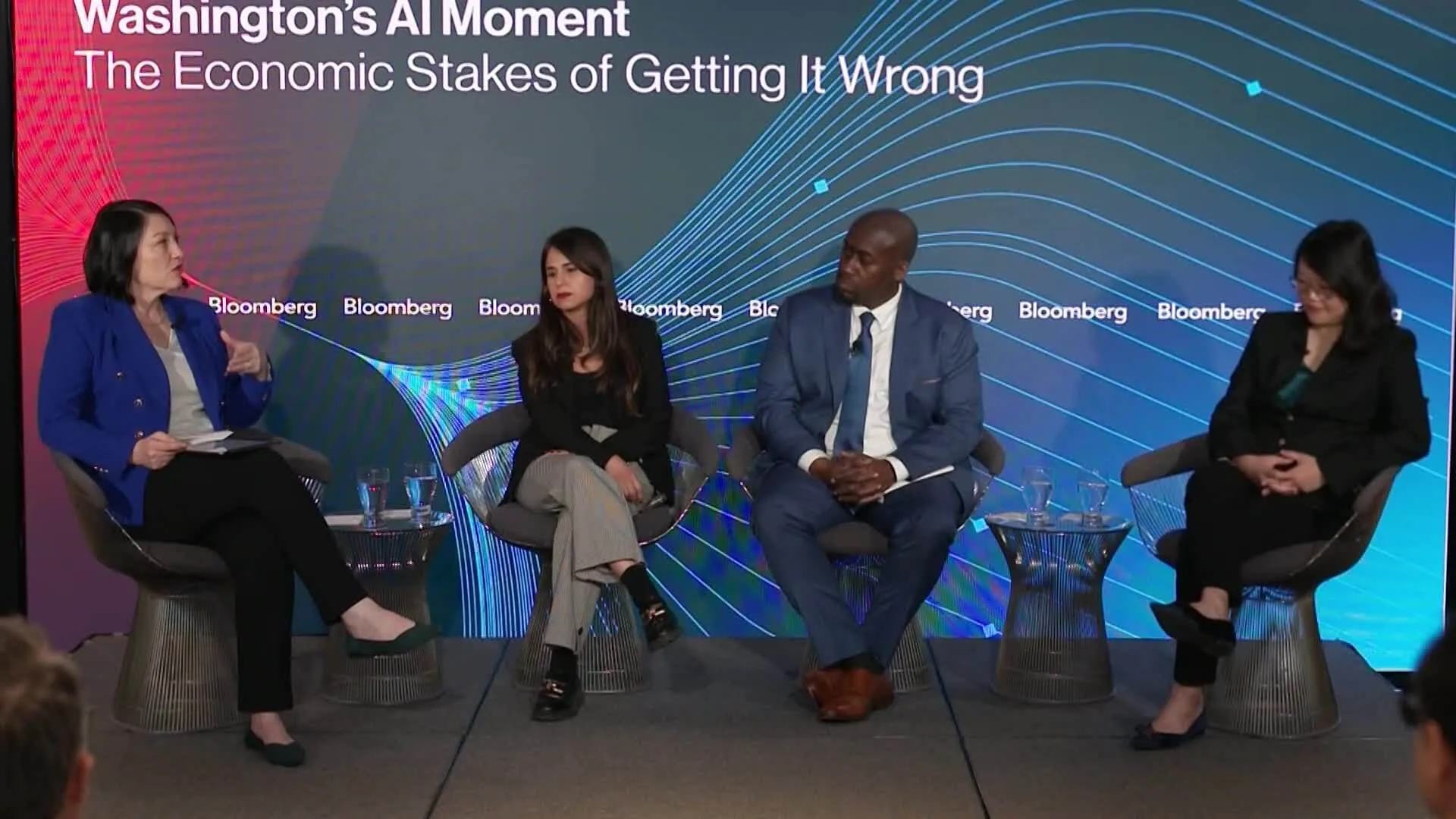
Event focused on economic consequences of poor AI policymaking
Why It Matters
Missteps in AI policy could stifle innovation and economic growth, urging practitioners to engage in policy advocacy. This event highlights growing regulatory scrutiny affecting AI deployment.
What To Do Next
Review Bloomberg's AI policy event recording to inform your regulatory compliance strategy.
Key Points
- •Event focused on economic consequences of poor AI policymaking
- •Held March 11 in Washington DC exclusively for Bloomberg subscribers
- •Panel featured Bloomberg journalists Nancy Cook, Shirin Ghaffary, Mario Parker, Anna Wong
🧠 Deep Insight
Background and context from public sources — not the original article. 1 sources cited.
🔑 Enhanced Key Takeaways
- •US trade deficits are structurally driven by savings-investment imbalances rather than tariffs alone, with AI investment booms widening current account deficits regardless of trade policy[1]
- •S&P 500 firms face existential competitive pressure to develop AI strategies, as companies without AI capabilities risk disruption from tech competitors and internal obsolescence[1]
- •Monetary policy rate cuts during full employment risk fueling inflation that disproportionately harms working-class populations; addressing inequality requires education and skills retraining rather than rate reduction[1]
🔮 Future ImplicationsAI analysis grounded in cited sources
⏳ Timeline
📎 Sources (1)
Factual claims are grounded in the sources below. Forward-looking analysis is AI-generated interpretation.
Weekly AI Recap
Read this week's curated digest of top AI events →
👉Related Updates


AI-curated news aggregator. All content rights belong to original publishers.
Original source: Bloomberg Technology ↗
This is a summary, not the original. Read the source, or get the weekly briefing.
Weekly AI briefing
One email a week. Unsubscribe anytime.