DJI and Insta360 Dominate Global Smart Camera Market
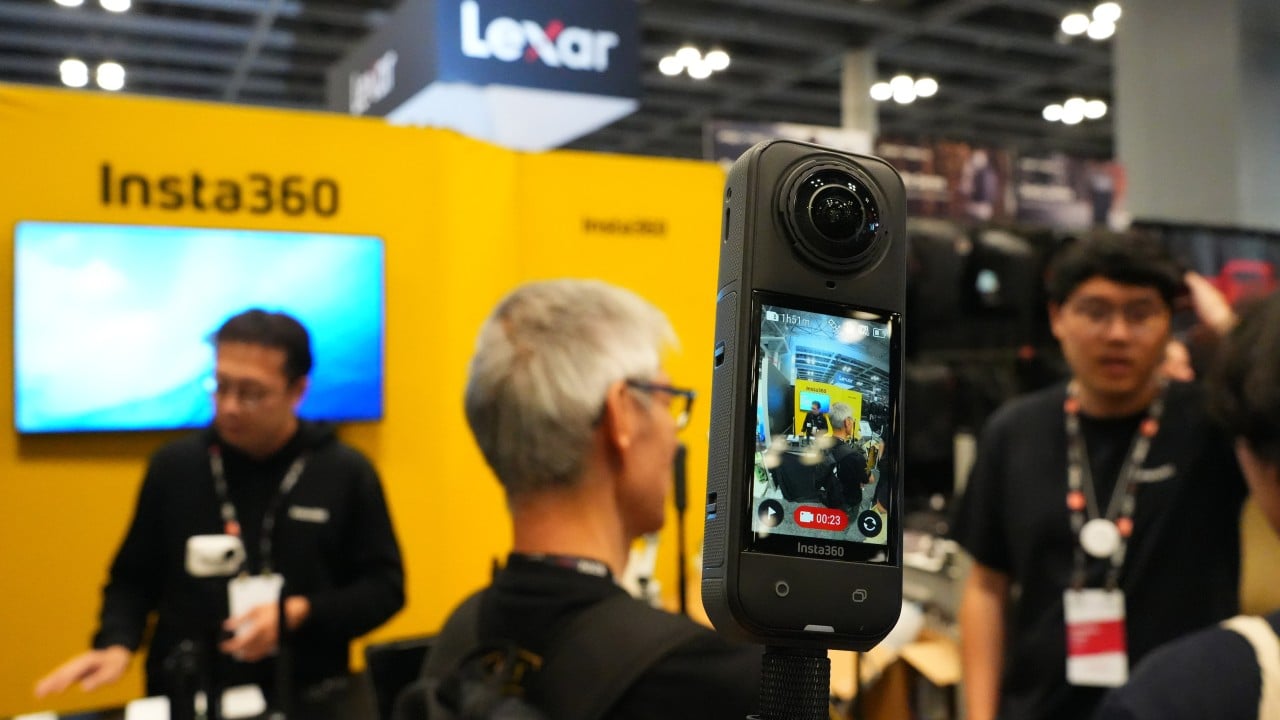
💡Understand how edge-AI hardware dominance is shifting from US legacy brands to Chinese manufacturers.
⚡ 30-Second TL;DR
What Changed
DJI and Insta360 account for nearly 90% of global smart camera shipments.
Why It Matters
The shift toward integrated edge-AI hardware suggests that consumer imaging is becoming a software-defined industry. Developers should monitor how these companies leverage proprietary AI algorithms to differentiate their hardware.
What To Do Next
Analyze the SDKs provided by DJI or Insta360 to explore integrating custom computer vision models into edge-based imaging workflows.
Key Points
- •DJI and Insta360 account for nearly 90% of global smart camera shipments.
- •Market growth is driven by demand for devices with onboard computing and stabilization.
- •US pioneer GoPro is losing significant market share to these Chinese competitors.
- •Q1 shipments reached 4.14 million units globally.
🧠 Deep Insight
AI-generated analysis for this event — not the original article.
🔑 Enhanced Key Takeaways
- •DJI's expansion into the handheld market was significantly accelerated by the 2020 launch of the DJI Pocket 2, which leveraged their existing drone gimbal miniaturization technology.
- •Insta360 has successfully pivoted from 360-degree niche cameras to the broader action camera market through the modular design of the ONE RS and the compact form factor of the GO series.
- •Geopolitical trade restrictions and tariffs have forced both companies to diversify their manufacturing footprints beyond mainland China, with some assembly operations moving to Southeast Asia.
- •The integration of proprietary AI-driven 'FlowState' stabilization and 'Deep Track' subject recognition has created a software moat that legacy hardware-focused competitors struggle to replicate.
- •Consumer preference has shifted away from traditional action cameras toward 'lifestyle' cameras that prioritize ease of social media content creation over extreme sports durability.
📊 Competitor Analysis▸ Show
| Feature | DJI (Osmo Series) | Insta360 (Ace/X Series) | GoPro (HERO Series) |
|---|---|---|---|
| Stabilization | Mechanical 3-Axis Gimbal | AI-based Electronic (FlowState) | Electronic (HyperSmooth) |
| Primary USP | Cinematic smoothness | 360/Modular versatility | Durability/Brand heritage |
| Pricing Strategy | Mid-to-High Premium | Competitive/Feature-rich | Premium/Subscription-based |
| AI Integration | High (ActiveTrack) | Very High (Auto-Edit) | Moderate (Quik App) |
🛠️ Technical Deep Dive
- Sensor Architecture: Both companies have shifted toward 1/1.3-inch large-format sensors to improve low-light performance compared to traditional 1/2.3-inch sensors.
- Stabilization Implementation: DJI utilizes physical brushless motors for mechanical gimbal stabilization, whereas Insta360 relies on 6-axis gyroscopic data processed through proprietary neural networks to achieve software-based horizon leveling.
- Onboard Computing: Utilization of custom-designed SoCs (System on Chips) that prioritize H.265/HEVC encoding efficiency to manage high-bitrate 4K/8K footage without thermal throttling.
- Connectivity: Implementation of ultra-low latency Wi-Fi 6 protocols for real-time mobile app preview and rapid wireless file transfer.
🔮 Future ImplicationsAI analysis grounded in cited sources
⏳ Timeline
Weekly AI Recap
Read this week's curated digest of top AI events →
👉Related Updates


AI-curated news aggregator. All content rights belong to original publishers.
Original source: SCMP Technology ↗
This is a summary, not the original. Read the source, or get the weekly briefing.
Weekly AI briefing
One email a week. Unsubscribe anytime.