📱Engadget•Stalecollected in 51m
Curiosity drill stuck, Arctic seafloor sounds
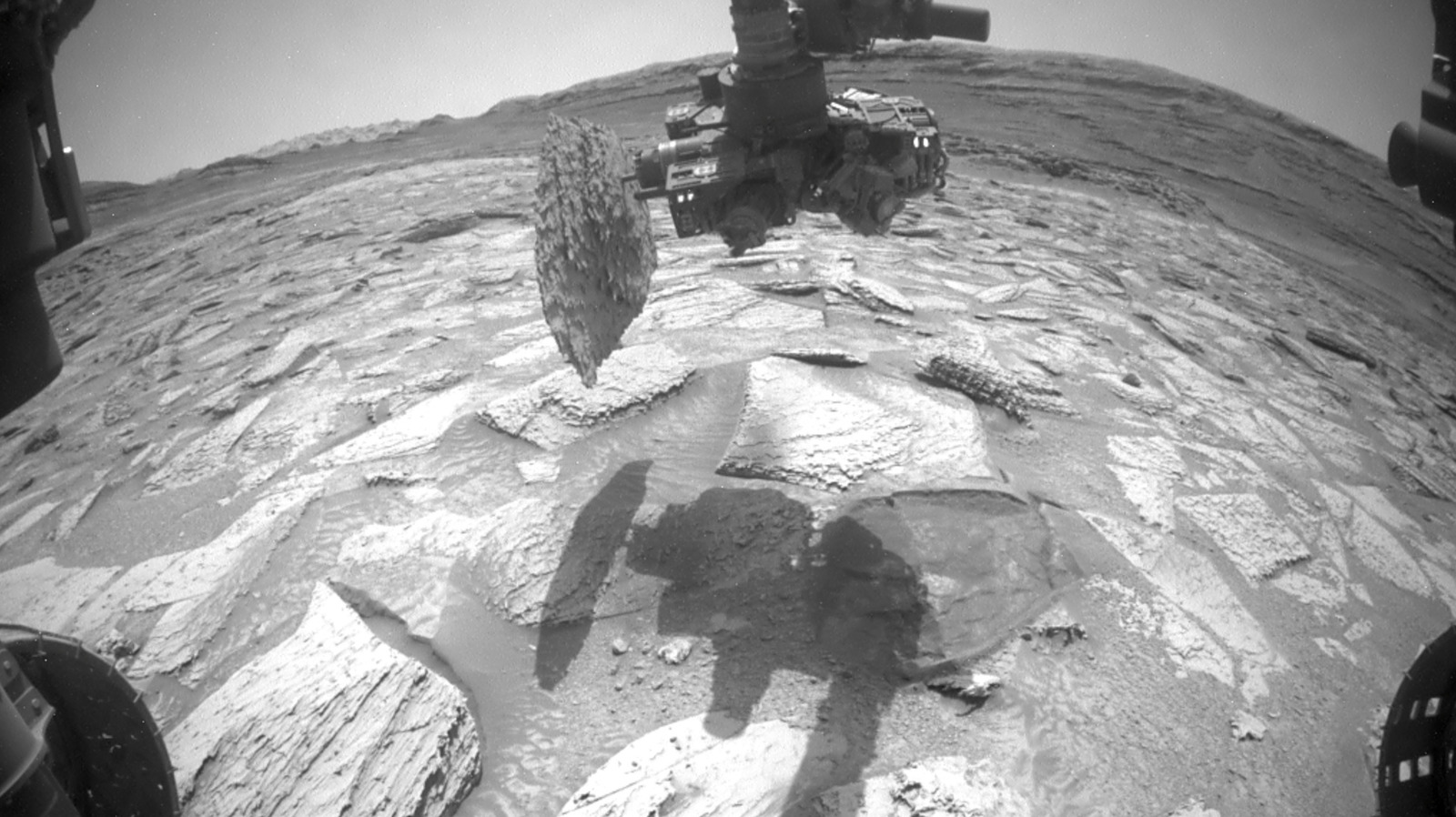
💡Real Mars rover failure data for training robust embodied AI robotics—key lessons for devs
⚡ 30-Second TL;DR
What Changed
Curiosity rover drill fails to operate
Why It Matters
Exposes hardware challenges in long-duration robotic missions critical for embodied AI. Advances acoustic monitoring tech applicable to underwater AI sensors. Informs reliability strategies for space robotics.
What To Do Next
Download NASA's Curiosity telemetry data to train AI models for robotic drill failure detection and recovery.
Who should care:Researchers & Academics
Key Points
- •Curiosity rover drill fails to operate
- •Arctic seafloor acoustic recordings released
- •Weekly roundup of science stories
- •Focus on planetary and earth exploration
🧠 Deep Insight
AI-generated analysis for this event.
🔑 Enhanced Key Takeaways
- •The Curiosity rover's drill mechanism experienced a 'percussive' failure, a known issue that previously required NASA engineers to develop a new 'Feed Extended Drilling' (FED) technique to bypass the broken motor.
- •The Arctic seafloor acoustic data was captured by the 'Deep-Ocean Assessment and Reporting of Tsunamis' (DART) buoy network, which is being repurposed to monitor climate-driven changes in underwater ambient noise.
- •NASA's Mars Science Laboratory mission has transitioned into an extended mission phase, prioritizing high-altitude geological sampling in the Gale Crater to analyze sedimentary layers for ancient organic compounds.
🛠️ Technical Deep Dive
- •Curiosity Drill Mechanism: Utilizes a rotary-percussive drill bit assembly; the failure involves the feed mechanism motor which pushes the bit into the rock surface.
- •FED Technique: A software-based workaround that uses the rover's robotic arm joints to apply force, rather than relying on the dedicated drill feed motor.
- •Acoustic Data Collection: Employs hydrophone arrays capable of recording low-frequency ambient noise (10Hz to 2kHz) to detect ice-cracking and biological movement in the Arctic basin.
🔮 Future ImplicationsAI analysis grounded in cited sources
NASA will prioritize software-based hardware workarounds for future Mars missions.
The success of the FED technique demonstrates that complex mechanical failures can be mitigated through remote software updates, reducing the need for physical repairs.
Arctic acoustic monitoring will become a standard metric for climate change impact studies.
The integration of seafloor audio data provides a non-invasive method to track ecosystem shifts and ice-shelf stability in previously inaccessible regions.
⏳ Timeline
2012-08
Curiosity rover successfully lands in Gale Crater, Mars.
2016-12
Curiosity's drill feed mechanism experiences a mechanical failure, halting drilling operations.
2018-05
NASA engineers successfully implement the 'Feed Extended Drilling' (FED) technique.
2023-09
Deployment of upgraded hydrophone sensors in the Arctic seafloor network.
📰
Weekly AI Recap
Read this week's curated digest of top AI events →
👉Related Updates
AI-curated news aggregator. All content rights belong to original publishers.
Original source: Engadget ↗