Court orders Tesla to refund FSD purchase
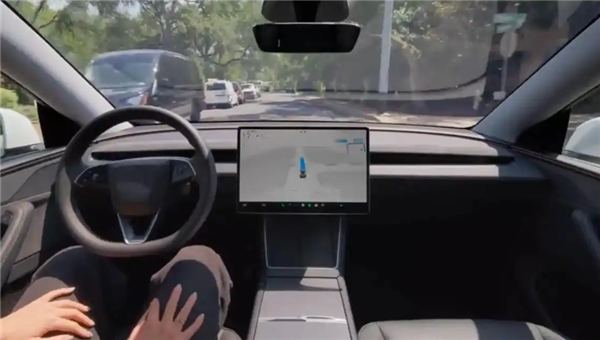
Legal precedent for AI marketing claims: See why a user successfully sued Tesla over FSD delivery failures.
30-Second TL;DR
What Changed
Oracle director won a lawsuit against Tesla for unfulfilled FSD promises
Why It Matters
This ruling sets a potential precedent for consumer protection in AI-driven product marketing, forcing companies to be more transparent about feature timelines.
What To Do Next
If you are building AI products, ensure marketing materials clearly distinguish between current capabilities and future roadmap features to avoid liability.
Key Points
- •Oracle director won a lawsuit against Tesla for unfulfilled FSD promises
- •Court issued a default judgment for over $10,000
- •Case highlights legal risks for companies failing to deliver on autonomous driving marketing claims
Deep Insight
Background and context from public sources — not the original article. 22 sources cited.
Enhanced Key Takeaways
- •The Oracle director, identified as Ben Gawiser, won a default judgment of $10,600 plus court costs in a Texas small claims court after Tesla failed to appear despite being notified.
- •A crucial factor in Gawiser's successful lawsuit was Elon Musk's recent admission that older Tesla vehicles equipped with Hardware 3 (HW3), such as Gawiser's August 2021 Model 3, would not be capable of unsupervised Full Self-Driving without a significant hardware upgrade.
- •This individual case is part of a broader legal challenge, including a certified class action lawsuit in California, allowing claims on behalf of customers who purchased FSD or Enhanced Autopilot between October 2016 and July 2024 based on allegedly misleading marketing, with potential financial exposure for Tesla reaching hundreds of millions of dollars.
- •In December 2025, a California court ruled that Tesla's marketing terms 'Full Self-Driving' and 'Autopilot' were 'actually, unambiguously false and counterfactual,' authorizing the California DMV to suspend Tesla's sales license for 30 days if the company fails to update its marketing to accurately reflect the Level 2 nature of its systems.
Competitor Analysis
- Tesla Full Self-Driving (FSD)
- Level 2 (Supervised)
- Ford BlueCruise
- Level 2 (Hands-free on mapped highways)
- GM Super Cruise
- Level 2 (Hands-free on mapped highways)
- Waymo/Cruise (Robotaxi)
- Level 4/5 (Fully autonomous in geo-fenced areas)
- Tesla Full Self-Driving (FSD)
- $12,000 one-time purchase or $199/month subscription
- Ford BlueCruise
- $49.99/month or $495/year after 90-day trial
- GM Super Cruise
- Subscription-based (details vary by model/year)
- Waymo/Cruise (Robotaxi)
- Per-mile pricing (e.g., Cruise at $0.90/mile)
- Tesla Full Self-Driving (FSD)
- Camera-only (Tesla Vision)
- Ford BlueCruise
- Cameras, radar, ultrasonic sensors (often with LiDAR for mapping)
- GM Super Cruise
- Cameras, radar, ultrasonic sensors (often with LiDAR for mapping)
- Waymo/Cruise (Robotaxi)
- LiDAR, radar, cameras
- Tesla Full Self-Driving (FSD)
- Selling advanced driver-assistance directly to individual car owners
- Ford BlueCruise
- Hands-free driving on pre-mapped highways for consumers
- GM Super Cruise
- Hands-free driving on pre-mapped highways for consumers
- Waymo/Cruise (Robotaxi)
- Fully autonomous ride-hailing services (robotaxis)
| Feature/Product | Tesla Full Self-Driving (FSD) | Ford BlueCruise | GM Super Cruise | Waymo/Cruise (Robotaxi) |
|---|---|---|---|---|
| Autonomy Level | Level 2 (Supervised) | Level 2 (Hands-free on mapped highways) | Level 2 (Hands-free on mapped highways) | Level 4/5 (Fully autonomous in geo-fenced areas) |
| Pricing Model | $12,000 one-time purchase or $199/month subscription | $49.99/month or $495/year after 90-day trial | Subscription-based (details vary by model/year) | Per-mile pricing (e.g., Cruise at $0.90/mile) |
| Sensor Suite | Camera-only (Tesla Vision) | Cameras, radar, ultrasonic sensors (often with LiDAR for mapping) | Cameras, radar, ultrasonic sensors (often with LiDAR for mapping) | LiDAR, radar, cameras |
| Primary Focus | Selling advanced driver-assistance directly to individual car owners | Hands-free driving on pre-mapped highways for consumers | Hands-free driving on pre-mapped highways for consumers | Fully autonomous ride-hailing services (robotaxis) |
Technical Deep Dive
- Hardware Evolution: Tesla's FSD hardware has evolved significantly, starting with Mobileye EyeQ3 (HW1, 2014-2016), then NVIDIA Drive PX2A (HW2/2.5, 2016-2019), and moving to its custom-designed FSD chip (HW3, introduced April 2019). The latest is Hardware 4 (HW4), which began shipping in January 2023.
- FSD Chip (HW3): This custom chip boasts 6 billion transistors, performs 144 trillion operations per second, and processes 2,300 frames per second, providing a robust foundation for FSD capabilities.
- Sensor Suite: Tesla initially used cameras, radar, and ultrasonic sensors. However, it transitioned to a vision-only approach (Tesla Vision) by dropping radar support in 2021 and ultrasonic sensors in 2022, relying exclusively on eight cameras for 360-degree coverage.
- Software Architecture (FSD v12): Tesla's FSD version 12, internally released to employees in late 2023, represents a radical shift from traditional rule-based C++ code (over 300,000 lines in v11) to an end-to-end neural network architecture.
- End-to-End AI: FSD v12 learns by observing millions of hours of human driving, processing raw camera inputs to directly output steering, acceleration, and braking commands through a single neural network pipeline. This system comprises 48 distinct neural networks working in concert to transform 2D camera images into 3D spatial understanding.
Future ImplicationsAI analysis grounded in cited sources
Timeline
- 2016-10Tesla announces all new cars have hardware for full self-driving; Elon Musk predicts fully autonomous drive by end of next year.
- 2019-04Tesla Autonomy Day, unveils custom-designed FSD chip (HW3).
- 2020-10First FSD Beta rolled out to select owners.
- 2021-07FSD Beta V9 released, adopting a vision-only approach.
- 2023-11FSD V12 internally released to employees, relying entirely on neural networks.
- 2025-08California federal judge certifies a class action lawsuit against Tesla for misleading FSD marketing.
- 2025-12California court rules Tesla's FSD marketing deceptive, authorizes DMV to suspend sales license if not corrected.
- 2026-04Ben Gawiser wins default judgment against Tesla for FSD refund in Texas small claims court.
Sources (22)
Factual claims are grounded in the sources below. Forward-looking analysis is AI-generated interpretation.
Weekly AI Recap
Read this week's curated digest of top AI events →
Related Updates
AI-curated news aggregator. All content rights belong to original publishers.
Original source: cnBeta (Full RSS) ↗
This is a summary, not the original. Read the source, or get the weekly briefing.
The weekly digest
One email a week. Unsubscribe anytime.