China’s BCI Race Has Three Front-Runners
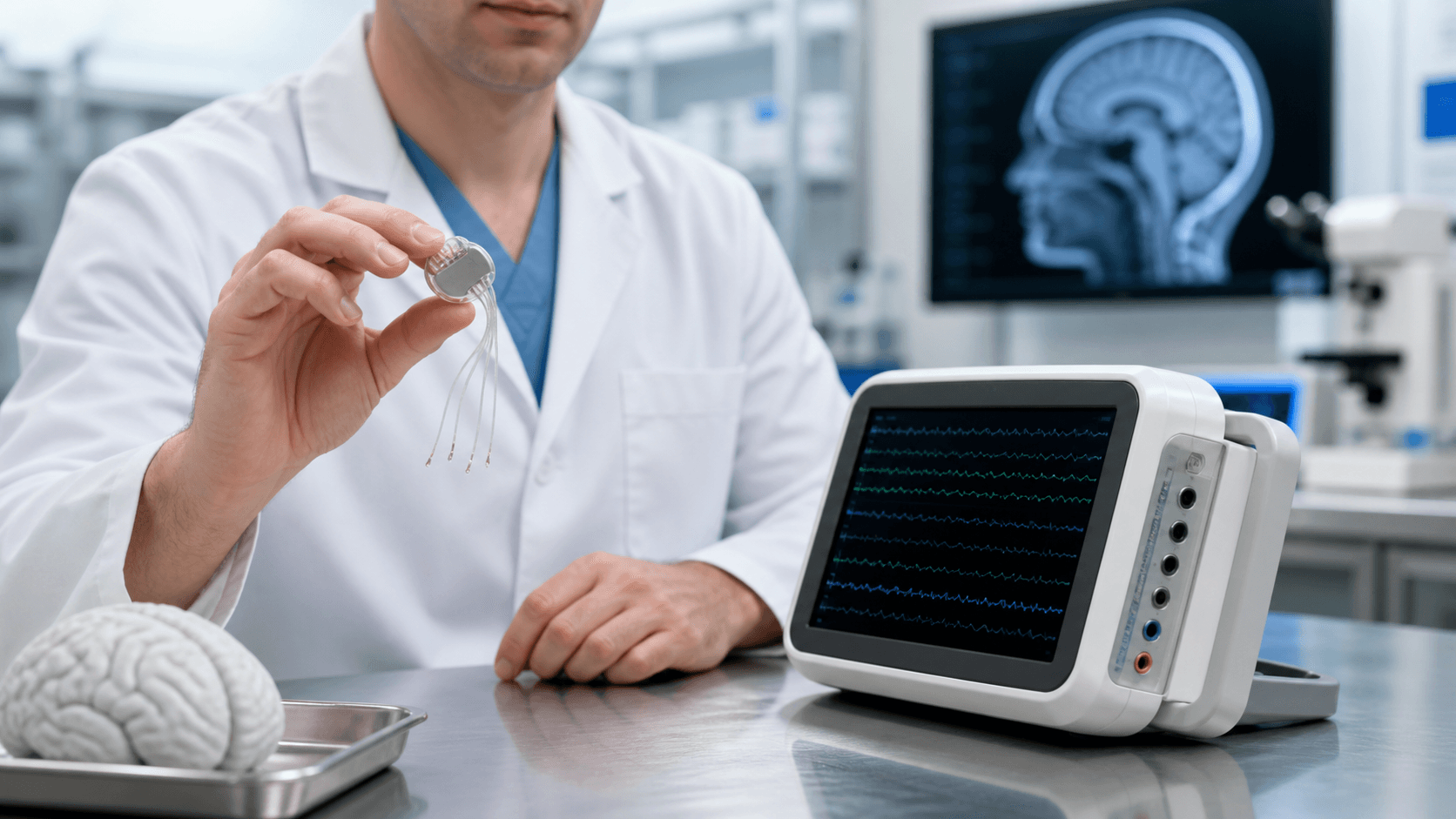
China’s first registered invasive BCI signals a regulatory lead—but three technologies still compete.
30-Second TL;DR
What Changed
Neuracle NEO is described as the world’s first registered invasive BCI.
Why It Matters
Regulatory approval may become a competitive advantage for BCI companies, but clinical leadership will depend on safety, bandwidth, usability, and long-term evidence. For AI and neurotechnology builders, the market remains open across multiple hardware and clinical strategies.
What To Do Next
Map your BCI project against the three Chinese technical routes and review FDA requirements for the corresponding invasive-device classification before planning clinical trials.
Key Points
- •Neuracle NEO is described as the world’s first registered invasive BCI.
- •The regulatory milestone does not establish one dominant BCI technology.
- •Chinese teams are pursuing semi-invasive, full-bandwidth wireless, and ultra-flexible cortical approaches.
- •These approaches are competing with Neuralink in the FDA approval race.
Deep Insight
AI-generated analysis for this event — not the original article.
Enhanced Key Takeaways
- •Neuracle's NEO system utilizes a high-density, multi-channel electrode array designed for long-term implantation, specifically targeting motor cortex signal acquisition for paralysis rehabilitation.
- •The Chinese government's 'Brain Project' (China Brain Project) has provided significant state funding and policy support, accelerating the transition of BCI research from academic labs to commercial clinical trials.
- •Unlike Neuralink's robotic-insertion approach, several Chinese BCI firms are prioritizing minimally invasive surgical techniques to reduce patient recovery time and infection risks.
- •Regulatory pathways in China have been streamlined through the National Medical Products Administration (NMPA), which established specialized review channels for innovative medical devices like BCIs.
- •The competition includes firms like NeuraMatrix and various academic-industrial partnerships that are focusing on ultra-low-power integrated circuits to extend the battery life of implanted devices.
Competitor Analysis
- Neuracle (NEO)
- Invasive (Cortical)
- Neuralink (N1)
- Invasive (Cortical)
- Synchron (Stentrode)
- Minimally Invasive (Endovascular)
- Neuracle (NEO)
- Surgical Craniotomy
- Neuralink (N1)
- Robotic Implantation
- Synchron (Stentrode)
- Catheter-based (Blood Vessel)
- Neuracle (NEO)
- Motor Cortex
- Neuralink (N1)
- Motor Cortex
- Synchron (Stentrode)
- Motor Cortex (via SSS)
- Neuracle (NEO)
- NMPA Registered
- Neuralink (N1)
- FDA IDE / Clinical Trials
- Synchron (Stentrode)
- FDA IDE / Clinical Trials
| Feature | Neuracle (NEO) | Neuralink (N1) | Synchron (Stentrode) |
|---|---|---|---|
| Invasiveness | Invasive (Cortical) | Invasive (Cortical) | Minimally Invasive (Endovascular) |
| Insertion Method | Surgical Craniotomy | Robotic Implantation | Catheter-based (Blood Vessel) |
| Primary Target | Motor Cortex | Motor Cortex | Motor Cortex (via SSS) |
| Regulatory Status | NMPA Registered | FDA IDE / Clinical Trials | FDA IDE / Clinical Trials |
Technical Deep Dive
- Electrode Array: Utilizes high-density micro-electrode arrays designed for high-fidelity neural signal recording from the cerebral cortex.
- Signal Processing: Employs on-chip signal amplification and digitization to minimize noise interference before wireless transmission.
- Wireless Power: Incorporates inductive coupling technology for transcutaneous power transfer, reducing the need for bulky internal batteries.
- Data Bandwidth: Supports high-throughput data transmission to external decoders, enabling real-time motor intent decoding.
- Biocompatibility: Uses advanced polymer coatings to mitigate the foreign body response and maintain signal stability over extended periods.
Future ImplicationsAI analysis grounded in cited sources
Timeline
- 2021-05Neuracle Technology is founded in Beijing to focus on clinical BCI applications.
- 2023-11Neuracle initiates pilot clinical studies for its invasive BCI system in Chinese hospitals.
- 2026-03Neuracle's NEO system receives official registration as an invasive BCI device.
Weekly AI Recap
Read this week's curated digest of top AI events →
Related Updates



AI-curated news aggregator. All content rights belong to original publishers.
Original source: Pandaily ↗
This is a summary, not the original. Read the source, or get the weekly briefing.
The weekly digest
One email a week. Unsubscribe anytime.