China Sets First L3/L4 Driving Safety Standard
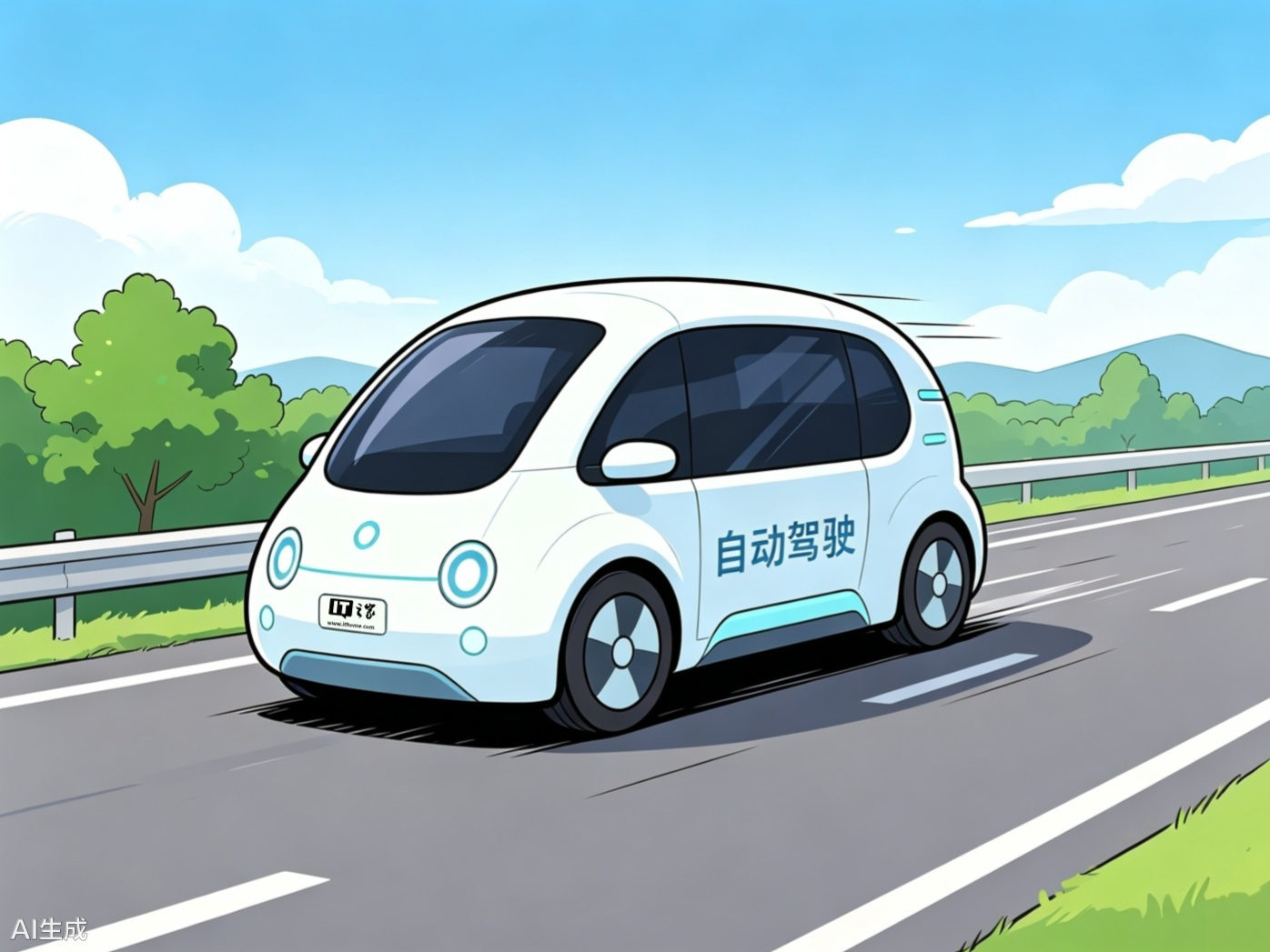
China’s first mandatory L3/L4 safety standard could reshape autonomous-driving deployment and testing requirements.
30-Second TL;DR
What Changed
The standard is named Intelligent Connected Vehicle—Safety Requirements for Autonomous Driving Systems.
Why It Matters
The regulation creates a formal safety-compliance baseline for deploying higher-level autonomous-driving systems in China. Developers and vehicle manufacturers may need to align system validation, monitoring, and operational safety processes with the forthcoming requirements.
What To Do Next
Create a compliance checklist for your L3/L4 stack and map each safety-validation artifact to GB 44721—2026 before the 2027 enforcement date.
Key Points
- •The standard is named Intelligent Connected Vehicle—Safety Requirements for Autonomous Driving Systems.
- •It applies specifically to L3 conditional automation and L4 high automation systems.
- •The mandatory standard was organized and administered by China’s Ministry of Industry and Information Technology.
- •Implementation is planned for July 1, 2027, giving manufacturers time to prepare for compliance.
Deep Insight
AI-generated analysis for this event — not the original article.
Enhanced Key Takeaways
- •GB 44721—2026 mandates specific 'fallback performance' requirements, requiring vehicles to safely reach a minimal risk condition (MRC) if the autonomous system encounters a critical failure.
- •The standard introduces strict data logging requirements, necessitating that vehicles record sensor data and system status for at least 30 seconds prior to any collision or system disengagement.
- •It establishes a cybersecurity framework that requires manufacturers to demonstrate protection against unauthorized remote access and data tampering as a prerequisite for L3/L4 certification.
- •The regulation mandates that L3 systems must include a 'Human-Machine Interface' (HMI) that can reliably detect driver alertness and issue escalating warnings before requesting a handover.
- •Compliance with this standard is now a prerequisite for obtaining mass-production permits for autonomous vehicles in China, effectively phasing out pilot-only regulatory frameworks.
Technical Deep Dive
- Defines Minimal Risk Condition (MRC) as the state to which a vehicle must transition when a system failure occurs, prioritizing stopping in a safe location or on the shoulder.
- Mandates Event Data Recorder (EDR) specifications that must capture high-fidelity telemetry, including steering angle, braking pressure, and object detection confidence scores.
- Requires redundant hardware architecture for critical systems, specifically mandating dual-path communication for steering and braking actuators to ensure fail-operational capabilities.
- Specifies environmental testing parameters, requiring systems to maintain operational safety in adverse weather conditions including heavy rain, fog, and low-light scenarios as defined by standardized test tracks.
Future ImplicationsAI analysis grounded in cited sources
Timeline
- 2021-08MIIT issues guidelines on strengthening the management of intelligent connected vehicle production.
- 2022-08Shenzhen implements the first local regulation allowing L3/L4 vehicles on public roads.
- 2023-11MIIT and four other departments launch pilot programs for L3/L4 autonomous vehicle road testing.
- 2026-06Final review and approval of GB 44721—2026 by the State Administration for Market Regulation.
Weekly AI Recap
Read this week's curated digest of top AI events →
Related Updates


AI-curated news aggregator. All content rights belong to original publishers.
Original source: cnBeta (Full RSS) ↗
This is a summary, not the original. Read the source, or get the weekly briefing.
The weekly digest
One email a week. Unsubscribe anytime.