China Includes Space Solar Power in 15th Five-Year Plan
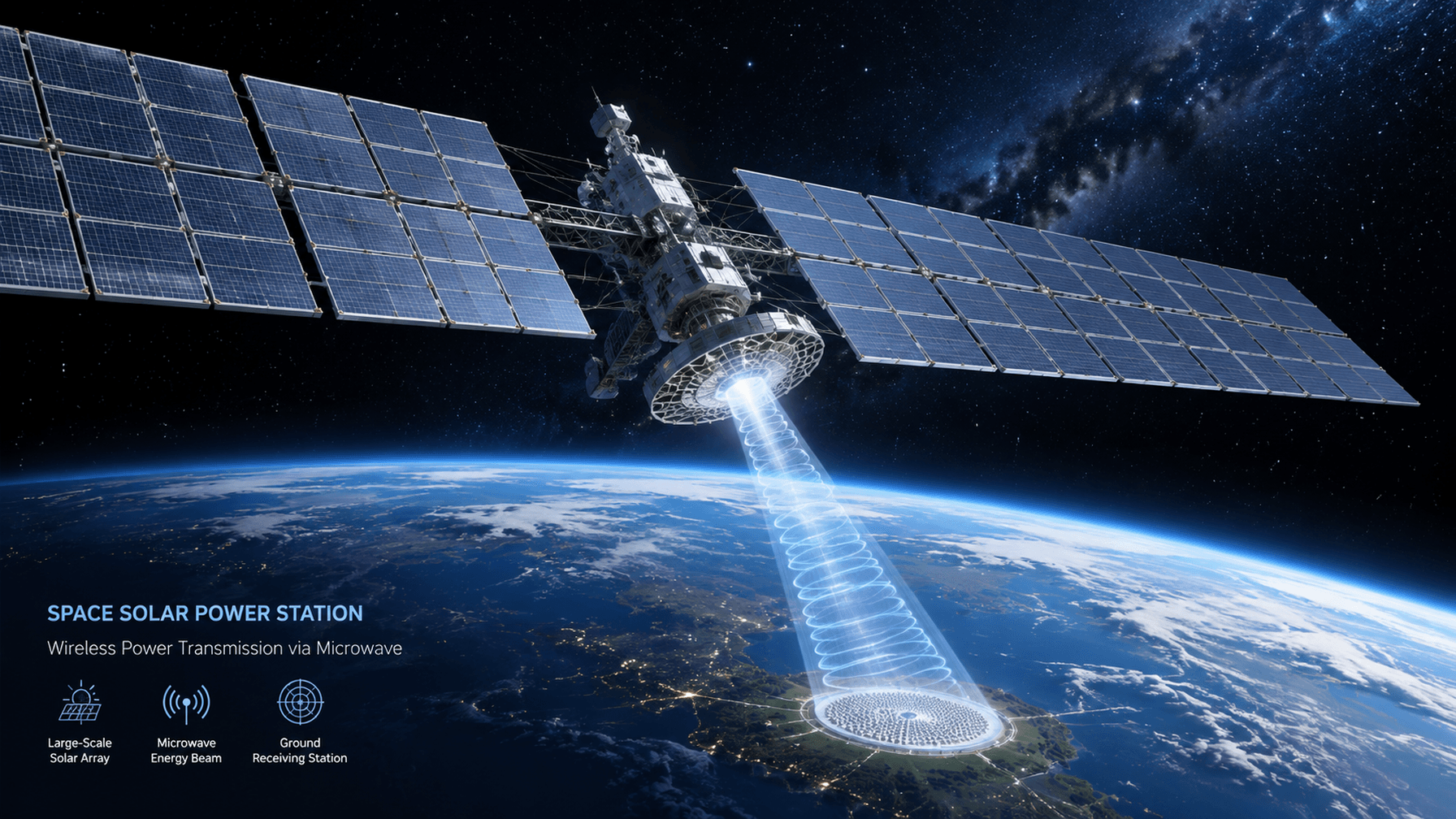
Massive government investment in space energy infrastructure creates new opportunities for AI-driven orbital robotics.
30-Second TL;DR
What Changed
Space solar power officially recognized in national strategic planning.
Why It Matters
This initiative will drive massive demand for autonomous orbital robotics and AI-driven energy grid management systems in space.
What To Do Next
Research wireless power transmission protocols and autonomous swarm robotics control, as these will be critical for managing orbital power infrastructure.
Key Points
- •Space solar power officially recognized in national strategic planning.
- •Three-pronged technical roadmap: energy materials, wireless transmission, and orbital infrastructure.
- •Aims to provide sustainable, high-capacity energy from space to earth.
- •Signals long-term investment in large-scale orbital energy systems.
Deep Insight
AI-generated analysis for this event — not the original article.
Enhanced Key Takeaways
- •The initiative is spearheaded by the China Academy of Space Technology (CAST) and involves the 'Zhuque' (Vermilion Bird) constellation project aimed at multi-megawatt power transmission.
- •China successfully conducted a ground-based wireless power transmission test in 2021, achieving the conversion of solar energy into microwaves and back into electricity over a 30-meter distance.
- •The 15th Five-Year Plan (2026-2030) prioritizes the development of high-efficiency, lightweight flexible solar cells specifically designed to withstand the harsh radiation environment of geostationary orbit.
- •Strategic collaboration has been established between the China Aerospace Science and Technology Corporation (CASC) and major domestic universities, such as Xidian University, to solve beam-steering and phase-control challenges.
- •The project aims to address the 'intermittency' problem of terrestrial renewables by providing a 24/7 baseload power supply, potentially bypassing the need for massive battery storage systems.
Competitor Analysis
- China (SSPS)
- Large-scale orbital infrastructure
- USA (Caltech SSPP)
- Flexible, lightweight modular tiles
- Japan (JAXA)
- Microwave power transmission
- China (SSPS)
- 15th Five-Year Plan integration
- USA (Caltech SSPP)
- Successful space-to-earth demo (MAPLE)
- Japan (JAXA)
- Ground-based testing & orbital roadmap
- China (SSPS)
- National energy independence
- USA (Caltech SSPP)
- Commercial/Academic R&D
- Japan (JAXA)
- Energy security/Disaster relief
| Feature | China (SSPS) | USA (Caltech SSPP) | Japan (JAXA) |
|---|---|---|---|
| Primary Focus | Large-scale orbital infrastructure | Flexible, lightweight modular tiles | Microwave power transmission |
| Current Status | 15th Five-Year Plan integration | Successful space-to-earth demo (MAPLE) | Ground-based testing & orbital roadmap |
| Strategic Goal | National energy independence | Commercial/Academic R&D | Energy security/Disaster relief |
Technical Deep Dive
- Microwave Power Transmission (MPT): Focuses on phased-array antennas capable of beam-forming to maintain high energy density over thousands of kilometers.
- Orbital Assembly: Utilizes modular, robotic assembly techniques to construct kilometers-long solar arrays that are too large for single-launch deployment.
- Energy Conversion: Employs high-efficiency gallium arsenide (GaAs) or perovskite-based solar cells optimized for space-grade power-to-weight ratios.
- Beam Control: Implements retrodirective beacon technology to ensure the microwave beam remains locked onto the ground-based rectifying antenna (rectenna) array.
Future ImplicationsAI analysis grounded in cited sources
Timeline
- 2019-06China announces the 'Zhuque' space solar power station project at the Global Space Exploration Conference.
- 2021-06Xidian University completes a full-system ground demonstration of space-based solar power transmission.
- 2022-06CASC announces the 'OmegA' roadmap, detailing the transition from small-scale testing to megawatt-level orbital stations.
- 2023-12China launches a series of small-scale orbital experiments to test wireless energy transmission components in microgravity.
- 2026-03The 15th Five-Year Plan is finalized, officially elevating space solar power to a national strategic priority.
Weekly AI Recap
Read this week's curated digest of top AI events →
Related Updates



AI-curated news aggregator. All content rights belong to original publishers.
Original source: Pandaily ↗
This is a summary, not the original. Read the source, or get the weekly briefing.
The weekly digest
One email a week. Unsubscribe anytime.