China AI Start-up Funding Triples to US$16B
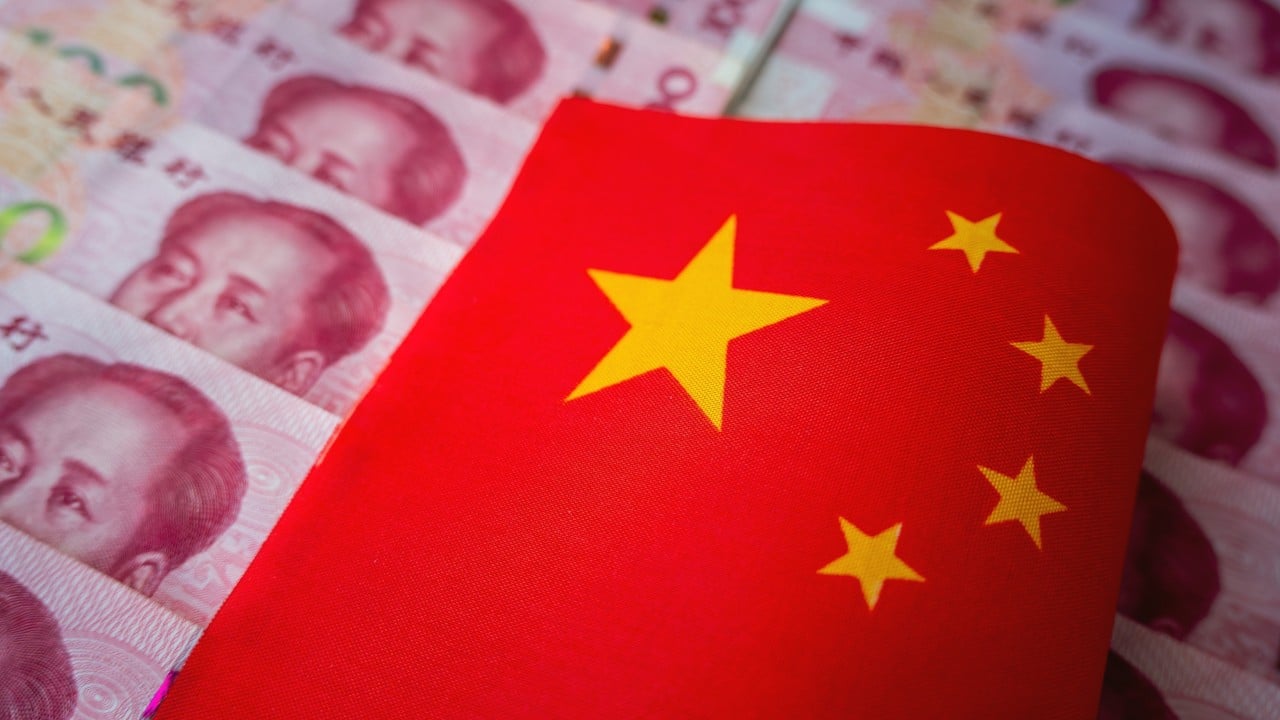
China's AI sector saw a 185% funding surge in Q1, signaling a massive push into LLMs and robotics.
30-Second TL;DR
What Changed
AI start-up funding reached 110 billion yuan (US$16.2 billion) in Q1.
Why It Matters
The massive capital influx suggests an accelerated development cycle for Chinese LLMs and robotics, potentially narrowing the gap with global competitors. Practitioners should monitor these well-funded players for new open-source model releases or hardware breakthroughs.
What To Do Next
Monitor the GitHub repositories and research papers of top-funded Chinese AI labs to identify potential alternatives to Western LLM APIs.
Key Points
- •AI start-up funding reached 110 billion yuan (US$16.2 billion) in Q1.
- •Investment growth is driven by large language models (LLMs) and robotics.
- •The 185% year-on-year surge signals strong investor confidence in China's tech ecosystem.
Deep Insight
Background and context from public sources — not the original article. 21 sources cited.
Enhanced Key Takeaways
- •China's Q1 2026 AI startup funding, reaching US$16.5 billion, constituted 60% of all Asian startup funding, marking the third consecutive quarter of growth after multi-year lows in early 2025.
- •The surge in investment is significantly bolstered by government initiatives, including the 'AI+' policy announced in August 2025, which aims for extensive AI integration across various sectors, and the 'Robot+' initiative to support robotics and AI integration in industrial settings.
- •Prominent Chinese AI startups that secured substantial funding in Q1 2026 include large language model developers like Moonshot AI, which raised $2 billion and is now valued over $20 billion, and embodied AI/robotics companies such as TARS Robotics, which closed a $513 million seed round at a $1.9 billion valuation.
- •Government venture capital funds have played a crucial role in China's AI ecosystem, channeling $912 billion into strategic industries like AI over the past decade, with 23% directed to 1.4 million AI-related firms, often signaling private VC investment.
- •Globally, Q1 2026 saw a record $300 billion in venture capital, with AI companies attracting 81% of these funds, largely concentrated in a few mega-rounds, primarily in the U.S., positioning China as the second-largest market for AI funding.
Technical Deep Dive
- Embodied AI startups are transitioning from pre-programmed hardware to advanced Vision-Language-Action (VLA) models, enabling physical machines to perceive, reason, and execute tasks end-to-end in real-time.
- Chinese large language models (LLMs) leverage sophisticated deep learning architectures, including Mixture-of-Experts (MoE) and transformer models, specifically optimized for Mandarin Chinese processing. Notable examples include Qwen3-235B-A22B (MoE with 235 billion total parameters and 22 billion activated parameters) and GLM-4.5 (MoE with 335 billion total parameters, designed for AI agent applications).
- Embodied AI robots for industrial applications, such as those deployed for high-risk tasks, feature humanoid upper bodies with 15 degrees of freedom, dual arms for simultaneous operations, and utilize electromagnetic adhesion for stability on metal surfaces. These systems are powered by large-scale AI models trained on over 100,000 hours of operational data.
- China's robust manufacturing base for industrial robots and electric vehicles (EVs) provides a strategic advantage, allowing for the repurposing of EV components like batteries, LiDAR, and cameras for robotics applications.
Future ImplicationsAI analysis grounded in cited sources
Timeline
- 1979-XXChina's first national conference on AI occurs.
- 1986-XXThe 863 Program, a state-high-tech development plan, is initiated, including intelligent computer systems and robotics.
- 2006-XXAI development is announced as a policy priority in China's National Medium and Long Term Plan for the Development of Science and Technology.
- 2017-XXChina's State Council unveils the 'New Generation Artificial Intelligence Development Plan (AIDP),' setting a goal for global AI leadership by 2030.
- 2025-08China's State Council issues the 'AI Plus' policy directive, aimed at accelerating sector-wide AI adoption.
- 2026-Q1Chinese AI start-up funding surges to US$16.2 billion, driven by large language models and embodied AI.
Sources (21)
Factual claims are grounded in the sources below. Forward-looking analysis is AI-generated interpretation.
Weekly AI Recap
Read this week's curated digest of top AI events →
Related Updates


AI-curated news aggregator. All content rights belong to original publishers.
Original source: SCMP Technology ↗
This is a summary, not the original. Read the source, or get the weekly briefing.
The weekly digest
One email a week. Unsubscribe anytime.