來源SCMP Technology•較早收集於 1m
中國 AI 新創融資額激增至 160 億美元
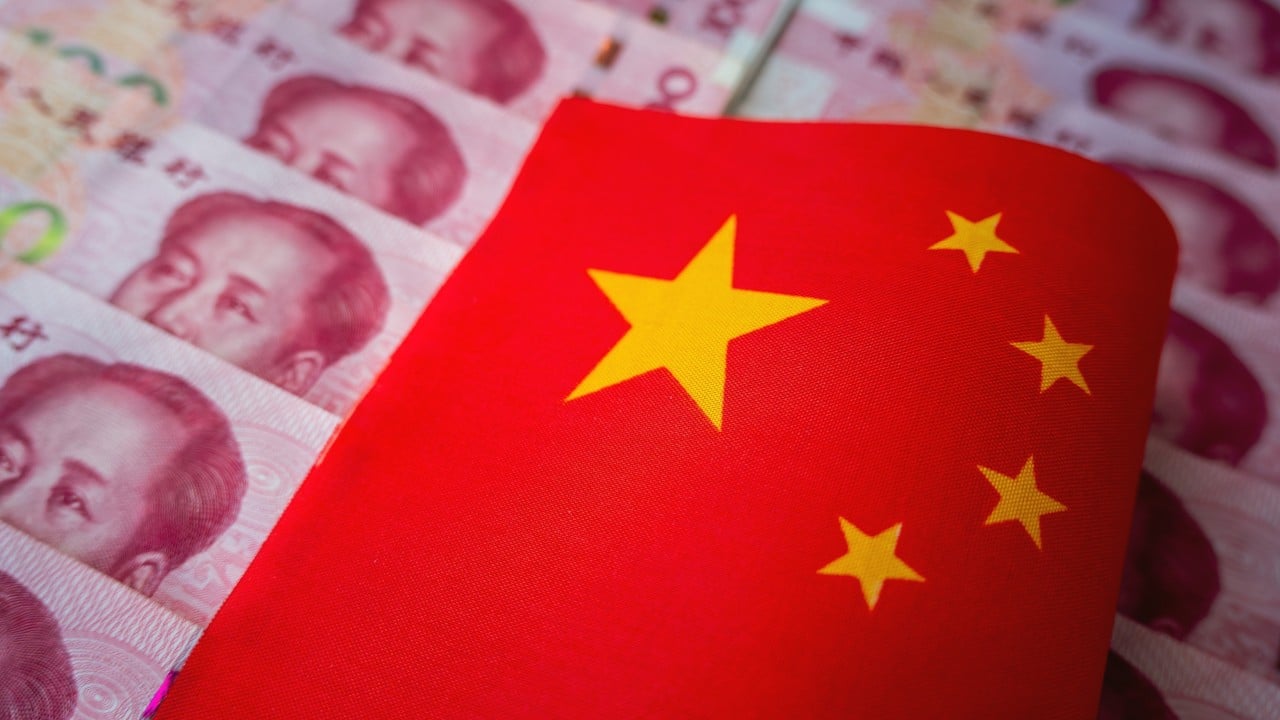
中國 AI 產業第一季融資額激增 185%,顯示對 LLM 與機器人技術的強勁投入。
30 秒速覽
有什麼變化
第一季 AI 新創融資額達到 1100 億人民幣(約 162 億美元)。
為什麼重要
大量資金湧入預示著中國 LLM 與機器人技術的開發週期將加速,可能縮小與全球競爭對手的差距。從業者應密切關注這些資金雄厚的企業,留意其發布的開源模型或硬體突破。
下一步行動
追蹤資金雄厚的中國 AI 實驗室的 GitHub 儲存庫與研究論文,以發掘西方 LLM API 的潛在替代方案。
誰應關注:Founders & Product Leaders
關鍵要點
- •第一季 AI 新創融資額達到 1100 億人民幣(約 162 億美元)。
- •投資成長主要由大型語言模型(LLM)與機器人技術驅動。
- •年增 185% 的數據顯示投資人對中國科技生態系統充滿信心。
關鍵數字US$16.5 billion60%$2 billion$20 billion
深度解析
背景與延伸:來自公開資料,非原文內容。引用 21 個來源。
增強重點摘要
- •China's Q1 2026 AI startup funding, reaching US$16.5 billion, constituted 60% of all Asian startup funding, marking the third consecutive quarter of growth after multi-year lows in early 2025.
- •The surge in investment is significantly bolstered by government initiatives, including the 'AI+' policy announced in August 2025, which aims for extensive AI integration across various sectors, and the 'Robot+' initiative to support robotics and AI integration in industrial settings.
- •Prominent Chinese AI startups that secured substantial funding in Q1 2026 include large language model developers like Moonshot AI, which raised $2 billion and is now valued over $20 billion, and embodied AI/robotics companies such as TARS Robotics, which closed a $513 million seed round at a $1.9 billion valuation.
- •Government venture capital funds have played a crucial role in China's AI ecosystem, channeling $912 billion into strategic industries like AI over the past decade, with 23% directed to 1.4 million AI-related firms, often signaling private VC investment.
- •Globally, Q1 2026 saw a record $300 billion in venture capital, with AI companies attracting 81% of these funds, largely concentrated in a few mega-rounds, primarily in the U.S., positioning China as the second-largest market for AI funding.
技術深入
- Embodied AI startups are transitioning from pre-programmed hardware to advanced Vision-Language-Action (VLA) models, enabling physical machines to perceive, reason, and execute tasks end-to-end in real-time.
- Chinese large language models (LLMs) leverage sophisticated deep learning architectures, including Mixture-of-Experts (MoE) and transformer models, specifically optimized for Mandarin Chinese processing. Notable examples include Qwen3-235B-A22B (MoE with 235 billion total parameters and 22 billion activated parameters) and GLM-4.5 (MoE with 335 billion total parameters, designed for AI agent applications).
- Embodied AI robots for industrial applications, such as those deployed for high-risk tasks, feature humanoid upper bodies with 15 degrees of freedom, dual arms for simultaneous operations, and utilize electromagnetic adhesion for stability on metal surfaces. These systems are powered by large-scale AI models trained on over 100,000 hours of operational data.
- China's robust manufacturing base for industrial robots and electric vehicles (EVs) provides a strategic advantage, allowing for the repurposing of EV components like batteries, LiDAR, and cameras for robotics applications.
前景展望基於引用來源的 AI 分析
China will significantly strengthen its global leadership in AI, particularly in industrial applications and smart manufacturing.
The substantial government and private investment, coupled with strategic policies like 'AI+' and 'Robot+', are accelerating the integration of AI into manufacturing processes, aiming for comprehensive AI-integrated economy by 2035 and global leadership by 2030.
The focus on embodied AI will lead to widespread commercial deployment of intelligent robots in diverse real-world scenarios.
Significant funding rounds for embodied AI startups, coupled with government initiatives like the national pilot base for embodied robot applications, indicate a strong push towards commercialization and practical deployment beyond research and development.
Hong Kong will become an increasingly vital gateway for Chinese AI companies seeking public market capital.
With existing constraints on funding channels for Chinese AI firms compared to their US counterparts, Hong Kong's booming IPO market is emerging as a crucial bridge for accessing global capital, as demonstrated by recent blockbuster listings of Chinese LLM and chip developers.
時間線
1979-XX
China's first national conference on AI occurs.
1986-XX
The 863 Program, a state-high-tech development plan, is initiated, including intelligent computer systems and robotics.
2006-XX
AI development is announced as a policy priority in China's National Medium and Long Term Plan for the Development of Science and Technology.
2017-XX
China's State Council unveils the 'New Generation Artificial Intelligence Development Plan (AIDP),' setting a goal for global AI leadership by 2030.
2025-08
China's State Council issues the 'AI Plus' policy directive, aimed at accelerating sector-wide AI adoption.
2026-Q1
Chinese AI start-up funding surges to US$16.2 billion, driven by large language models and embodied AI.
- 1979-XXChina's first national conference on AI occurs.
- 1986-XXThe 863 Program, a state-high-tech development plan, is initiated, including intelligent computer systems and robotics.
- 2006-XXAI development is announced as a policy priority in China's National Medium and Long Term Plan for the Development of Science and Technology.
- 2017-XXChina's State Council unveils the 'New Generation Artificial Intelligence Development Plan (AIDP),' setting a goal for global AI leadership by 2030.
- 2025-08China's State Council issues the 'AI Plus' policy directive, aimed at accelerating sector-wide AI adoption.
- 2026-Q1Chinese AI start-up funding surges to US$16.2 billion, driven by large language models and embodied AI.
來源 (21)
Factual claims are grounded in the sources below. Forward-looking analysis is AI-generated interpretation.
1crunchbase.comvertexaisearch.cloud.google.com2beamstart.comvertexaisearch.cloud.google.com3crunchbase.comvertexaisearch.cloud.google.com4janushenderson.comvertexaisearch.cloud.google.com5ussc.edu.auvertexaisearch.cloud.google.com6merics.orgvertexaisearch.cloud.google.com7techfundingnews.comvertexaisearch.cloud.google.com8gasgoo.comvertexaisearch.cloud.google.com9stanford.eduvertexaisearch.cloud.google.com10crunchbase.comvertexaisearch.cloud.google.com11cryptorank.iovertexaisearch.cloud.google.com1236kr.comvertexaisearch.cloud.google.com13siliconflow.comvertexaisearch.cloud.google.com14cgtn.comvertexaisearch.cloud.google.com15carnegieendowment.orgvertexaisearch.cloud.google.com16rand.orgvertexaisearch.cloud.google.com17wikipedia.orgvertexaisearch.cloud.google.com18gasgoo.comvertexaisearch.cloud.google.com19yicaiglobal.comvertexaisearch.cloud.google.com20globaltimes.cnvertexaisearch.cloud.google.com21chinadailyasia.comvertexaisearch.cloud.google.com
AI 週報
閱讀本週精選 AI 大事摘要 →
相關動態


AI 策展新聞聚合。所有內容版權歸原始發布者所有。
原始來源: SCMP Technology ↗
每週電子報
每週一封,可隨時退訂。