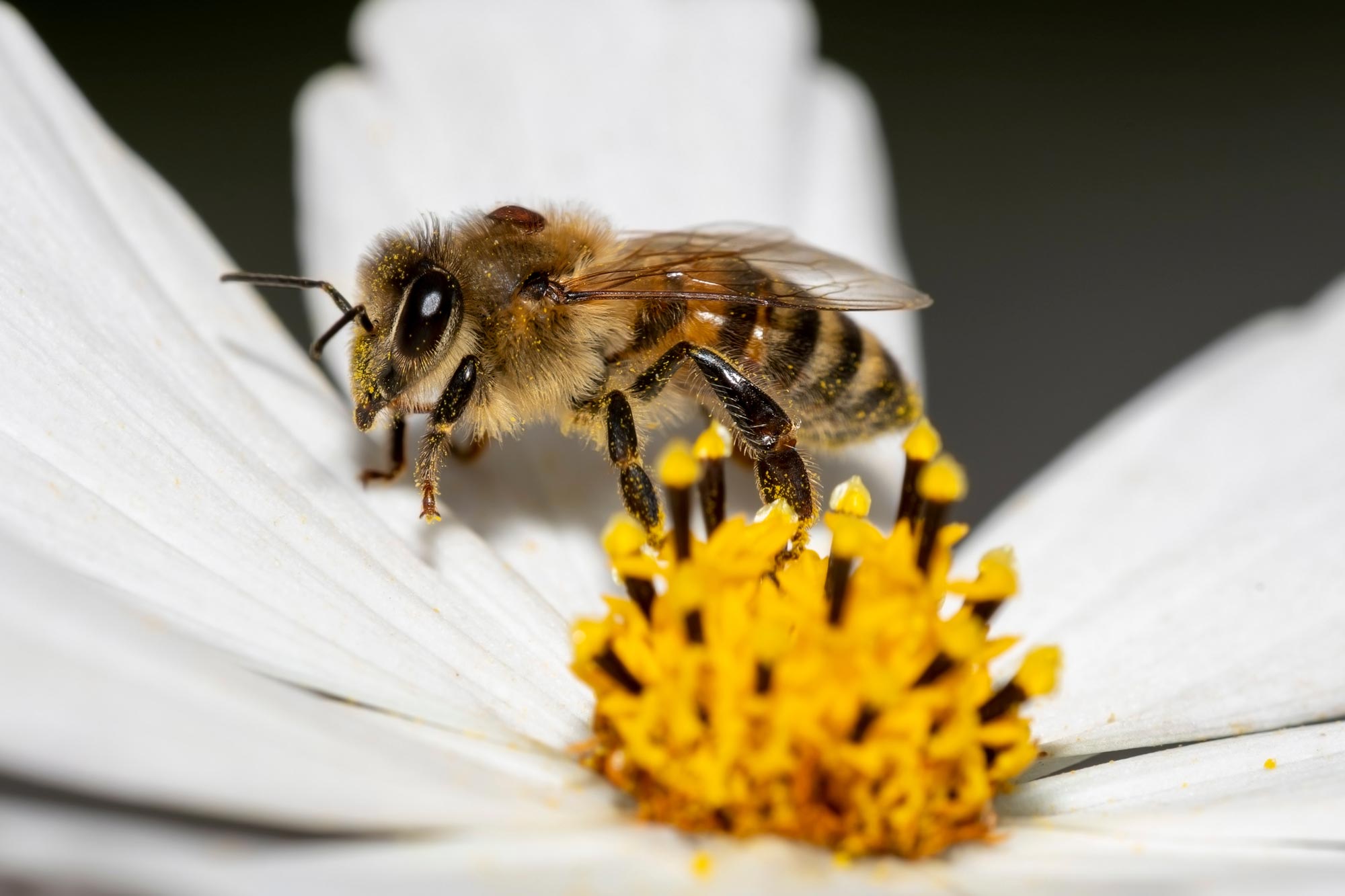
California Bees Evolve Natural Resistance to Mites
💡Learn how natural systems develop resilience to inform robust multi-agent AI swarm architectures.
⚡ 30-Second TL;DR
What Changed
Hybrid bees in Southern California show natural resistance to Varroa mites.
Why It Matters
Understanding natural adaptation mechanisms in complex biological systems can inform the development of more resilient AI swarm intelligence and distributed systems.
What To Do Next
Study swarm intelligence patterns in resilient biological systems to improve fault tolerance in multi-agent AI systems.
Key Points
- •Hybrid bees in Southern California show natural resistance to Varroa mites.
- •This adaptation provides a potential solution for declining commercial bee populations.
- •Research conducted by the University of California, Riverside.
🧠 Deep Insight
Web-grounded analysis with 18 cited sources.
🔑 Enhanced Key Takeaways
- •The hybrid bees, a genetically diverse population with ancestry from African, Eastern European, Middle Eastern, and Western European lineages, exhibit a significant reduction in mite infestation, averaging 68% fewer mites than commercial colonies and requiring chemical treatment five times less often.
- •The mechanism of resistance appears to stem from the hybrid bee larvae being less attractive to Varroa mites, particularly at seven days old, which is the stage when mites typically invade brood cells for reproduction, suggesting a genetic rather than purely behavioral defense.
- •Varroa mites pose a severe threat by feeding on the bees' fat body tissue, weakening their immune systems, and acting as vectors for lethal viruses such as Deformed Wing Virus and Acute Bee Paralysis Virus, a problem exacerbated by the mites' increasing resistance to conventional chemical treatments.
🛠️ Technical Deep Dive
- The observed resistance is not full immunity but a consistent suppression of Varroa mite populations, leading to significantly lower infestation rates in hybrid colonies compared to commercial ones.
- Laboratory experiments revealed that Varroa mites are less attracted to the larvae of these Californian hybrid bees, especially at seven days old, which is the critical stage for mite invasion into brood cells for reproduction.
- This reduced attractiveness of larvae suggests a potential genetic basis for resistance, indicating that the defense mechanism may be inherent in the bees' early development rather than solely relying on adult bee behaviors like hygienic grooming.
- Varroa mites primarily feed on the honeybee's fat body tissue, an organ crucial for energy storage, immune response, and detoxification, functionally similar to a human liver, pancreas, and immune system.
- Beyond direct feeding, Varroa mites are significant vectors for deadly bee viruses, including Deformed Wing Virus (DWV) and Acute Bee Paralysis Virus (ABPV), which they transmit directly into the bee's hemolymph (blood).
- The hybrid bee population studied is genetically diverse, having ancestry from at least four honeybee lineages: African, Eastern European, Middle Eastern, and Western European bees, often originating from feral colonies.
- Traditional Varroa control methods include synthetic miticides (e.g., fluvalinate, coumaphos, amitraz) and naturally occurring substances (e.g., formic acid, oxalic acid, thymol), but mites have developed resistance to many chemical treatments over time.
🔮 Future ImplicationsAI analysis grounded in cited sources
⏳ Timeline
📎 Sources (18)
Factual claims are grounded in the sources below. Forward-looking analysis is AI-generated interpretation.
Weekly AI Recap
Read this week's curated digest of top AI events →
👉Related Updates
Same topic
Explore #swarm-intelligence
Same product
More on honey-bee-resilience-research
Same source
Latest from cnBeta (Full RSS)

PACA: Open-source tool for ancient fossil coordinate mapping

First atmosphere detected on habitable-zone exoplanet

Samsung Secures $200B Broadcom AI Infrastructure Deal

How AMD's 2006 ATI Acquisition Built Today's AI Empire
AI-curated news aggregator. All content rights belong to original publishers.
Original source: cnBeta (Full RSS) ↗