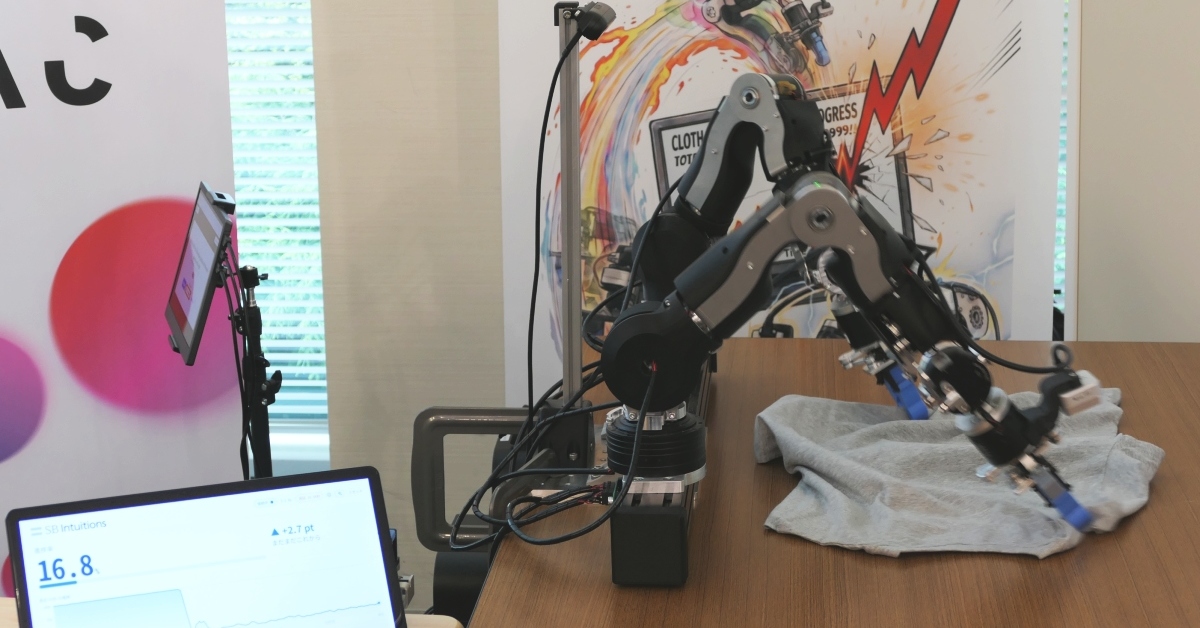
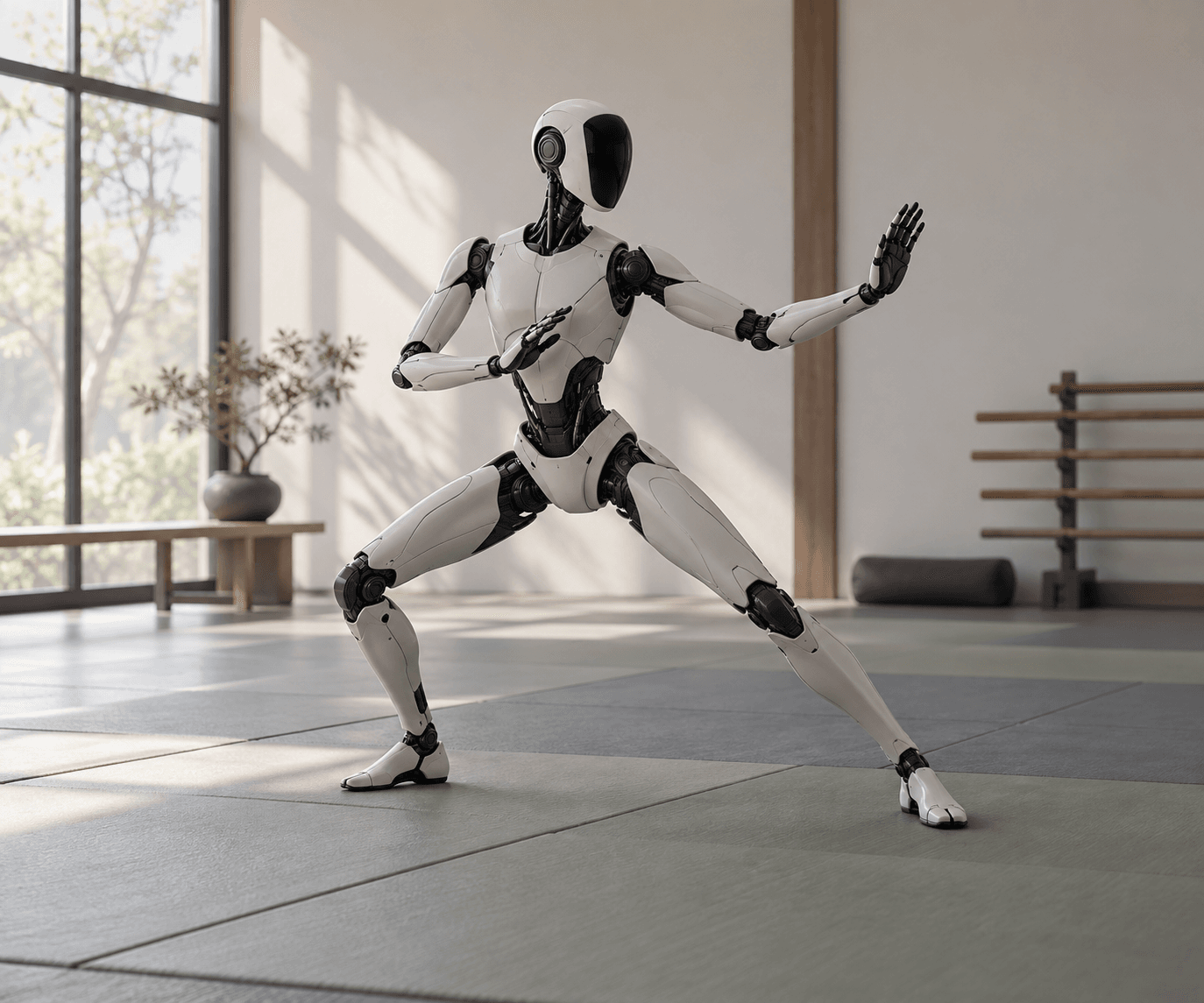
Breakthroughs in China's Humanoid Robotics and Physical AI
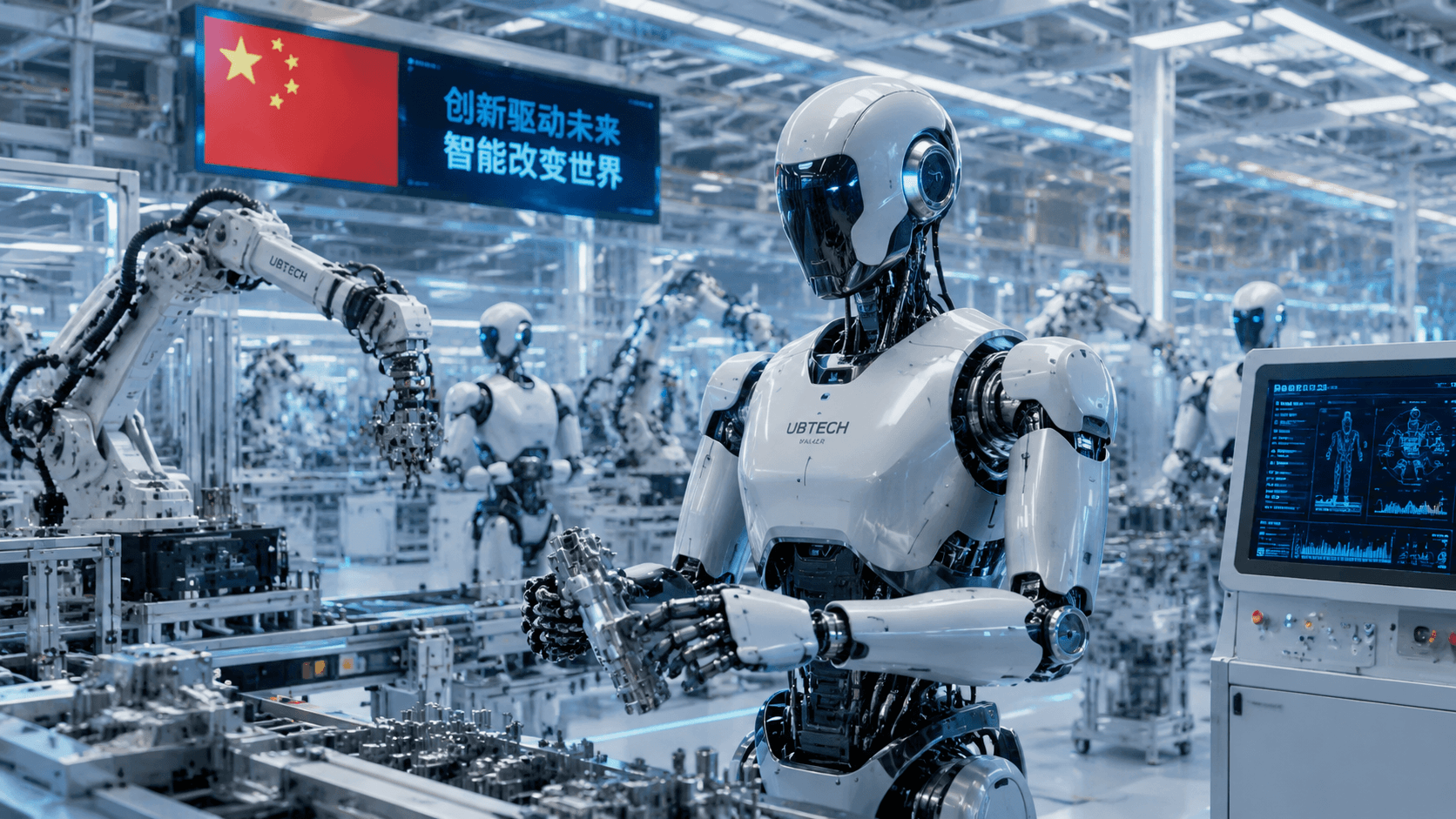
๐กDiscover how Chinese robotics firms are integrating foundation models to advance physical AI capabilities.
โก 30-Second TL;DR
What Changed
Enhanced motor control and dexterity in humanoid platforms
Why It Matters
The convergence of LLMs and robotics is creating new opportunities for embodied AI. Developers should explore frameworks that bridge the gap between high-level reasoning and low-level motor control.
What To Do Next
Experiment with ROS 2 and integrate a vision-language model to control a simulated robotic arm for basic manipulation tasks.
๐ง Deep Insight
AI-generated analysis for this event.
๐ Enhanced Key Takeaways
- โขThe Chinese Ministry of Industry and Information Technology (MIIT) has established a national humanoid robot innovation center in Beijing to standardize hardware interfaces and operating systems.
- โขLeading Chinese firms like UBTECH and Fourier Intelligence are transitioning from proprietary closed-loop systems to open-source ROS 2-based architectures to accelerate developer ecosystem growth.
- โขAdvancements in 'embodied AI' are increasingly utilizing synthetic data generation pipelines to train robots on edge cases, reducing reliance on costly real-world physical training hours.
- โขDomestic manufacturers have achieved a 30-40% reduction in the cost of harmonic drives and force-torque sensors through localized mass production, significantly lowering the bill of materials for humanoid units.
- โขNew multi-modal large language models (LLMs) specifically fine-tuned for spatial reasoning are enabling robots to perform zero-shot task planning in unstructured industrial environments.
๐ Competitor Analysisโธ Show
| Feature | Chinese Humanoid Platforms | Tesla Optimus (USA) | Figure AI (USA) |
|---|---|---|---|
| Primary Focus | Industrial/Manufacturing | Mass Production/Consumer | General Purpose/Logistics |
| Hardware Strategy | Rapid domestic supply chain | Vertical integration | Partnership-driven (OpenAI/BMW) |
| AI Architecture | Multi-model/Hybrid | End-to-end Neural Net | Foundation Model-based |
| Market Positioning | Cost-competitive/Modular | High-scale/Consumer-grade | High-performance/Enterprise |
๐ ๏ธ Technical Deep Dive
- Implementation of Transformer-based architectures for policy learning, allowing robots to map visual inputs directly to motor commands.
- Utilization of high-torque density frameless motors with integrated absolute encoders for precise joint position feedback.
- Deployment of vision-language-action (VLA) models that process RGB-D camera streams to identify and manipulate objects in real-time.
- Adoption of whole-body control (WBC) algorithms to maintain balance and stability during dynamic locomotion and heavy lifting tasks.
- Integration of edge computing modules (NVIDIA Jetson or domestic equivalents) to handle low-latency inference for safety-critical obstacle avoidance.
๐ฎ Future ImplicationsAI analysis grounded in cited sources
โณ Timeline
Weekly AI Recap
Read this week's curated digest of top AI events โ
๐Related Updates
Same topic
Explore #robotics
Same product
More on humanoid-robotics-&-physical-ai
Same source
Latest from Pandaily

NVIDIA unveils 'Android for Robotics' platform

The $400 million machine powering the future of chipmaking

Micron and Anthropic sign multi-year AI memory supply deal

Intel and AMD release ACE CPU extension for local AI
AI-curated news aggregator. All content rights belong to original publishers.
Original source: Pandaily โ