🇨🇳cnBeta (Full RSS)•Stalecollected in 22h
Brain's Frontline Aids Decision-Making
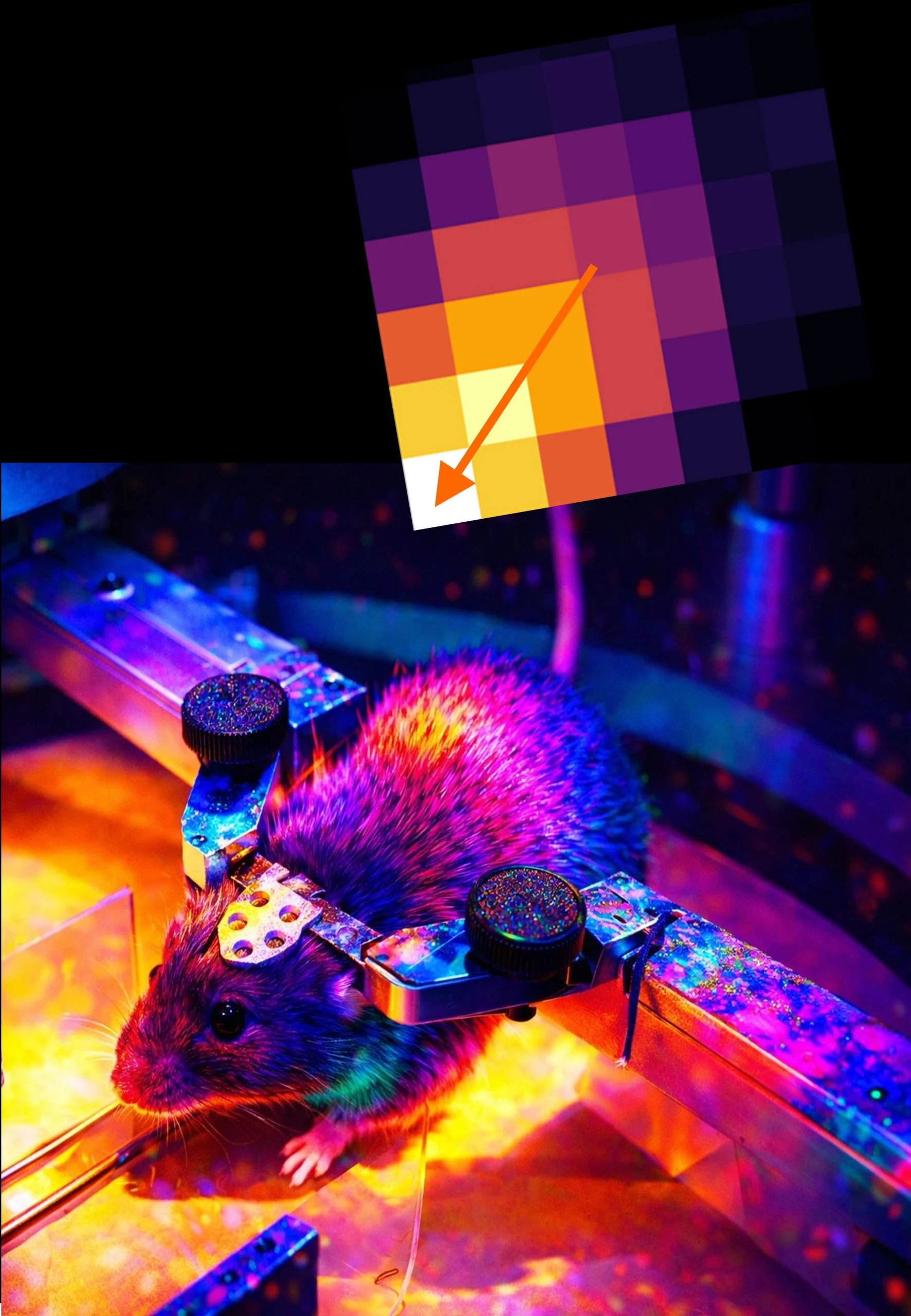
💡Neuroscience breakthrough offers blueprint for dynamic, efficient AI architectures
⚡ 30-Second TL;DR
What Changed
Earliest sensory cortex plays active role in decision formation
Why It Matters
This shifts AI design toward brain-like dynamic processing, potentially enabling more efficient, low-energy models mimicking human cognition.
What To Do Next
Read the full study and simulate bidirectional sensory models in PyTorch for decision AI.
Who should care:Researchers & Academics
Key Points
- •Earliest sensory cortex plays active role in decision formation
- •Challenges traditional hierarchical brain processing model
- •Dynamic neural interactions inspire low-power AI designs
- •From University of Illinois Granger Engineering
🧠 Deep Insight
AI-generated analysis for this event.
🔑 Enhanced Key Takeaways
- •The study specifically identifies the primary visual cortex (V1) as a site of decision-making, demonstrating that it integrates task-relevant information rather than merely acting as a sensory relay station.
- •Researchers utilized optogenetic manipulation and high-density neural recordings in mice to prove that silencing V1 activity directly impairs the accuracy of perceptual decisions, confirming its causal role.
- •The findings suggest a 'distributed' model of cognition where decision-related computations are spread across the cortical hierarchy, contradicting the traditional view that sensory processing and decision-making are strictly segregated.
🛠️ Technical Deep Dive
- •Experimental model: Transgenic mice trained on a visual discrimination task.
- •Methodology: Combined optogenetic silencing of V1 neurons with behavioral tracking to measure decision accuracy.
- •Data acquisition: High-density silicon probe recordings to monitor neural population dynamics during the decision-making process.
- •Computational framework: Evidence accumulation models (e.g., drift-diffusion models) were adapted to account for sensory cortex involvement, showing that V1 activity correlates with the accumulation of sensory evidence.
🔮 Future ImplicationsAI analysis grounded in cited sources
Neuromorphic hardware will shift from feed-forward to recurrent architectures.
Incorporating bidirectional feedback loops inspired by the sensory cortex can significantly reduce the energy cost of processing ambiguous sensory data in edge AI devices.
Next-generation computer vision models will integrate decision-making layers earlier in the pipeline.
By moving decision-making logic closer to the input layer, AI systems can achieve faster response times and higher robustness to noise compared to traditional deep hierarchical networks.
⏳ Timeline
2024-05
University of Illinois researchers initiate study on cortical feedback loops in decision-making.
2025-11
Preliminary findings presented at the Society for Neuroscience meeting regarding V1's active role.
2026-04
Formal publication of the study detailing the integration of sensory and decision-making processes.
📰
Weekly AI Recap
Read this week's curated digest of top AI events →
👉Related Updates
Same topic
Explore #neuroscience
Same product
More on sensory-cortex-model
Same source
Latest from cnBeta (Full RSS)

Microsoft plans to transform Minecraft into a global creator platform
cnBeta (Full RSS)•Aug 1

SpaceX Rocket Debris to Impact Moon
cnBeta (Full RSS)•Aug 1

Apple warns of potential AI compute resource shortages
cnBeta (Full RSS)•Aug 1

ShieldFont uses obfuscated typography to block AI scrapers
cnBeta (Full RSS)•Aug 1
AI-curated news aggregator. All content rights belong to original publishers.
Original source: cnBeta (Full RSS) ↗