AWE 2026: Snap, Google, and Qualcomm XR Keynotes
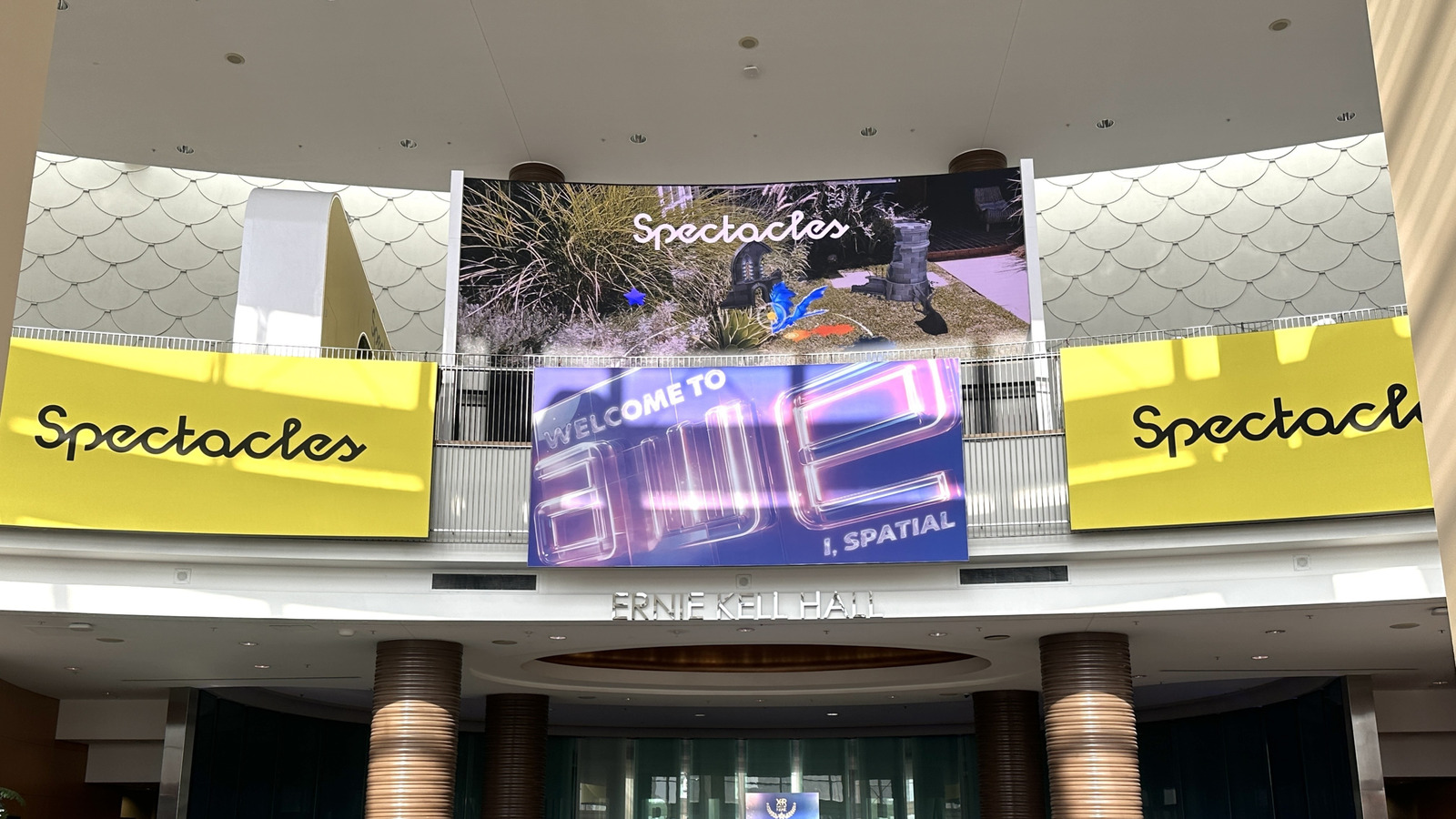
💡Get the latest strategic insights from leaders in AR/VR hardware and spatial computing platforms.
⚡ 30-Second TL;DR
What Changed
Snap CEO Evan Spiegel discusses the future of AR hardware and software integration.
Why It Matters
These keynotes set the tone for the XR industry's trajectory, influencing hardware standards and developer platform adoption for the coming year.
What To Do Next
Review the technical specifications of the latest Qualcomm XR chipsets to optimize your spatial application performance.
Key Points
- •Snap CEO Evan Spiegel discusses the future of AR hardware and software integration.
- •Google showcases new developments in their XR ecosystem and platform capabilities.
- •Qualcomm highlights the latest silicon advancements powering next-gen XR headsets.
🧠 Deep Insight
Background and context from public sources — not the original article. 25 sources cited.
🔑 Enhanced Key Takeaways
- •Snap's consumer AR glasses, branded as "Specs," are anticipated to launch in 2026, evolving from their developer-focused Spectacles line to offer a lighter form factor and enhanced capabilities.
- •Google's overarching XR strategy is anchored by Android XR, an operating system launched in October 2025, which was developed in collaboration with Samsung and Qualcomm and features deep integration with Google's Gemini AI.
- •Qualcomm maintains a dominant position in the extended reality (XR) system-on-chip (SoC) market, holding over 90% market share as of 2024, with its Snapdragon XR platforms being critical for powering next-generation headsets from various manufacturers, including Meta and Samsung.
- •Snap has forged a multi-year strategic partnership with Qualcomm to supply Snapdragon XR chipsets for its upcoming consumer "Specs" AR glasses, emphasizing on-device AI, advanced graphics, and multi-user digital experiences.
- •Google is actively cultivating an open XR ecosystem through Android XR, supporting OpenXR standards and providing developer tools that leverage existing Android frameworks, aiming for broad compatibility across multiple OEM devices.
📊 Competitor Analysis▸ Show
| Company/Platform | Key Competitors (XR Hardware/Software) |
|---|---|
| Snap (AR Glasses/Platform) | Meta (Ray-Ban Meta smart glasses), Apple (Vision Pro), Xreal, Viture |
| Google (Android XR) | Apple (visionOS), Meta (Horizon OS/proprietary OS for Quest) |
| Qualcomm (XR Chipsets) | Apple (R1 chip for Vision Pro), NVIDIA, Intel (though Qualcomm holds a significant majority in the HMD market) |
🛠️ Technical Deep Dive
- Snap Spectacles 5 (Developer Version):
- Weight: 226 grams
- Display: See-through waveguides with LCoS microprojectors
- Field of View (FoV): 46 degrees diagonal
- Resolution: 37 pixels per degree
- Processors: Two powerful Snapdragon chips
- Battery Life: 45 minutes in standalone mode
- Cameras: Four tracking cameras (two color, two infrared)
- Sensors: 6-axis IMU, GPS
- Connectivity: WiFi 6 and Bluetooth
- Operating System: Snap OS, enabling hand tracking and AI integration
- Qualcomm Snapdragon XR2+ Gen 2 Platform:
- Display Support: Up to 4.3K x 4.3K resolution per eye at 90 frames per second
- Performance: 15% higher GPU and 20% higher CPU max frequency compared to Snapdragon XR2 Gen 2
- Graphics Enhancements: Dynamic foveated rendering, space warp, and game super resolution for immersive 4K graphics
- On-Device AI: Powerful AI engine supporting 12 or more concurrent cameras
- Interaction Capabilities: Enables hand, head, controller, facial expression, depth estimation, and 3D reconstruction
- Video See-Through: Ultra-fast 12ms video see-through latency
- Connectivity: Supports Wi-Fi 7 and Wi-Fi 6E, along with Bluetooth 5.3 and 5.2
- Google ARCore:
- Key Capabilities: Motion Tracking (identifies and tracks visually distinct features with camera and inertial sensors), Environmental Understanding (detects flat surfaces like tables or floors), and Light Estimation (estimates ambient lighting conditions)
- Compatibility: Works on a wide range of qualified Android phones running Android 7.0 (Nougat) and later
- Android XR:
- Foundation: Built on the Android OS, leveraging components like ARCore, Android Studio, Jetpack Compose, Unity, and OpenXR
- Standards: Compliant with OpenXR 1.1 and expands with leading-edge vendor extensions, including AI-powered hand mesh
🔮 Future ImplicationsAI analysis grounded in cited sources
⏳ Timeline
📎 Sources (25)
Factual claims are grounded in the sources below. Forward-looking analysis is AI-generated interpretation.
- tomsguide.com
- roadtovr.com
- counterpointresearch.com
- wikipedia.org
- lucidrealitylabs.com
- abiresearch.com
- vr.org
- socialmediatoday.com
- auganix.org
- qualcomm.com
- medium.com
- framesixty.com
- roadtovr.com
- forbes.com
- googleblog.com
- filtermaker.fr
- framesixty.com
- sphericalinsights.com
- xpert.digital
- qualcomm.com
- xda-developers.com
- geeksforgeeks.org
- google.com
- infoq.com
- wikipedia.org
Weekly AI Recap
Read this week's curated digest of top AI events →
👉Related Updates

AI-curated news aggregator. All content rights belong to original publishers.
Original source: Engadget ↗
This is a summary, not the original. Read the source, or get the weekly briefing.
Weekly AI briefing
One email a week. Unsubscribe anytime.