Senators Challenge TikTok’s Algorithm Safety Test
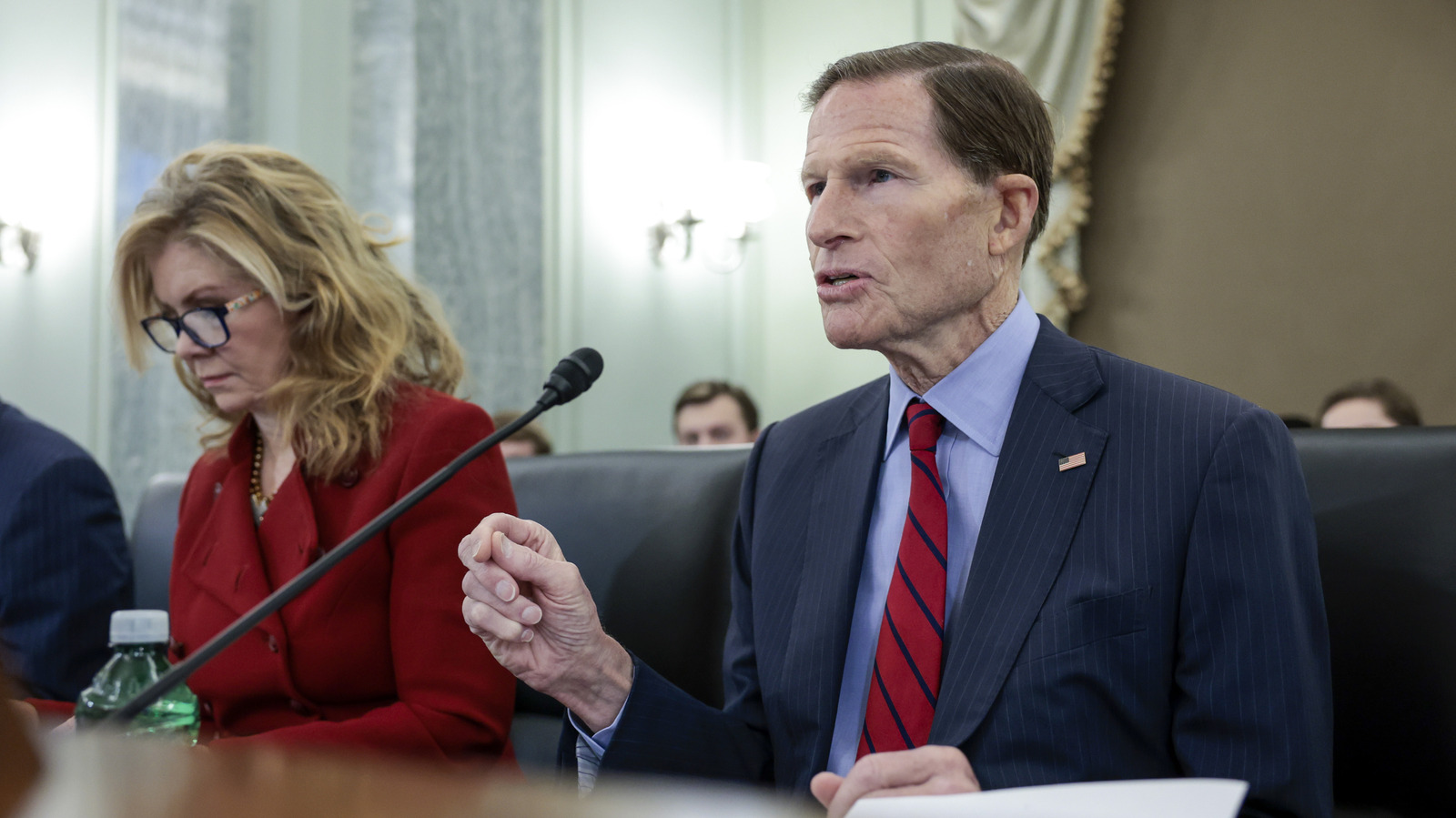
💡A reported TikTok safety experiment raises urgent questions about responsible recommendation-system testing.
⚡ 30-Second TL;DR
What Changed
The experiment reportedly held back an algorithm safety feature.
Why It Matters
The allegations could intensify scrutiny of TikTok’s recommendation-system testing and safety governance. AI teams may face stronger expectations to document safeguards, experiment boundaries, and user-risk assessments.
What To Do Next
Audit any user-facing recommendation experiments by documenting safety gates, exclusion criteria, monitoring metrics, and rollback procedures before deployment.
Key Points
- •The experiment reportedly held back an algorithm safety feature.
- •US senators are demanding explanations from TikTok.
- •A teenager who died by suicide was reportedly part of the test.
🧠 Deep Insight
Background and context from public sources — not the original article. 10 sources cited.
🔑 Enhanced Key Takeaways
- •The experiment involved intentionally withholding an algorithmic safeguard designed to disrupt 'filter bubbles' of harmful content, which TikTok had acknowledged could lead to a harmful viewing experience.
- •Approximately 10% of TikTok's U.S. user base, estimated at around 15 million people at the time, was included in the control group that did not receive the safety feature.
- •The existence of this experiment was detailed in a confidential 2023 company document, which was later revealed through litigation against major social media companies.
- •The teenager, Chase Nasca, reportedly viewed over 7,500 videos in the two weeks leading up to his death, with 73% of these videos containing themes of sadness or personal struggles, and 10% violating TikTok's own rules regarding the normalization of suicide or self-harm.
- •U.S. Senators Marsha Blackburn (R-TN) and Richard Blumenthal (D-CT), co-sponsors of an online child safety bill, sent a letter to TikTok's CEO Shou Chew and U.S. CEO Adam Presser, demanding answers by September 1st, and requested a list of all similar algorithmic experiments where safety features were withheld.
🛠️ Technical Deep Dive
- TikTok's recommendation system is built on a ByteDance-developed system called Monolith.
- It employs a multi-stage pipeline utilizing deep neural networks to model user preferences based on implicit behavioral signals, collaborative filtering, and content-based feature extraction across various data modalities.
- The system architecture includes a Feature Store for real-time user and video features, an Embedding Layer that represents users and videos as high-dimensional vectors, and a Multi-Task Learning Model.
- The ranking model simultaneously predicts multiple user interactions, such as watch time, like probability, share probability, comment probability, follow probability, and 'not interested' probability.
- A key technical feature is its real-time online learning capability, which continuously ingests new interaction data and updates model parameters in near-real-time, facilitating a rapid feedback loop.
- Content moderation on TikTok combines automated systems with a global team of over 40,000 human moderators who manage content in more than 70 languages.
🔮 Future ImplicationsAI analysis grounded in cited sources
⏳ Timeline
📎 Sources (10)
Factual claims are grounded in the sources below. Forward-looking analysis is AI-generated interpretation.
Weekly AI Recap
Read this week's curated digest of top AI events →
👉Related Updates
AI-curated news aggregator. All content rights belong to original publishers.
Original source: Engadget ↗
This is a summary, not the original. Read the source, or get the weekly briefing.
Weekly AI briefing
One email a week. Unsubscribe anytime.