AT&T, T-Mobile, and Verizon unite to eliminate dead zones
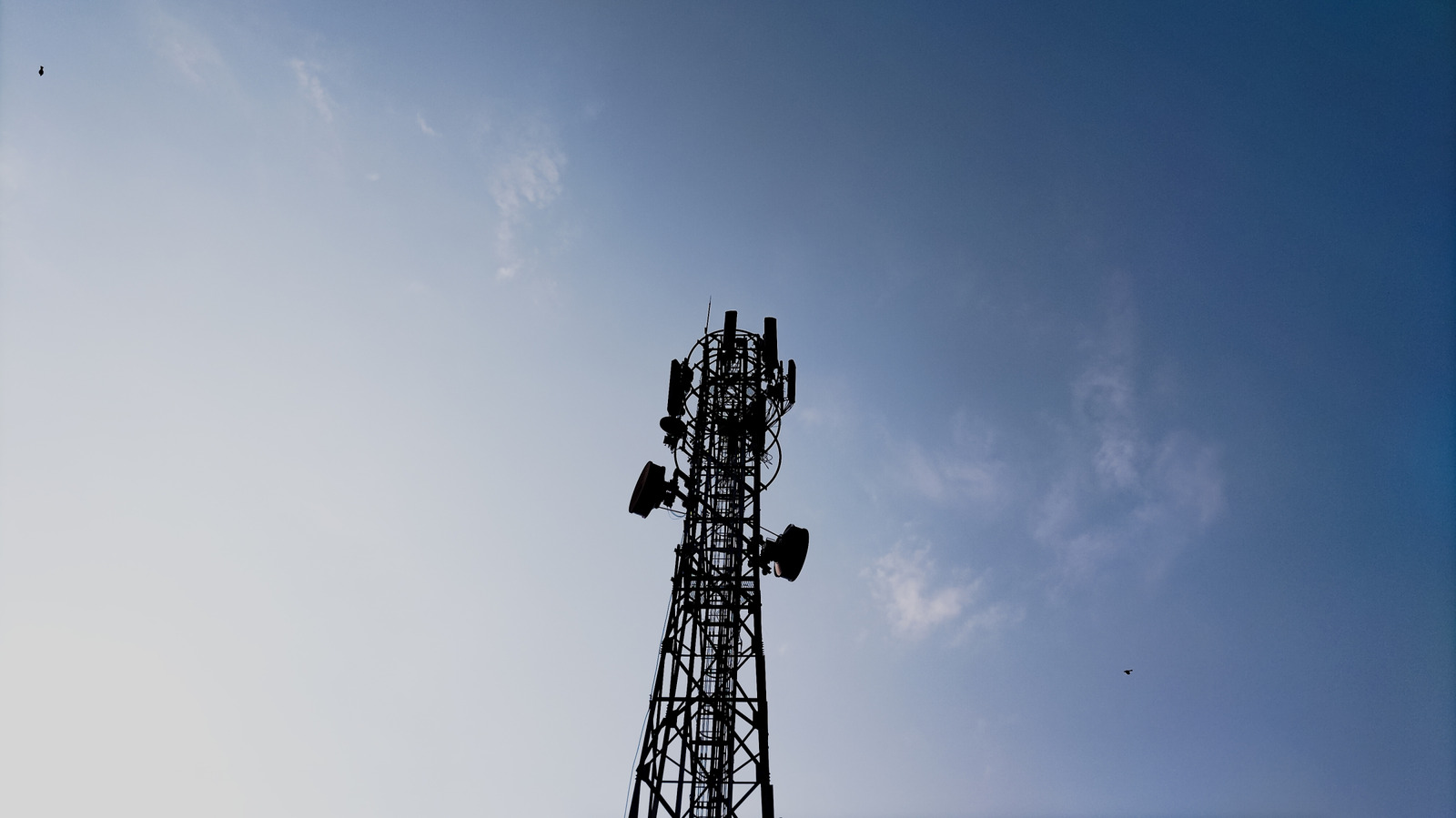
Ubiquitous satellite connectivity is a game-changer for edge AI and IoT deployments in remote, offline environments.
30-Second TL;DR
What Changed
Carriers are pooling resources to optimize satellite-to-mobile network capacity.
Why It Matters
This collaboration could accelerate the deployment of ubiquitous IoT and edge AI applications that require constant connectivity. It signals a shift toward shared infrastructure for next-gen communication networks.
What To Do Next
Evaluate how your edge AI or IoT products can leverage ubiquitous satellite connectivity to maintain data synchronization in remote environments.
Key Points
- •Carriers are pooling resources to optimize satellite-to-mobile network capacity.
- •The initiative focuses on providing consistent coverage in previously underserved or remote areas.
- •Shared infrastructure strategy aims to reduce the cost and complexity of expanding mobile connectivity.
Deep Insight
Background and context from public sources — not the original article. 36 sources cited.
Enhanced Key Takeaways
- •The collaboration is an "agreement in principle" for a joint venture, which remains subject to negotiating definitive agreements and satisfying customary closing conditions.
- •The joint venture aims to pool spectrum resources and establish common technical standards, making the platform technology-neutral and allowing various satellite providers to integrate their services.
- •Beyond eliminating dead zones, the initiative also seeks to provide redundant connectivity during natural disasters and improve overall network performance and resilience.
- •The Federal Communications Commission (FCC) recently modernized satellite spectrum-sharing rules, which could increase capacity for space-based broadband services by up to sevenfold and generate over $2 billion in economic benefits, creating a more favorable regulatory environment for such collaborations.
- •This collaboration is intended to foster competition among satellite providers by creating a unified platform, thereby expanding consumer choices in satellite services.
Competitor Analysis
- AT&T (with AST SpaceMobile)
- Space-based broadband (voice, data, text, video potential)
- T-Mobile (with Starlink)
- Satellite-to-phone (text, location, picture/audio messaging, select apps, satellite data)
- Verizon (with AST SpaceMobile)
- Space-based broadband (voice, data, text, video potential)
- Joint Venture (AT&T, T-Mobile, Verizon)
- Unified platform for D2D (voice, data, text)
- Apple (with Globalstar)
- Emergency SOS & peer-to-peer messaging
- Lynk Global (with SES)
- "Cell tower in space" (2G/LTE messaging, voice, data)
- AT&T (with AST SpaceMobile)
- Standard, unmodified mobile devices
- T-Mobile (with Starlink)
- Most new iOS and Android smartphones
- Verizon (with AST SpaceMobile)
- Standard, unmodified mobile devices
- Joint Venture (AT&T, T-Mobile, Verizon)
- Standard, unmodified mobile devices
- Apple (with Globalstar)
- iPhone 14 and later, Apple Watch
- Lynk Global (with SES)
- Standard, unmodified mobile devices
- AT&T (with AST SpaceMobile)
- Remote, off-grid locations, continental U.S.
- T-Mobile (with Starlink)
- Extreme remote locations (mountains, at sea), continental US, HI, parts of AK, PR
- Verizon (with AST SpaceMobile)
- Remote, off-grid locations, continental U.S.
- Joint Venture (AT&T, T-Mobile, Verizon)
- Rural and underserved areas, eliminating nearly all U.S. dead zones
- Apple (with Globalstar)
- Areas without cellular coverage
- Lynk Global (with SES)
- Underserved rural areas globally
- AT&T (with AST SpaceMobile)
- AT&T spectrum
- T-Mobile (with Starlink)
- T-Mobile's mid-band spectrum
- Verizon (with AST SpaceMobile)
- Verizon spectrum
- Joint Venture (AT&T, T-Mobile, Verizon)
- Pooled spectrum resources
- Apple (with Globalstar)
- Globalstar's satellites and spectrum holdings
- Lynk Global (with SES)
- Omnispace's S-band spectrum (post-merger)
- AT&T (with AST SpaceMobile)
- Definitive commercial agreement, BlueBird satellites launched
- T-Mobile (with Starlink)
- Commercial service launched July 2025
- Verizon (with AST SpaceMobile)
- Partnership announced May 2024
- Joint Venture (AT&T, T-Mobile, Verizon)
- Agreement in principle, subject to definitive agreements
- Apple (with Globalstar)
- Commercially available since 2022
- Lynk Global (with SES)
- Developing constellation, agreements with MNOs
| Feature/Provider | AT&T (with AST SpaceMobile) | T-Mobile (with Starlink) | Verizon (with AST SpaceMobile) | Joint Venture (AT&T, T-Mobile, Verizon) | Apple (with Globalstar) | Lynk Global (with SES) |
|---|---|---|---|---|---|---|
| Service Type | Space-based broadband (voice, data, text, video potential) | Satellite-to-phone (text, location, picture/audio messaging, select apps, satellite data) | Space-based broadband (voice, data, text, video potential) | Unified platform for D2D (voice, data, text) | Emergency SOS & peer-to-peer messaging | "Cell tower in space" (2G/LTE messaging, voice, data) |
| Target Devices | Standard, unmodified mobile devices | Most new iOS and Android smartphones | Standard, unmodified mobile devices | Standard, unmodified mobile devices | iPhone 14 and later, Apple Watch | Standard, unmodified mobile devices |
| Coverage Focus | Remote, off-grid locations, continental U.S. | Extreme remote locations (mountains, at sea), continental US, HI, parts of AK, PR | Remote, off-grid locations, continental U.S. | Rural and underserved areas, eliminating nearly all U.S. dead zones | Areas without cellular coverage | Underserved rural areas globally |
| Spectrum Use | AT&T spectrum | T-Mobile's mid-band spectrum | Verizon spectrum | Pooled spectrum resources | Globalstar's satellites and spectrum holdings | Omnispace's S-band spectrum (post-merger) |
| Status (as of May 2026) | Definitive commercial agreement, BlueBird satellites launched | Commercial service launched July 2025 | Partnership announced May 2024 | Agreement in principle, subject to definitive agreements | Commercially available since 2022 | Developing constellation, agreements with MNOs |
Technical Deep Dive
- The initiative leverages "direct-to-device (D2D)" or "direct-to-cell (D2C)" technology, enabling standard mobile phones to connect directly to satellites without requiring specialized hardware or apps.
- This connectivity is primarily facilitated by Low Earth Orbit (LEO) satellites, which operate at altitudes between 500 and 2,000 km, contributing to reduced latency and improved signal quality compared to higher-orbiting satellites.
- Satellites in these constellations function as "cell towers in space," directly receiving and transmitting data to and from mobile devices on the ground.
- D2D services can utilize spectrum in frequency bands already used by mobile services or those specifically allocated for mobile satellite service.
- Recent FCC rule modernizations allow Non-Geostationary Orbit (NGSO) satellite operators to increase transmission power, provided they implement interference mitigation techniques such as beam-forming, directional antennas, or dynamic frequency hopping.
- While D2D connectivity offers ubiquitous coverage, it generally cannot provide the same throughput and bandwidth as traditional terrestrial mobile networks, making it a complementary service for remote areas rather than a replacement for high-capacity urban networks.
Future ImplicationsAI analysis grounded in cited sources
Timeline
- 1976MARISAT becomes the first dedicated mobile communications satellite.
- 1987Motorola conceptualizes Iridium, a satellite-based mobile communication system.
- 1998Globalstar launches its first satellites.
- 2022-08T-Mobile and SpaceX announce their "Coverage Above and Beyond" partnership for satellite-to-phone connectivity.
- 2024-05AT&T and AST SpaceMobile enter a definitive commercial agreement for a space-based broadband network.
- 2025-07T-Mobile commercially launches its T-Satellite messaging service with Starlink nationwide.
- 2026-05AT&T, T-Mobile, and Verizon announce an agreement in principle to form a joint venture to eliminate dead zones.
Sources (36)
Factual claims are grounded in the sources below. Forward-looking analysis is AI-generated interpretation.
Weekly AI Recap
Read this week's curated digest of top AI events →
Related Updates

AI-curated news aggregator. All content rights belong to original publishers.
Original source: Engadget ↗
This is a summary, not the original. Read the source, or get the weekly briefing.
The weekly digest
One email a week. Unsubscribe anytime.