ASML joins China trade mission amid US export restrictions
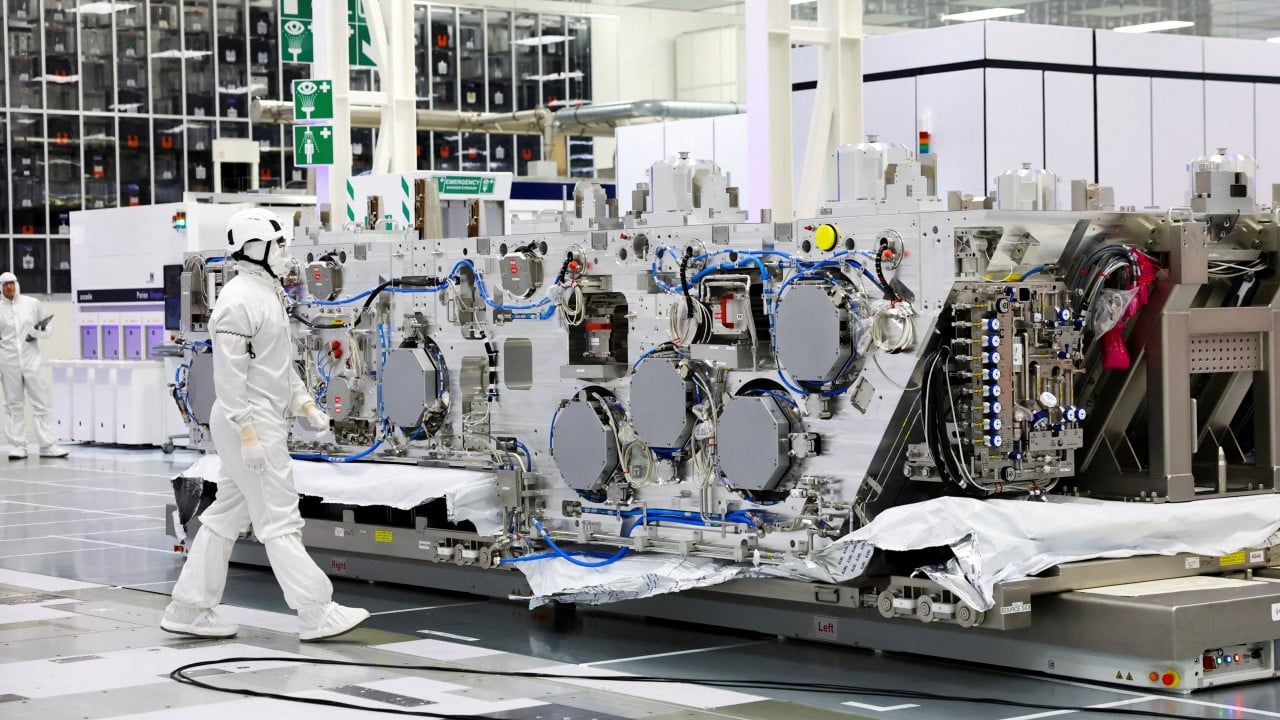
ASML's trade status directly dictates the global supply of chips required for training next-gen AI models.
30-Second TL;DR
What Changed
ASML and NXP executives are participating in a Dutch trade mission to Beijing.
Why It Matters
Continued restrictions on ASML's EUV and DUV lithography systems directly impact the global AI hardware supply chain. AI practitioners should monitor how these trade policies affect the availability and cost of high-end chips.
What To Do Next
Monitor the availability of high-end GPU clusters, as further export restrictions may impact hardware procurement timelines for large-scale model training.
Key Points
- •ASML and NXP executives are participating in a Dutch trade mission to Beijing.
- •The mission aims to secure business deals despite ongoing US-led export controls.
- •The Netherlands is balancing economic interests with US efforts to restrict advanced chip-making equipment sales.
Deep Insight
AI-generated analysis for this event — not the original article.
Enhanced Key Takeaways
- •The Dutch government has increasingly utilized trade missions as a diplomatic tool to mitigate the impact of the 'Wassenaar Arrangement' and unilateral US-imposed extraterritorial export controls on its domestic semiconductor industry.
- •ASML's participation follows a series of tightening restrictions in 2024 and 2025 that specifically targeted the servicing and maintenance of previously sold DUV (Deep Ultraviolet) lithography systems in China.
- •NXP Semiconductors, while less impacted by the most stringent EUV (Extreme Ultraviolet) bans, faces significant pressure regarding its automotive and industrial chip supply chains which remain highly integrated with the Chinese market.
- •The Dutch Ministry of Foreign Affairs has emphasized that these missions focus on 'non-restricted' technologies, attempting to draw a clear regulatory line between legacy chip manufacturing equipment and advanced AI-capable hardware.
- •Industry analysts note that this mission occurs against the backdrop of China's accelerated 'self-sufficiency' drive, which has reduced the immediate reliance on Dutch equipment for certain mature process nodes.
Technical Deep Dive
- ASML's primary export constraint involves the Twinscan NXT series, specifically immersion DUV systems (e.g., NXT:2000i and above) which are critical for multi-patterning techniques used to produce sub-7nm chips.
- NXP's exposure centers on S32 automotive processors and power management ICs, which utilize mature nodes (28nm to 90nm) that are currently exempt from the most aggressive US-led 'entity list' restrictions.
- The technical friction point remains the 'service and maintenance' clause, which prevents ASML engineers from providing software updates or replacing critical components for restricted machines currently installed in Chinese fabs.
Future ImplicationsAI analysis grounded in cited sources
Timeline
- 2023-06Netherlands announces new export controls on advanced semiconductor manufacturing equipment.
- 2024-01ASML reports the partial revocation of export licenses for NXT:2050i and NXT:2100i systems to China.
- 2024-09Dutch government further aligns export control policies with US-led restrictions on chip-making tools.
- 2025-05ASML CEO Christophe Fouquet emphasizes the importance of the Chinese market during annual shareholder meetings.
Weekly AI Recap
Read this week's curated digest of top AI events →
Related Updates


AI-curated news aggregator. All content rights belong to original publishers.
Original source: SCMP Technology ↗
This is a summary, not the original. Read the source, or get the weekly briefing.
The weekly digest
One email a week. Unsubscribe anytime.