Anthropic in talks with Samsung for custom AI chips
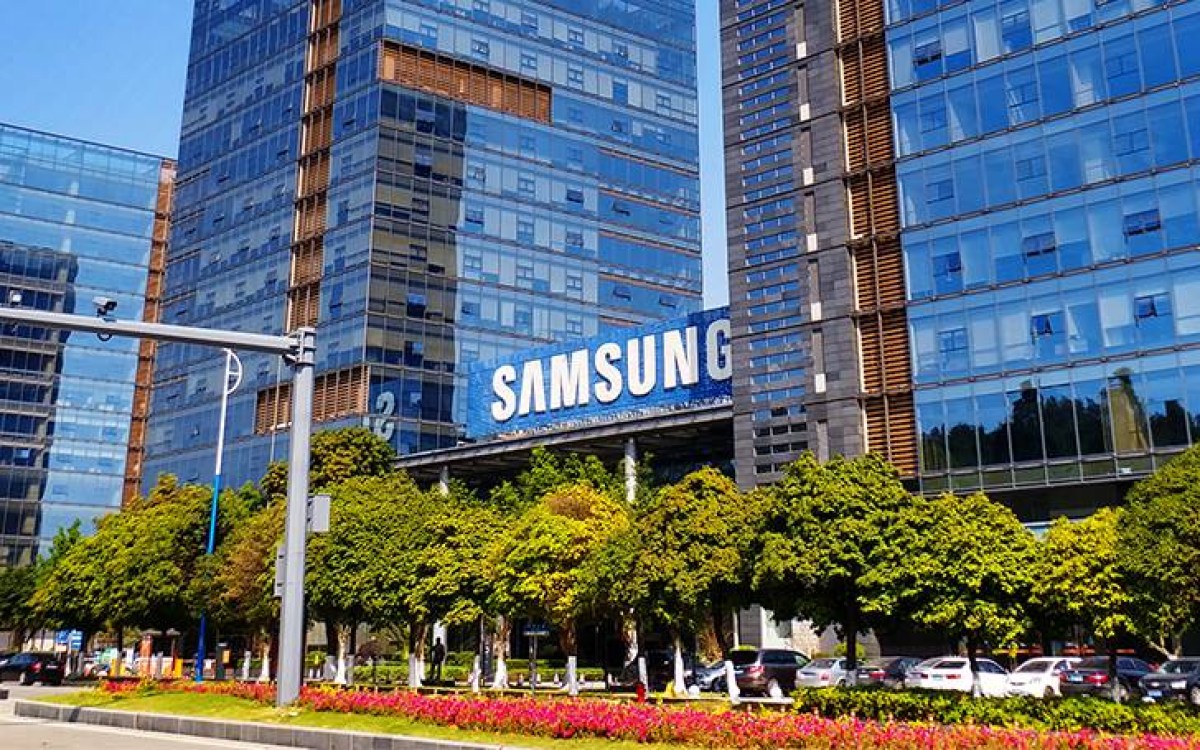
💡Anthropic's move to custom silicon could reshape the AI hardware landscape and reduce dependency on TSMC.
⚡ 30-Second TL;DR
What Changed
Anthropic is exploring custom silicon to optimize AI model performance.
Why It Matters
If successful, this partnership could reduce Anthropic's reliance on TSMC and potentially lower hardware costs for large-scale model training.
What To Do Next
Monitor Anthropic's infrastructure announcements to understand how custom silicon might affect future model inference latency and costs.
Key Points
- •Anthropic is exploring custom silicon to optimize AI model performance.
- •Samsung is being considered as a strategic manufacturing partner.
- •The move signals a shift to diversify AI chip production beyond TSMC.
🧠 Deep Insight
AI-generated analysis for this event — not the original article.
🔑 Enhanced Key Takeaways
- •Anthropic's interest in custom silicon is driven by the need to optimize for its specific 'Claude' model architecture, which utilizes a unique approach to context windows and long-sequence processing.
- •Samsung's 2nm (SF2) and 1.4nm (SF1.4) process nodes are reportedly the primary targets for these potential custom AI accelerators to compete with TSMC-manufactured alternatives.
- •The partnership discussions include potential integration with Samsung's High Bandwidth Memory (HBM4) technology, which is critical for reducing latency in large-scale model inference.
- •This initiative is part of a broader trend among 'frontier' AI labs to move away from general-purpose GPUs toward domain-specific architectures (ASICs) to improve energy efficiency per token.
- •Industry analysts suggest that Anthropic is seeking to diversify its hardware supply chain to mitigate geopolitical risks and capacity constraints currently dominated by NVIDIA's H100/B200 ecosystem.
📊 Competitor Analysis▸ Show
| Feature | Anthropic (Proposed) | OpenAI (Project Orion/Triton) | Google (TPU v5p/v6) |
|---|---|---|---|
| Strategy | Custom ASIC + Samsung Foundry | Custom ASIC + TSMC/Broadcom | In-house TPU ecosystem |
| Hardware Focus | Inference Efficiency | Training & Inference | Full-stack Vertical Integration |
| Foundry Partner | Samsung (Reported) | TSMC | In-house/Samsung/TSMC |
🛠️ Technical Deep Dive
- Focus on HBM4 integration to address memory bandwidth bottlenecks in transformer-based architectures.
- Potential utilization of Samsung's GAA (Gate-All-Around) transistor architecture to improve power efficiency at sub-2nm nodes.
- Design requirements likely prioritize high-speed interconnects for multi-chip module (MCM) scaling to support massive parameter counts.
- Optimization for sparse attention mechanisms to reduce the compute overhead of Claude's large context window capabilities.
🔮 Future ImplicationsAI analysis grounded in cited sources
⏳ Timeline
Weekly AI Recap
Read this week's curated digest of top AI events →
👉Related Updates


AI-curated news aggregator. All content rights belong to original publishers.
Original source: cnBeta (Full RSS) ↗
This is a summary, not the original. Read the source, or get the weekly briefing.
Weekly AI briefing
One email a week. Unsubscribe anytime.