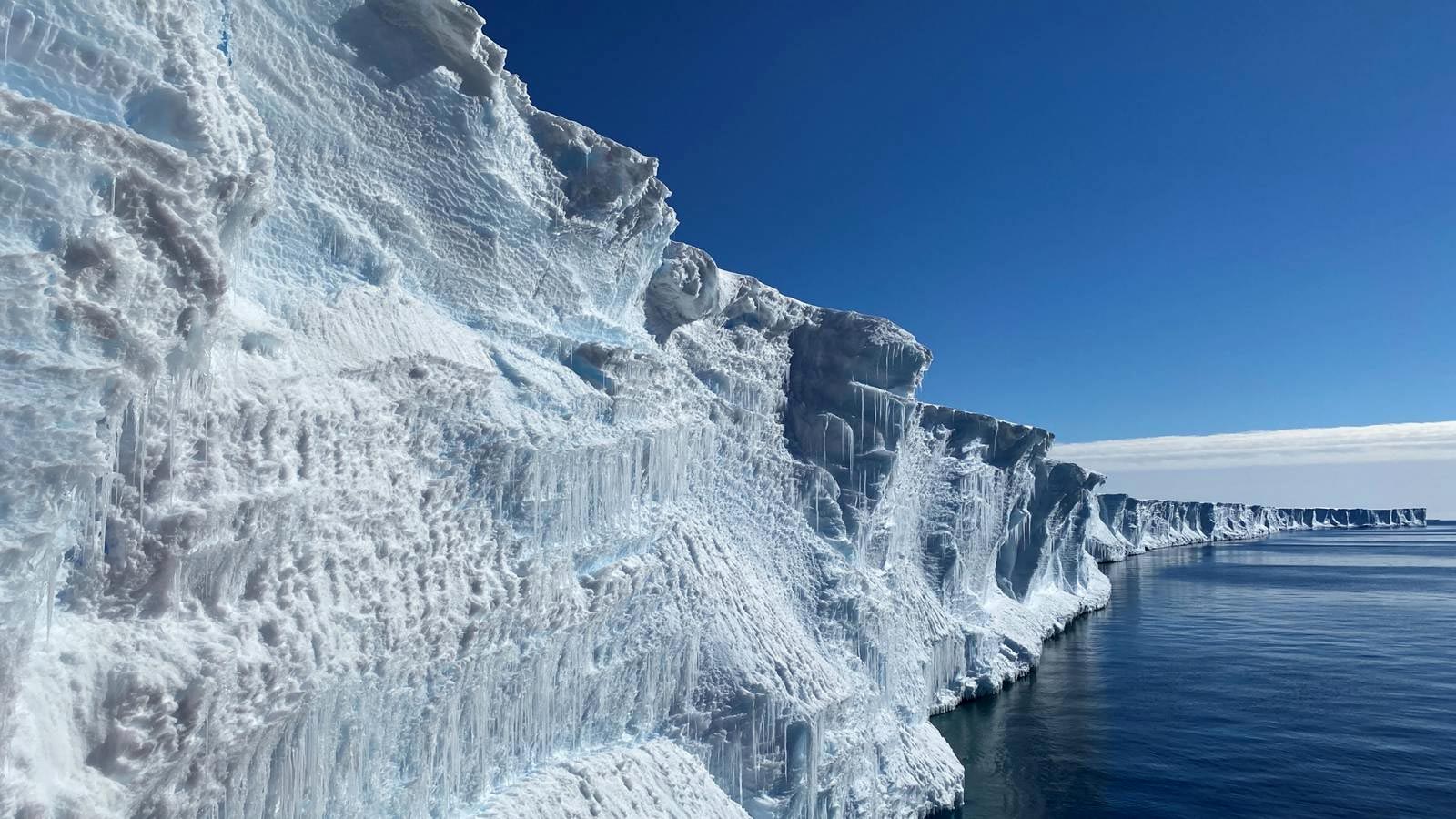
Antarctic ice shelf melting faster than climate models predicted
💡Critical climate data update that impacts long-term physical infrastructure and data center site planning.
⚡ 30-Second TL;DR
What Changed
Warm seawater traps under ice shelves are accelerating melting rates
Why It Matters
This research necessitates a recalibration of climate risk models, which are critical for long-term infrastructure planning and data center site selection in coastal regions.
What To Do Next
If you are building climate-resilient infrastructure, update your risk assessment models to include these new Antarctic thermal melting variables.
Key Points
- •Warm seawater traps under ice shelves are accelerating melting rates
- •Current climate models fail to account for these specific thermal pockets
- •Global sea level rise projections likely need significant upward revision
🧠 Deep Insight
Web-grounded analysis with 19 cited sources.
🔑 Enhanced Key Takeaways
- •The Norwegian study, led by Tore Hattermann from the iC3 Polar Research Hub, specifically investigated the Fimbulisen Ice Shelf in East Antarctica, a region previously considered less vulnerable, revealing that channel-like formations on the ice shelf's underside actively trap warm seawater, intensifying local melt rates by an order of magnitude.
- •This localized melting mechanism can lead to uneven thinning and weakening of the ice shelf's structural integrity, potentially creating a dangerous feedback loop where deepening channels further accelerate the flow of land-based glaciers into the ocean.
- •Recent observational data (April 2026) confirms that deep-ocean heat, specifically circumpolar deep water, has shifted closer to the Antarctic continental shelf over the past two decades, a phenomenon previously predicted by climate models but only now observed, adding another layer of concern to basal melting.
- •The Intergovernmental Panel on Climate Change (IPCC) has already recognized polar ice shelf instability as a significant and poorly understood risk factor, indicating that current sea level rise projections may be too conservative.
🛠️ Technical Deep Dive
- Current global climate models, including those used by the IPCC, generally do not adequately resolve the small-scale oceanographic processes occurring within sub-ice shelf channels, leading to an underestimation of basal melt rates.
- Researchers in the Norwegian study utilized a combination of detailed bathymetric mapping of the ice shelf underside and high-resolution ocean modeling to identify and quantify the localized trapping of warm seawater.
- The challenge in integrating these findings into broader climate models involves accurately representing the evolving geometries of sub-ice-shelf cavities and the dynamic interaction at the grounding line, which are complex to model across different timescales.
- Advanced coupled ocean-sea ice models, such as those using components like CICE (Los Alamos Sea Ice Model) and ROMS (Regional Ocean Modeling System) or MOM-5 (Modular Ocean Model) with SIS (Sea Ice Simulator), are being developed to better simulate ice-ocean interactions, but often struggle with the fine-scale resolution needed for these specific thermal pockets.
🔮 Future ImplicationsAI analysis grounded in cited sources
⏳ Timeline
📎 Sources (19)
Factual claims are grounded in the sources below. Forward-looking analysis is AI-generated interpretation.
- Google Search Source
- Google Search Source
- Google Search Source
- Google Search Source
- Google Search Source
- Google Search Source
- Google Search Source
- Google Search Source
- Google Search Source
- Google Search Source
- Google Search Source
- Google Search Source
- Google Search Source
- Google Search Source
- Google Search Source
- Google Search Source
- Google Search Source
- Google Search Source
- Google Search Source
Weekly AI Recap
Read this week's curated digest of top AI events →
👉Related Updates
Same topic
Explore #climate-change
Same product
More on antarctic-ice-shelf-climate-model
Same source
Latest from cnBeta (Full RSS)

Microsoft plans to transform Minecraft into a global creator platform

SpaceX Rocket Debris to Impact Moon

Apple warns of potential AI compute resource shortages

ShieldFont uses obfuscated typography to block AI scrapers
AI-curated news aggregator. All content rights belong to original publishers.
Original source: cnBeta (Full RSS) ↗