America Experiments, China Scales
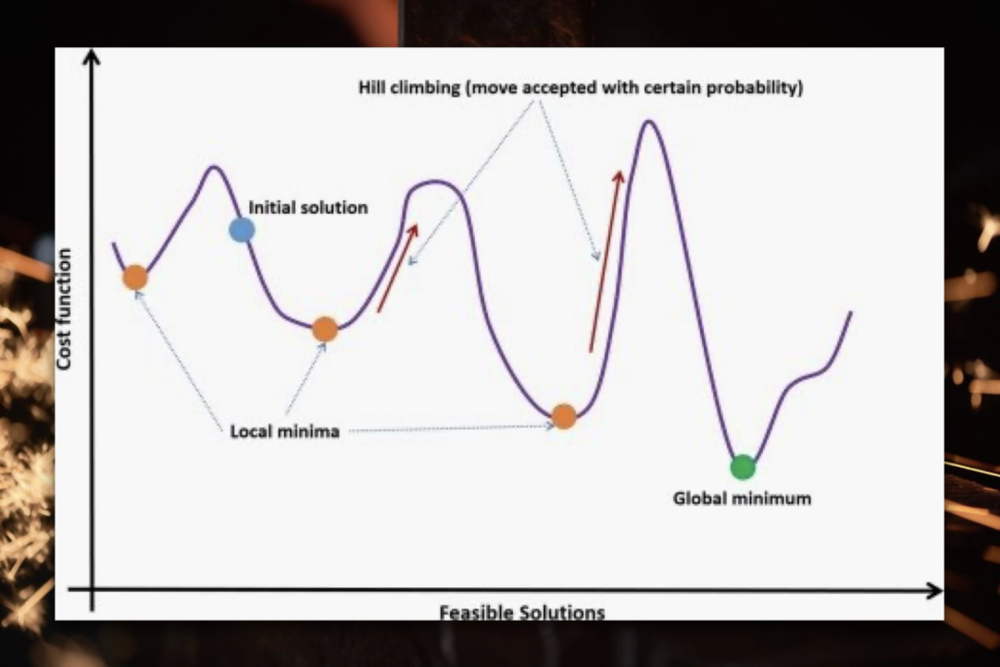
💡Chinese open-source models may be becoming the low-cost foundation beneath global AI startups.
⚡ 30-Second TL;DR
What Changed
Chinese open-source models reportedly occupy most of the top ten positions on several global rankings, with cumulative downloads exceeding 10 billion.
Why It Matters
For AI practitioners, the key implication is that model advantage may increasingly depend on distribution, cost, openness, and ecosystem adoption rather than frontier benchmarks alone. Chinese open-source models could become strategically important infrastructure for global startups, although the article’s statistics and future-dated claims should be independently verified.
What To Do Next
Benchmark at least one Chinese open-source model, such as Qwen or DeepSeek, against your current production model for quality, latency, licensing, and inference cost.
Key Points
- •Chinese open-source models reportedly occupy most of the top ten positions on several global rankings, with cumulative downloads exceeding 10 billion.
- •The article claims that around 80% of AI startups seeking funding in Silicon Valley may use Chinese open-source models as their foundation.
- •China reportedly accounted for about 46% of new molecules entering human trials in the first half of 2025, while the US remained a major buyer of Chinese biotech assets.
- •SpaceX’s high-frequency launch program and Starship’s repeated failures are presented as examples of high-temperature experimentation and convex risk-taking.
- •The article argues that the old division of US innovation versus Chinese execution is weakening as both countries increasingly perform both invention and scaling.
Weekly AI Recap
Read this week's curated digest of top AI events →
👉Related Updates
AI-curated news aggregator. All content rights belong to original publishers.
Original source: 虎嗅 ↗
This is a summary, not the original. Read the source, or get the weekly briefing.
Weekly AI briefing
One email a week. Unsubscribe anytime.