AMD FSR 4.1 Expands Support to RX 7000/6000 Series

💡Learn how AMD is bringing AI-driven upscaling to older GPUs, expanding your game's performance reach.
⚡ 30-Second TL;DR
What Changed
FSR 4.1 brings AI-driven upscaling to legacy hardware.
Why It Matters
This update extends the lifecycle of older AMD hardware by leveraging AI to improve visual fidelity and performance. It allows developers to target a broader user base with AI-enhanced gaming experiences.
What To Do Next
Integrate the latest FSR 4.1 SDK into your game engine to optimize performance on AMD hardware across multiple generations.
Key Points
- •FSR 4.1 brings AI-driven upscaling to legacy hardware.
- •Support confirmed for RX 7000 and RX 6000 series GPUs.
- •Steam Machine devices are included in the compatibility list.
🧠 Deep Insight
Web-grounded analysis with 21 cited sources.
🔑 Enhanced Key Takeaways
- •FSR 4.1 was initially exclusive to AMD's latest RDNA 4 architecture (Radeon RX 9000 series) GPUs, with the current announcement extending support to older generations.
- •The 'AI-driven' aspect of FSR 4.1 utilizes machine learning algorithms and neural networks to reconstruct visuals, aiming to match or exceed native rendering quality.
- •FSR 4.1 for RDNA 3 (RX 7000 series) and RDNA 2 (RX 6000 series) GPUs will use an optimized INT8 version of the ML algorithm, as these architectures primarily support INT8 processing, unlike RDNA 4's FP8 capabilities.
- •The FSR 4.1 update significantly improves image quality over previous FSR versions, offering less blurring, better detail retention on fine lines and distant objects, and enhanced temporal stability to reduce shimmer on object edges.
- •FSR 4.1 is based on the same underlying foundation as Sony's PSSR 2.0 upscaling technology, which was recently introduced for PlayStation 5 Pro consoles.
📊 Competitor Analysis▸ Show
| Feature/Aspect | AMD FSR (FidelityFX Super Resolution) | NVIDIA DLSS (Deep Learning Super Sampling) | Intel XeSS (Xe Super Sampling) |
|---|---|---|---|
| Technology Type | Open-source, AI-driven temporal upscaling and frame generation | Proprietary, AI-driven temporal upscaling and frame generation | Hybrid (AI-accelerated on Arc, DP4a fallback for others) temporal upscaling and frame generation |
| Hardware Support | Broad compatibility across AMD, NVIDIA, and Intel GPUs (FSR 4.1 for RDNA 2/3/4) | Exclusive to NVIDIA RTX GPUs (Tensor Cores required) | Optimized for Intel Arc GPUs (XMX units), but also runs on other GPUs |
| Image Quality | Significant improvements with FSR 4.1, aiming for native or better quality; less ghosting, better detail. | Often leads in overall performance and image clarity on RTX hardware. | Good image quality and performance, particularly on Intel Arc GPUs. |
| Performance Boost | Can increase FPS by 30-50% or more; frame generation can double FPS. | Can increase FPS by 30-50% or more; frame generation can double FPS. | Competitive results, especially on Intel hardware. |
| Frame Generation | Available (FSR 3.x and 4.x), FSR 3.1 decoupled from upscaling. | Available (DLSS 3+), includes Multi-Frame Generation. | Available (XeSS 2+). |
| Ray Tracing | FSR 4.1 includes FSR Ray Regeneration. | Includes Ray Reconstruction. | Supports ray tracing. |
| Pricing | Integrated into GPU drivers and games (free). | Integrated into GPU drivers and games (free). | Integrated into GPU drivers and games (free). |
🛠️ Technical Deep Dive
- FSR 4.1 is an ML-powered upscaler that uses neural networks to reconstruct visuals from lower-resolution frames.
- The algorithm analyzes temporal and spatial information from multiple frames to improve detail and image quality.
- For RDNA 3 and RDNA 2 architectures, AMD has optimized the FSR 4.1 ML algorithm for the INT8 data format, as these GPUs primarily support INT8 processing, whereas RDNA 4 features FP8 processing units.
- FSR 4.1 delivers improvements in temporal stability, better preservation of fine details and particle effects, and reduced ghosting on moving objects.
- The technology is part of the AMD FSR "Redstone" SDK 2.2, which also incorporates FSR Ray Regeneration 1.1.
- FSR 3.1, a predecessor, introduced the ability to decouple frame generation from the upscaling component, allowing it to work with other temporal upscalers.
- Memory requirements for FSR Super Resolution can be significant, for example, approximately 318MB for upscaling to 3840x2160 resolution on an RX 9070XT.
🔮 Future ImplicationsAI analysis grounded in cited sources
⏳ Timeline
📎 Sources (21)
Factual claims are grounded in the sources below. Forward-looking analysis is AI-generated interpretation.
- Google Search Source
- Google Search Source
- Google Search Source
- Google Search Source
- Google Search Source
- Google Search Source
- Google Search Source
- Google Search Source
- Google Search Source
- Google Search Source
- Google Search Source
- Google Search Source
- Google Search Source
- Google Search Source
- Google Search Source
- Google Search Source
- Google Search Source
- Google Search Source
- Google Search Source
- Google Search Source
- Google Search Source
Weekly AI Recap
Read this week's curated digest of top AI events →
👉Related Updates
Same topic
Explore #gpu-acceleration
Same product
More on amd-fsr-4.1
Same source
Latest from cnBeta (Full RSS)

Microsoft plans to transform Minecraft into a global creator platform
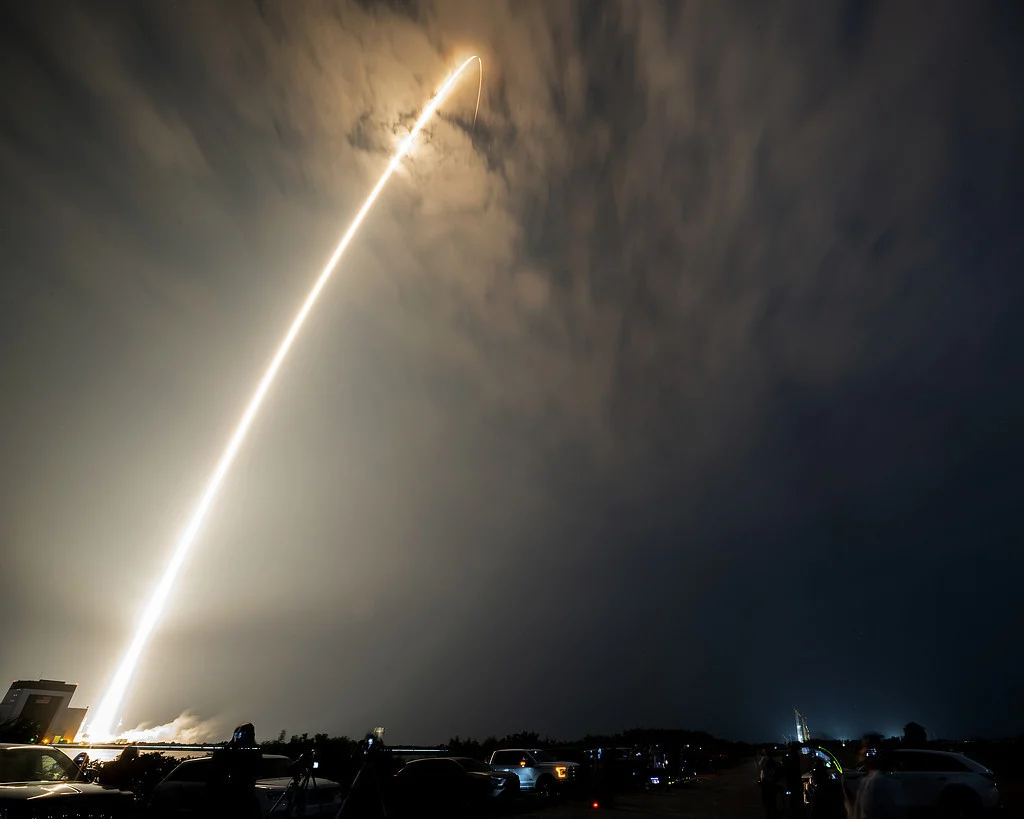
SpaceX Rocket Debris to Impact Moon
Apple warns of potential AI compute resource shortages

ShieldFont uses obfuscated typography to block AI scrapers
AI-curated news aggregator. All content rights belong to original publishers.
Original source: cnBeta (Full RSS) ↗