AMD bets on UMA for future AI hardware roadmap
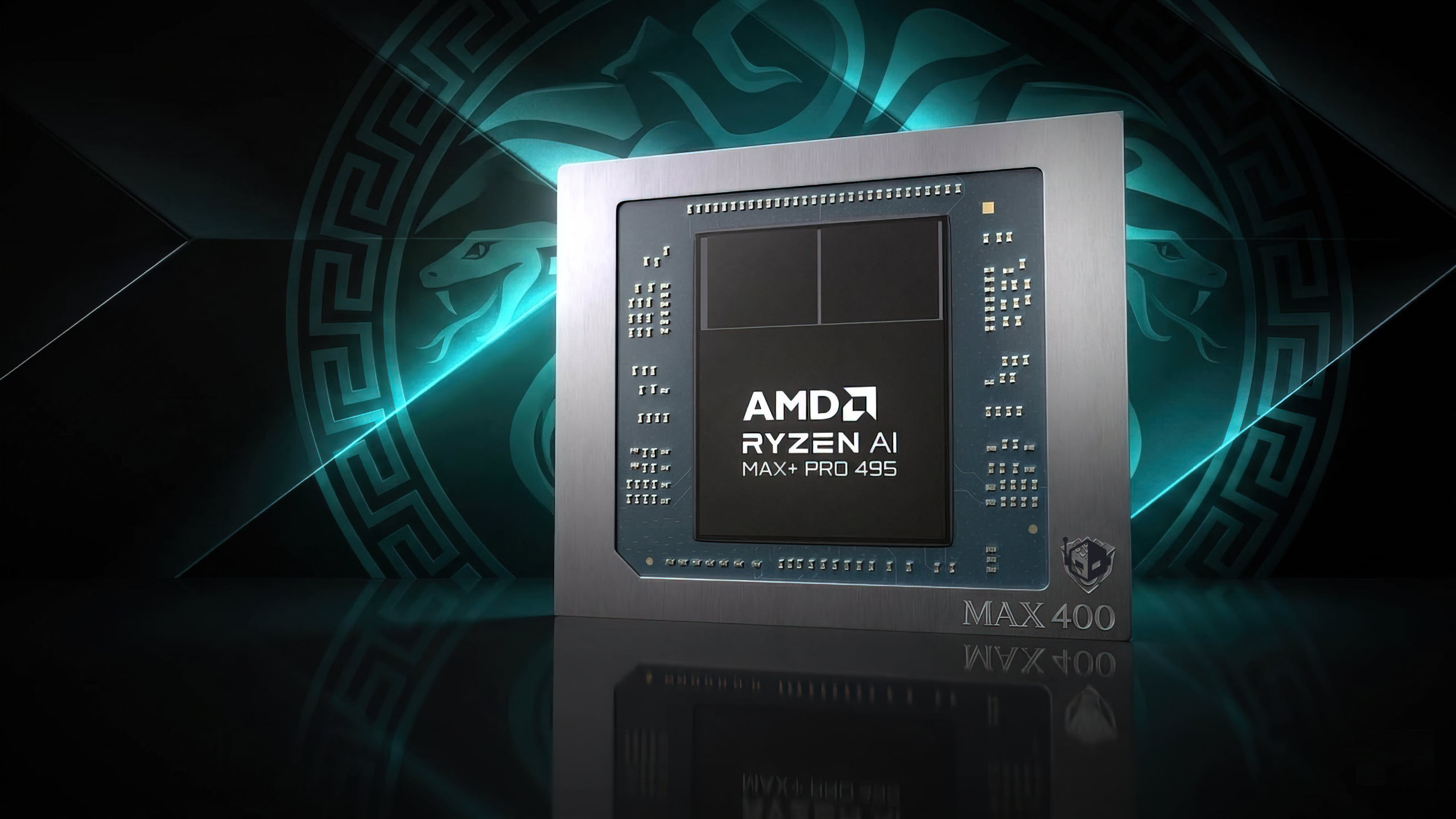
💡AMD's strategic pivot to UMA signals a major shift in how hardware will handle memory-intensive Agentic AI tasks.
⚡ 30-Second TL;DR
What Changed
AMD prioritizes UMA as a core direction for future product roadmaps
Why It Matters
This shift indicates that AMD is aligning its hardware design to optimize for memory-intensive AI tasks, potentially challenging Nvidia's dominance in integrated memory systems.
What To Do Next
Evaluate your current AI workload memory requirements to determine if UMA-optimized hardware can reduce your inference latency.
Key Points
- •AMD prioritizes UMA as a core direction for future product roadmaps
- •Focus on supporting the rising wave of Agentic AI applications
- •UMA is positioned as a key differentiator for high-performance computing platforms
🧠 Deep Insight
Background and context from public sources — not the original article. 21 sources cited.
🔑 Enhanced Key Takeaways
- •AMD's UMA strategy extends to its Ryzen AI MAX series (e.g., 400 series) for client PCs, enabling local execution of large language models (300B+ parameters) by offering up to 192 GB of unified memory, with up to 160 GB allocatable to the GPU.
- •The Instinct MI300A APU, a key component of AMD's UMA strategy for data centers, integrates 24 Zen 4 CPU cores, 228 CDNA 3 GPU compute units, and 128 GB of unified HBM3 memory into a single package, presenting a shared address space to both CPU and GPU.
- •Agentic AI workloads, which AMD aims to support, are characterized by persistent state across sessions, repeated model re-entry, and sustained KV-cache growth, requiring high-concurrency, low-latency memory access.
- •AMD's CDNA architecture, particularly CDNA 3 and the upcoming CDNA 4, utilizes chiplet-based designs and Infinity Fabric to achieve scalability and efficient data movement, supporting a wide array of AI and HPC data formats.
- •NVIDIA's RTX Spark also adopts dynamic and unified memory architectures, indicating an industry-wide validation of the UMA approach for AI workloads.
📊 Competitor Analysis▸ Show
| Feature / Metric | AMD MI300X / MI300A | NVIDIA H100 / H200 | Intel Gaudi3 |
|---|---|---|---|
| Architecture | CDNA 3 (chiplet-based, 3.5D packaging) | Hopper (monolithic) | Dual-die design (two compute dies on one package) |
| Memory Capacity | MI300X: 192 GB HBM3; MI300A: 128 GB unified HBM3 | H100: 80 GB HBM3; H200: 141 GB HBM3e | 128 GB HBM2e |
| Memory Bandwidth | MI300X: 5.3 TB/s; MI300A: 1 TB/s bidirectional (per APU) | H100: 3.35 TB/s; H200: 4.8 TB/s | 3.7 TB/s |
| Peak FP16 Performance | MI300X: 1307 TFLOPS; MI300A: 980.6 TFLOPS (with sparsity) | H100: 989 TFLOPS | Gaudi3: 1.8 PFLOPs (BF16/FP8 matrix) |
| AI Workload Focus | LLM inference, training large models (due to memory), HPC | Cloud AI, data center training, mixed-precision training | High-efficiency training, cost-sensitive deployments |
| Software Ecosystem | ROCm (open-source, improving support) | CUDA (mature, developer-friendly, extensive framework support) | SynapseAI (integrations for PyTorch/TensorFlow, based on open standards) |
| Pricing/Cost-Efficiency | MI300X: Positioned for balanced value, lower cloud rental costs than H100 | H100: High-end, expensive | Gaudi3: More affordable, lower upfront costs |
🛠️ Technical Deep Dive
- AMD Instinct MI300A APU: Integrates 24 'Zen 4' x86 CPU cores with 228 AMD CDNA™ 3 high-throughput GPU compute units and 128 GB of unified HBM3 memory.
- AMD Instinct MI300X Accelerator: A GPU-only design featuring 192 GB of HBM3 memory with 5.3 TB/s peak memory bandwidth.
- CDNA 3 Architecture: Utilizes a chiplet-based design with 3D stacking and 2.5D silicon interposers, interconnected by the 4th Gen AMD Infinity Architecture for efficient data transfer.
- Memory Subsystem: Features a 128-channel interface to HBM3 and includes 256MB of AMD Infinity Cache.
- Precision Support: Optimized for a broad range of data types including FP64, FP32, FP16, BF16, TF32, FP8, and INT8, with native hardware sparsity support.
- ROCm Software Platform: An open-source software stack that supports unified memory management and facilitates programming for AI and HPC workloads on AMD GPUs.
- Ryzen AI MAX Series: Incorporates integrated XDNA 2 NPUs, Zen 5 CPU cores, and RDNA 3.5 GPUs, offering up to 192GB of unified system memory (with up to 160GB allocatable to the GPU).
🔮 Future ImplicationsAI analysis grounded in cited sources
⏳ Timeline
📎 Sources (21)
Factual claims are grounded in the sources below. Forward-looking analysis is AI-generated interpretation.
Weekly AI Recap
Read this week's curated digest of top AI events →
👉Related Updates
AI-curated news aggregator. All content rights belong to original publishers.
Original source: cnBeta (Full RSS) ↗
This is a summary, not the original. Read the source, or get the weekly briefing.
The weekly digest
One email a week. Unsubscribe anytime.