來源cnBeta (Full RSS)•較早收集於 8h
AMD 押注統一記憶體架構以重塑 AI 硬體路線圖
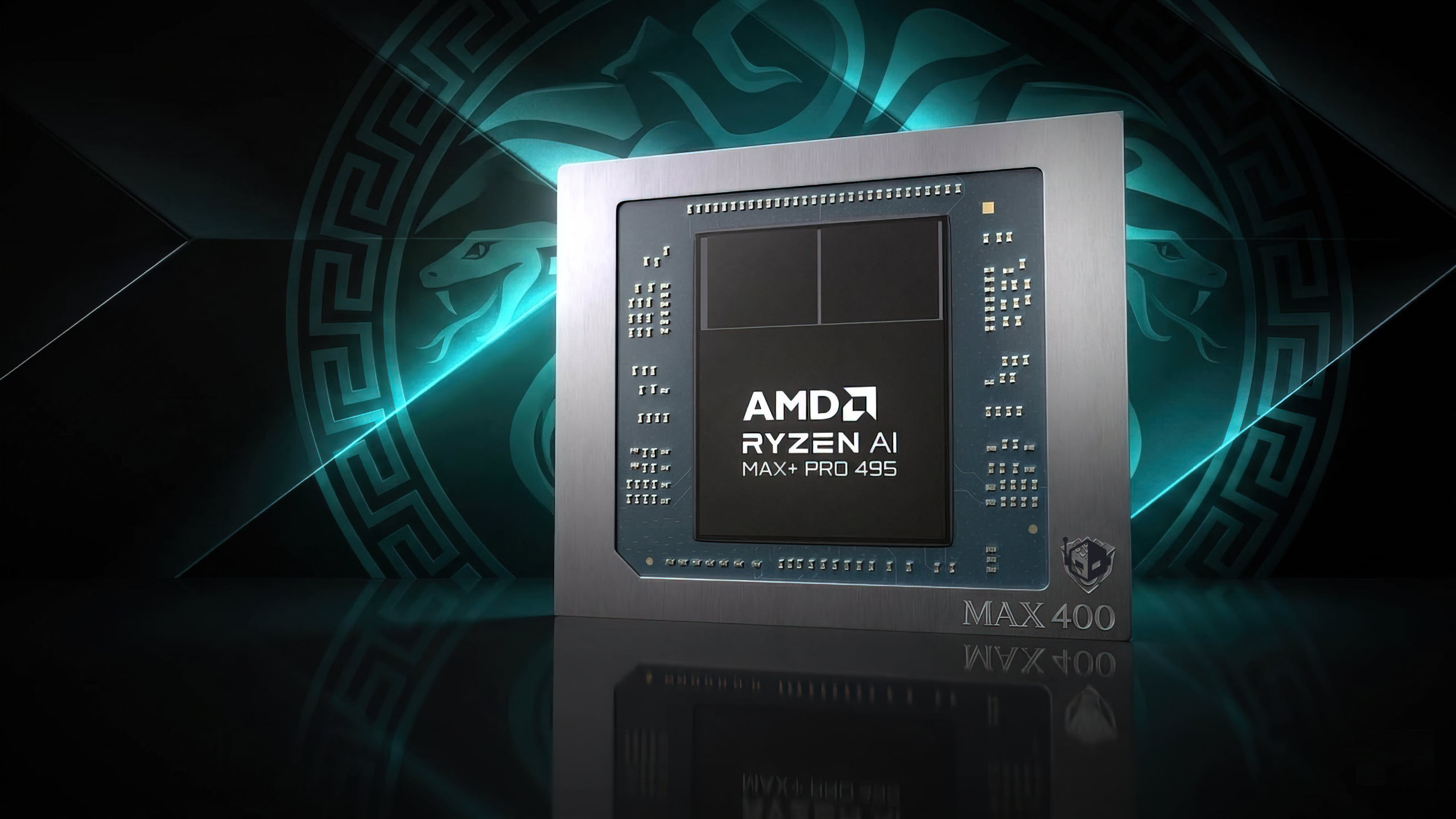
💡AMD 向 UMA 的戰略轉向,預示著硬體處理記憶體密集型 Agentic AI 任務的方式將發生重大變革。
⚡ 30 秒速覽
有什麼變化
AMD 將 UMA 列為未來產品路線圖的核心方向
為什麼重要
此轉變顯示 AMD 正調整其硬體設計以優化記憶體密集型 AI 任務,可能對 Nvidia 在整合記憶體系統領域的統治地位構成挑戰。
下一步行動
評估您目前 AI 工作負載的記憶體需求,以確定 UMA 優化的硬體是否能降低您的推論延遲。
誰應關注:Developers & AI Engineers
關鍵要點
- •AMD 將 UMA 列為未來產品路線圖的核心方向
- •專注於支援日益增長的 Agentic AI 應用
- •UMA 被定位為高效能運算平台的關鍵差異化優勢
🧠 深度解析
背景與延伸:來自公開資料,非原文內容。引用 21 個來源。
🔑 增強重點摘要
- •AMD's UMA strategy extends to its Ryzen AI MAX series (e.g., 400 series) for client PCs, enabling local execution of large language models (300B+ parameters) by offering up to 192 GB of unified memory, with up to 160 GB allocatable to the GPU.
- •The Instinct MI300A APU, a key component of AMD's UMA strategy for data centers, integrates 24 Zen 4 CPU cores, 228 CDNA 3 GPU compute units, and 128 GB of unified HBM3 memory into a single package, presenting a shared address space to both CPU and GPU.
- •Agentic AI workloads, which AMD aims to support, are characterized by persistent state across sessions, repeated model re-entry, and sustained KV-cache growth, requiring high-concurrency, low-latency memory access.
- •AMD's CDNA architecture, particularly CDNA 3 and the upcoming CDNA 4, utilizes chiplet-based designs and Infinity Fabric to achieve scalability and efficient data movement, supporting a wide array of AI and HPC data formats.
- •NVIDIA's RTX Spark also adopts dynamic and unified memory architectures, indicating an industry-wide validation of the UMA approach for AI workloads.
📊 競品分析▸ Show
| Feature / Metric | AMD MI300X / MI300A | NVIDIA H100 / H200 | Intel Gaudi3 |
|---|---|---|---|
| Architecture | CDNA 3 (chiplet-based, 3.5D packaging) | Hopper (monolithic) | Dual-die design (two compute dies on one package) |
| Memory Capacity | MI300X: 192 GB HBM3; MI300A: 128 GB unified HBM3 | H100: 80 GB HBM3; H200: 141 GB HBM3e | 128 GB HBM2e |
| Memory Bandwidth | MI300X: 5.3 TB/s; MI300A: 1 TB/s bidirectional (per APU) | H100: 3.35 TB/s; H200: 4.8 TB/s | 3.7 TB/s |
| Peak FP16 Performance | MI300X: 1307 TFLOPS; MI300A: 980.6 TFLOPS (with sparsity) | H100: 989 TFLOPS | Gaudi3: 1.8 PFLOPs (BF16/FP8 matrix) |
| AI Workload Focus | LLM inference, training large models (due to memory), HPC | Cloud AI, data center training, mixed-precision training | High-efficiency training, cost-sensitive deployments |
| Software Ecosystem | ROCm (open-source, improving support) | CUDA (mature, developer-friendly, extensive framework support) | SynapseAI (integrations for PyTorch/TensorFlow, based on open standards) |
| Pricing/Cost-Efficiency | MI300X: Positioned for balanced value, lower cloud rental costs than H100 | H100: High-end, expensive | Gaudi3: More affordable, lower upfront costs |
🛠️ 技術深入
- AMD Instinct MI300A APU: Integrates 24 'Zen 4' x86 CPU cores with 228 AMD CDNA™ 3 high-throughput GPU compute units and 128 GB of unified HBM3 memory.
- AMD Instinct MI300X Accelerator: A GPU-only design featuring 192 GB of HBM3 memory with 5.3 TB/s peak memory bandwidth.
- CDNA 3 Architecture: Utilizes a chiplet-based design with 3D stacking and 2.5D silicon interposers, interconnected by the 4th Gen AMD Infinity Architecture for efficient data transfer.
- Memory Subsystem: Features a 128-channel interface to HBM3 and includes 256MB of AMD Infinity Cache.
- Precision Support: Optimized for a broad range of data types including FP64, FP32, FP16, BF16, TF32, FP8, and INT8, with native hardware sparsity support.
- ROCm Software Platform: An open-source software stack that supports unified memory management and facilitates programming for AI and HPC workloads on AMD GPUs.
- Ryzen AI MAX Series: Incorporates integrated XDNA 2 NPUs, Zen 5 CPU cores, and RDNA 3.5 GPUs, offering up to 192GB of unified system memory (with up to 160GB allocatable to the GPU).
🔮 前景展望基於引用來源的 AI 分析
AMD's UMA strategy will significantly lower the barrier to entry for local Agentic AI development.
By providing large unified memory pools on APUs like the Ryzen AI MAX series, developers can run large language models (300B+ parameters) locally without the prohibitive cost and complexity of discrete multi-GPU setups.
The adoption of UMA will accelerate the convergence of HPC and AI workloads.
UMA eliminates data transfer bottlenecks between CPU and GPU, simplifying programming and improving efficiency for applications that benefit from both high-performance computing and AI acceleration.
AMD's focus on UMA and chiplet design will enhance its competitiveness against NVIDIA in memory-intensive AI workloads.
The MI300X already offers significantly more HBM3 memory and bandwidth than NVIDIA's H100, which is crucial for large language models, and the chiplet approach allows for greater scalability and power efficiency.
⏳ 時間線
2020-03-05
AMD announces the first generation of its CDNA architecture.
2020-11-16
AMD Instinct MI100, the first product with CDNA 1, is launched.
2021-11-08
AMD announces CDNA 2, featuring a multi-chip module (MCM) approach.
2023-01-05
AMD announces the MI300 series (MI300X and MI300A) based on CDNA 3 architecture.
2023-H2
MI300 series accelerators are launched.
2026-06-02
AMD introduces Ryzen AI Halo developer platform and Ryzen AI Max PRO 400 Series processors, emphasizing unified memory for local Agentic AI.
📎 來源 (21)
Factual claims are grounded in the sources below. Forward-looking analysis is AI-generated interpretation.
📰
AI 週報
閱讀本週精選 AI 大事摘要 →
👉相關動態
AI 策展新聞聚合。所有內容版權歸原始發布者所有。
原始來源: cnBeta (Full RSS) ↗
每週電子報
每週一封,可隨時退訂。