Amazon Finance Uses Bedrock for Reg Inquiries
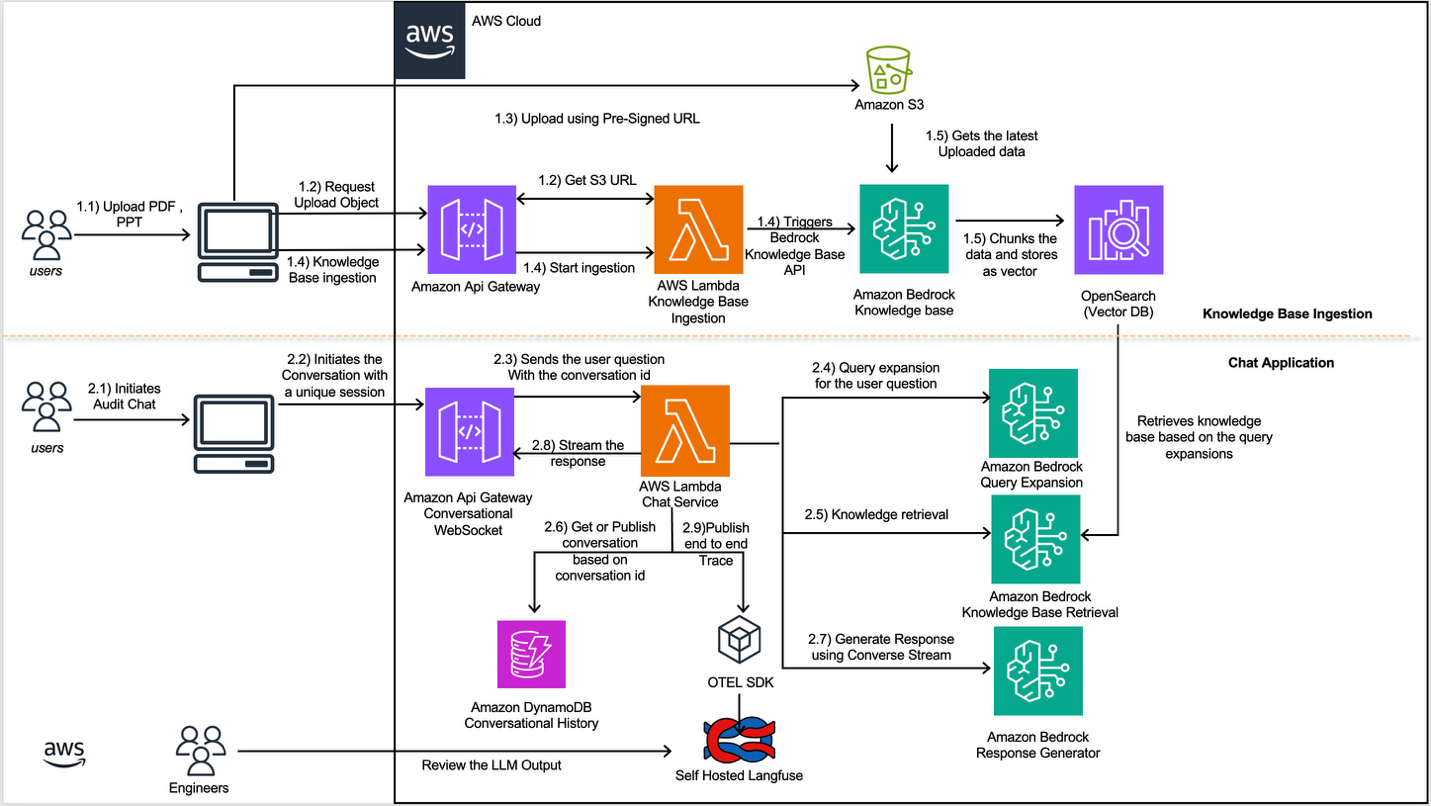
Amazon's Bedrock blueprint for fintech compliance – enterprise RAG in action
30-Second TL;DR
What Changed
Amazon FinTech builds AI apps with Bedrock for regulatory inquiries
Why It Matters
Enterprises in regulated industries can adopt similar Bedrock-based RAG systems to automate compliance tasks, reducing response times and manual effort. Demonstrates practical gen AI integration in finance.
What To Do Next
Build a Bedrock knowledge base with your docs to test regulatory RAG pipelines.
Key Points
- •Amazon FinTech builds AI apps with Bedrock for regulatory inquiries
- •Teams create dedicated knowledge bases with team-specific documents
- •Scalable solution uses generative AI on AWS for streamlined compliance
Deep Insight
AI-generated analysis for this event — not the original article.
Enhanced Key Takeaways
- •Amazon Finance utilizes Amazon Bedrock's Knowledge Bases feature to implement Retrieval-Augmented Generation (RAG), which grounds generative AI responses in verified, team-specific regulatory documentation to reduce hallucinations.
- •The architecture integrates Amazon OpenSearch Service as the vector database to store and query document embeddings, enabling low-latency retrieval of relevant regulatory clauses for complex inquiries.
- •By automating the initial drafting of responses to regulatory inquiries, Amazon Finance has significantly reduced the manual workload for compliance officers, allowing them to focus on final review and validation rather than information gathering.
Competitor Analysis
- Amazon Bedrock (Finance RAG)
- Amazon OpenSearch Serverless
- Microsoft Azure AI Search (Compliance)
- Azure AI Search
- Google Cloud Vertex AI Search
- Vertex AI Vector Search
- Amazon Bedrock (Finance RAG)
- Multi-model (Claude, Titan, Llama)
- Microsoft Azure AI Search (Compliance)
- Primarily OpenAI GPT models
- Google Cloud Vertex AI Search
- Primarily Gemini models
- Amazon Bedrock (Finance RAG)
- AWS-native security/governance
- Microsoft Azure AI Search (Compliance)
- Microsoft Purview integration
- Google Cloud Vertex AI Search
- Google Cloud Security Command Center
| Feature | Amazon Bedrock (Finance RAG) | Microsoft Azure AI Search (Compliance) | Google Cloud Vertex AI Search |
|---|---|---|---|
| Vector Database | Amazon OpenSearch Serverless | Azure AI Search | Vertex AI Vector Search |
| Model Flexibility | Multi-model (Claude, Titan, Llama) | Primarily OpenAI GPT models | Primarily Gemini models |
| Compliance Focus | AWS-native security/governance | Microsoft Purview integration | Google Cloud Security Command Center |
Technical Deep Dive
- •Implementation utilizes Amazon Bedrock Knowledge Bases to manage the end-to-end RAG pipeline, including data ingestion, chunking, and embedding generation.
- •Data is ingested from Amazon S3 buckets, where regulatory documents are stored, and processed using Bedrock's managed embedding models (e.g., Titan Embeddings).
- •The system employs a 'human-in-the-loop' architecture where the generative AI drafts responses, but final regulatory submissions require explicit approval from human compliance subject matter experts.
- •Security is enforced via AWS Identity and Access Management (IAM) to ensure that only authorized personnel can access specific knowledge bases containing sensitive financial data.
Future ImplicationsAI analysis grounded in cited sources
Timeline
- 2023-09Amazon Bedrock becomes generally available, providing the foundation for enterprise-scale generative AI applications.
- 2023-11AWS announces Knowledge Bases for Amazon Bedrock, enabling RAG for enterprise data.
- 2024-05Amazon Finance begins scaling internal generative AI pilots for regulatory and compliance workflows.
- 2025-02AWS introduces enhanced guardrails for Amazon Bedrock to improve safety and compliance in regulated industries.
Weekly AI Recap
Read this week's curated digest of top AI events →
AI-curated news aggregator. All content rights belong to original publishers.
Original source: AWS Machine Learning Blog ↗
This is a summary, not the original. Read the source, or get the weekly briefing.
The weekly digest
One email a week. Unsubscribe anytime.