Latest RAG News & Updates
Retrieval-augmented generation is how enterprises actually deploy LLMs on their own data. Techniques, tools and production lessons.
124 articles
When GraphRAG actually beats vector RAG
GraphRAG addresses the limitations of standard vector RAG by using knowledge graphs to connect disparate data points. While it offers superior performance for global queries and complex reasoning, it requires more computational overhead than simple similarity search.
VultronRetriever: High-Performance Offline Retrieval Models Released
The VultronRetriever family of models has been released on HuggingFace, offering state-of-the-art retrieval performance for edge devices. These models range from 0.8B to 8B parameters and are optimized for offline Q&A and document embedding.
Big tech firms race to automate college admission counseling
Major tech companies like Alibaba, Tencent, and Baidu are deploying AI agents to fill the market gap in college admission counseling, aiming to replace human experts with data-driven algorithms.
Snowflake Raises Outlook Driven by AI Data Demand
Snowflake Inc. increased its annual product sales outlook, citing strong demand for its data software in the AI era. The company's stock rose significantly following the news.
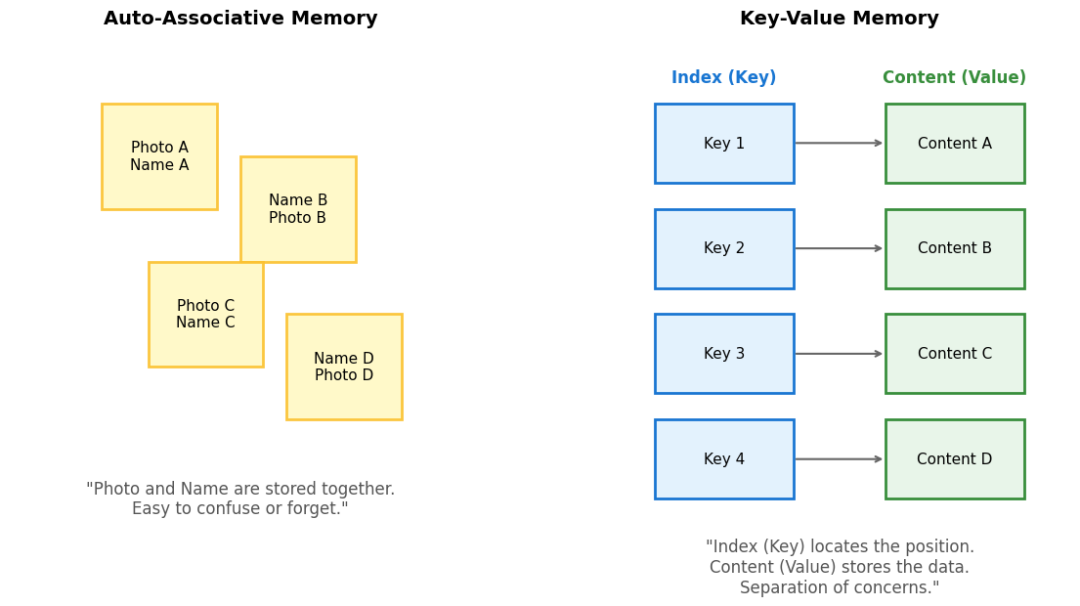
AI Key-Value Memory Mirrors Human Brain Logic
A 2025 Neuron study reveals that AI's key-value memory architecture shares a similar functional logic with the human brain, specifically the division of labor between the hippocampus and the neocortex.
EU AI Act OpenRAG: Structured Legal Corpus for RAG
A new downloadable corpus for the EU AI Act, featuring 933 legally structured chunks and BGE-M3 embeddings in a single SQLite file. It improves retrieval performance by chunking based on legal provisions rather than arbitrary character windows.
HG-RAG: Hierarchy-Guided Retrieval for Structured Knowledge Graphs
HG-RAG is a new framework that improves RAG performance by traversing hierarchical knowledge graphs instead of flat document stores. It enables LLMs to perform better relational and multi-hop reasoning while reducing hallucinations.
CLaRa: Bridging Retrieval and Generation with Continuous Latent Reasoning
Apple researchers introduced CLaRa, a framework that integrates retrieval and generation through continuous latent reasoning. It uses embedding-based compression to reduce document length while maintaining semantic richness for LLMs.
Tencent Cloud Slashes MetaInsight Intelligent Retrieval Pricing
Tencent Cloud announced significant price reductions for its MetaInsight intelligent retrieval service, effective July 2026. Costs for scalar and hybrid retrieval, as well as storage, have been drastically lowered to improve accessibility.
AI Competition Trends: Model Strength vs. Context Window
The AI landscape is evolving rapidly, with a notable trend where increasing model power is accompanied by shorter, more efficient context windows. This shift impacts how developers approach long-context tasks.
Multi-agent framework for verified literature reviews
A researcher proposes a four-agent framework built on CrewAI to address LLM hallucination in systematic literature reviews. The system uses specialized roles and a confidence-gated citation verification layer to ensure claim-level accuracy.
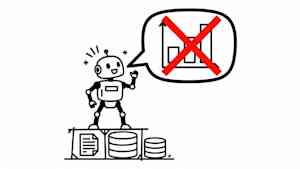
57% of Enterprises Report Confidently Wrong AI Agents
A VentureBeat survey reveals that 57% of enterprises have encountered AI agents providing incorrect information with high confidence due to poor context management. The study highlights that relying on simple document retrieval is insufficient, driving a shift toward governed context layers.
Context Graphs: Enabling Proactive Enterprise AI Agents
This research introduces 'Context Graphs,' a relational data structure that allows enterprise AI agents to move from reactive query-based models to proactive notification systems. By monitoring state changes in real-time, the framework significantly reduces the time required to surface actionable insights to workers.
Large Behavioral Model: A Promptable Digital Twin for Retail
Researchers introduced the Large Behavioral Model (LBM), which uses transaction history and retrieval-augmented generation to simulate customer decision-making. It outperforms general-purpose LLMs in retail-specific tasks like basket completion and promotion response.
RAG is essential for accurate local LLM technical answers
A developer experiment shows that local LLMs struggle with technical accuracy without RAG, but perform exceptionally well when provided with a knowledge base. The study tested various models including Apple Intelligence and Qwen, highlighting the effectiveness of context injection.
Prompt-to-Paper: Agentic AI for Automated Bioinformatics Research
Prompt-to-Paper is a multi-agent system designed to automate scientific manuscript generation by grounding claims in verifiable literature and executing real computational experiments. It features a quality-driven improvement loop that significantly enhances manuscript rigor and reproducibility.
Narrative World Model Improves Long-Form Fiction Memory
The Narrative World Model (NWM) introduces a narratology-grounded temporal-state graph to help AI track complex story arcs in long-form fiction. It significantly outperforms existing agent-memory frameworks like Graphiti/Zep in multi-hop narratological reasoning.
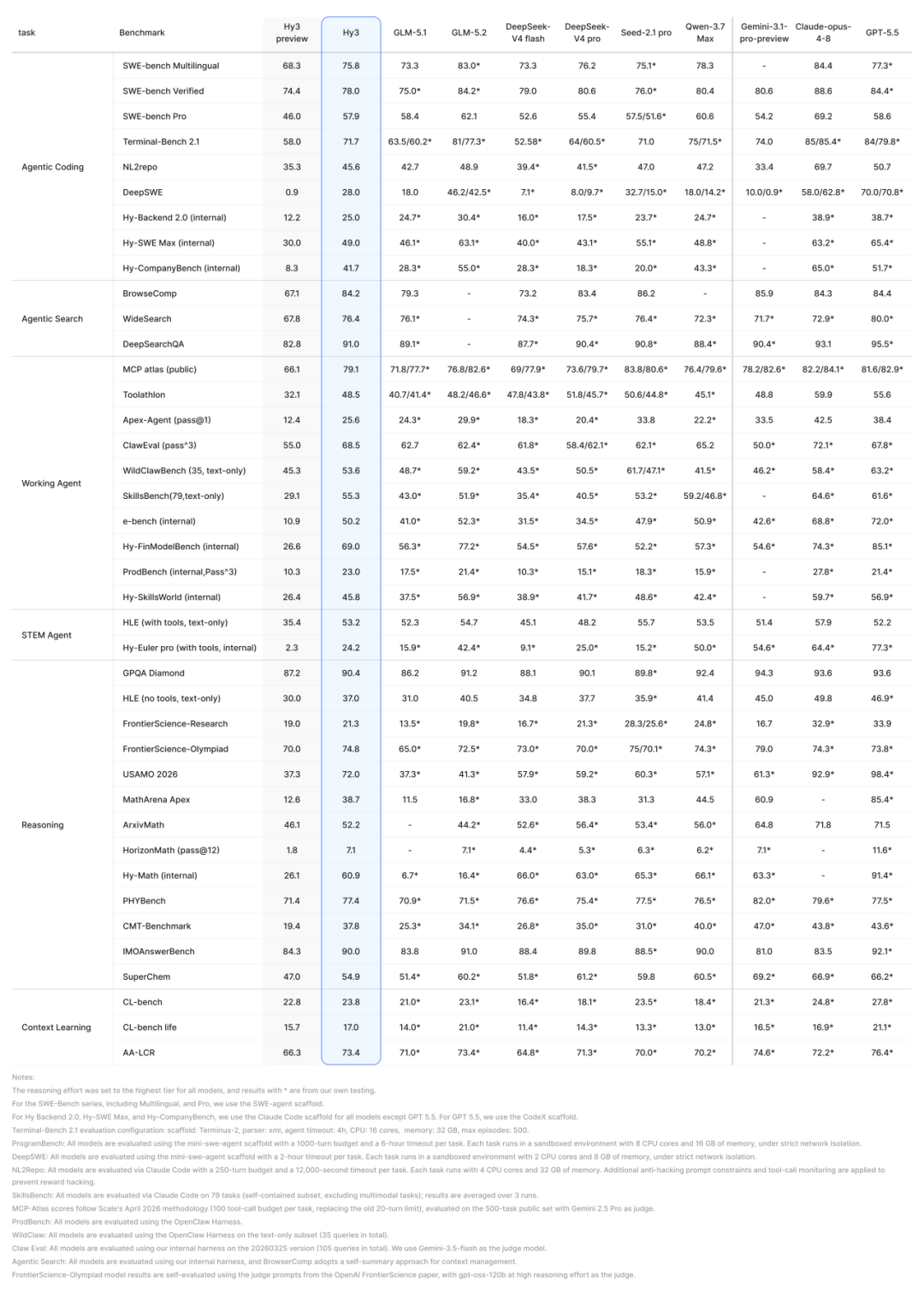
Tencent Hunyuan 3 official version shows strong performance
Tencent's Hunyuan 3 has achieved high benchmark scores, with search capabilities now matching GPT-5.5 standards. The update also reports a 50% reduction in hallucination rates.
TRACE: Open-source hierarchical memory for LLM agents
TRACE introduces a hierarchical topic tree structure for LLM agent memory, significantly outperforming existing solutions like Mem0 and MemGPT on the EventQA benchmark. It provides a more efficient alternative to flat RAG chunks for managing long-term conversation history.
Competence Gate: Gating Tool-Use via Internal Model Confidence
Competence Gate is a 10MB LoRA adapter for Qwen3.5-4B that uses internal activation signals to decide whether to answer directly, search the web, or retrieve local documents. It significantly reduces hallucinations and prevents private data leakage by gating tool usage based on verified confidence rather than verbalized claims.
BaryGraph: Knowledge Graphs with Embedded Relationship Documents
BaryGraph introduces a novel knowledge graph architecture where relationships are first-class documents with their own vectors, rather than simple edges. This approach enables the discovery of structural bridges between concepts that lack semantic similarity in standard embedding spaces.
Trunk Tools cuts document review time using specialized AI stack
Trunk Tools replaced general-purpose LLMs with a specialized three-layer architecture to handle complex construction documentation. This shift reduced document review cycles from 60 days to 10 days by focusing on domain-specific reasoning.
Contrastive Reflection for Iterative Prompt Optimization
Contrastive Reflection is a new framework that optimizes LLM prompts by identifying error-anchored behavioral slices and using a Teacher LLM to propose targeted edits. This approach significantly outperforms random evidence selection and achieves state-of-the-art results on HotpotQA benchmarks.
ToE: Hierarchical Framework for Explainable AI Claim Verification
ToE (Tree of Evidence) is a new framework that models claims as dynamic argument trees to improve automated fact-checking. It utilizes reinforcement learning-driven retrieval and evidence aggregation to combat AI-generated misinformation and GEO poisoning.
MKG-RAG-Bench: New Benchmark for Multimodal Knowledge Graph Retrieval
MKG-RAG-Bench is a new cross-domain benchmark designed to evaluate retrieval performance in multimodal knowledge graph-augmented generation. It addresses the critical bottleneck of heterogeneous data alignment by providing a curated dataset for testing retrieval and downstream generation quality.
MRAgent framework slashes token usage for agentic memory
Researchers at the National University of Singapore developed MRAgent, a framework that replaces static retrieval with active, multi-step memory reconstruction. This approach significantly reduces token consumption and runtime costs compared to traditional agentic memory systems like LangMem.
New OCR Hub Centralizes Benchmarks and Open-Source Models
Papers with Code has launched a centralized hub for OCR, featuring top-performing models like Chandra OCR 2 and Mistral OCR v4. The platform provides essential benchmarks and code links to help developers navigate the rapidly growing landscape of document digitization tools.
Tongyi Qianwen sees 14 million users for college counseling
Alibaba's Tongyi Qianwen has become a popular tool for college entrance exam candidates, with over 14 million users utilizing it for personalized volunteer reporting.
HyperspaceDB v3.1.0: High-performance Spatial AI Engine released
HyperspaceDB v3.1.0 introduces a Spatial AI Engine designed to reduce RAM usage by 50x compared to Milvus or Chroma. It utilizes Matryoshka Representation Learning and Lorentz geometry to handle complex hierarchical reasoning.
Google AI Overviews mistakenly treats fan-fiction as fact
Googleβs AI Overviews are reportedly presenting entries from the SCP Foundation, a collaborative fan-fiction project, as documented reality. This highlights ongoing challenges in AI hallucination and source verification.