AI Reconstructs Healthcare Industry Chain at 36Kr WAVES2026
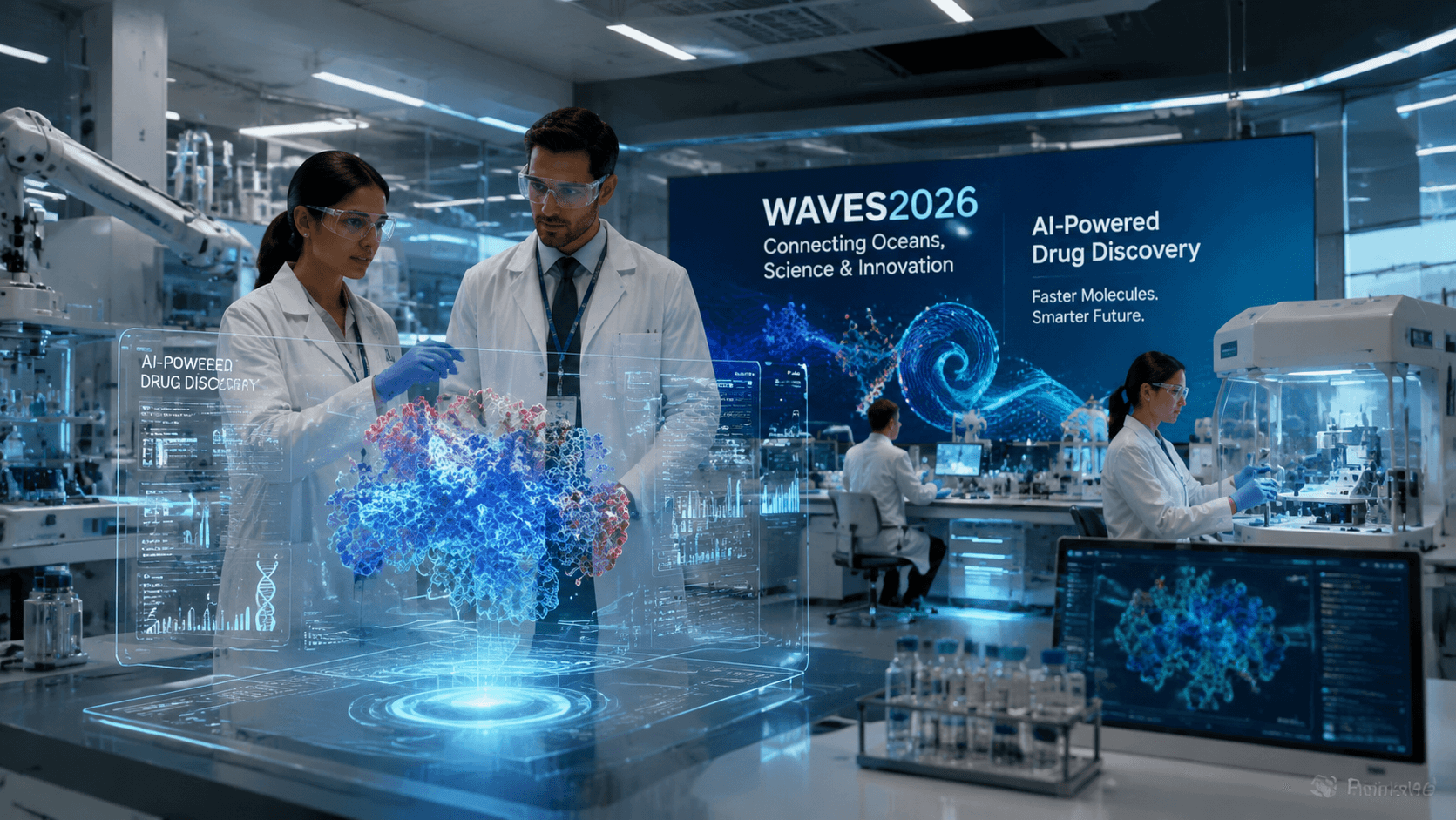
Insights on how AI is fundamentally restructuring the healthcare value chain—essential for health-tech founders.
30-Second TL;DR
What Changed
AI is moving beyond diagnostics to restructure the entire medical value chain.
Why It Matters
The restructuring of the healthcare value chain suggests significant opportunities for AI-native startups to disrupt traditional hospital and pharmaceutical operations.
What To Do Next
Analyze the specific bottlenecks in clinical workflows mentioned at WAVES2026 to identify high-impact areas for your next healthcare AI project.
Key Points
- •AI is moving beyond diagnostics to restructure the entire medical value chain.
- •Focus on systemic integration of AI in healthcare operations.
- •Industry leaders emphasize the shift toward data-driven medical decision-making.
Deep Insight
AI-generated analysis for this event — not the original article.
Enhanced Key Takeaways
- •The 36Kr WAVES2026 conference highlighted the transition from 'AI-assisted' tools to 'AI-agentic' workflows, where autonomous systems manage administrative and clinical scheduling tasks.
- •Industry participants identified the 'data silo' problem as the primary bottleneck, proposing federated learning architectures to train models across hospitals without compromising patient privacy.
- •New regulatory frameworks discussed at the event emphasize 'algorithmic accountability,' requiring healthcare providers to maintain human-in-the-loop oversight for AI-driven treatment recommendations.
- •The integration of multi-modal Large Language Models (LLMs) is enabling the synthesis of unstructured clinical notes, medical imaging, and genomic data into unified patient digital twins.
- •Investment trends presented at the summit indicate a shift in capital allocation from general-purpose diagnostic startups toward specialized infrastructure providers that focus on interoperability and legacy system integration.
Technical Deep Dive
- Implementation of Federated Learning (FL) protocols to allow model training on decentralized datasets while maintaining HIPAA/GDPR compliance.
- Utilization of Multi-modal Large Language Models (MLLMs) capable of processing DICOM imaging files alongside Electronic Health Record (EHR) text data.
- Deployment of Agentic Workflow Orchestrators that utilize Retrieval-Augmented Generation (RAG) to ground clinical decision support in verified medical literature and institutional guidelines.
- Integration of Graph Neural Networks (GNNs) for mapping complex patient-disease relationships and predicting longitudinal health outcomes.
Future ImplicationsAI analysis grounded in cited sources
Timeline
- 2023-0536Kr launches the first WAVES conference series focusing on the intersection of technology and industry innovation.
- 2024-06WAVES2024 highlights the initial surge of generative AI applications in the Chinese enterprise software market.
- 2025-0636Kr WAVES2025 emphasizes the 'AI-native' transformation of traditional manufacturing and service sectors.
- 2026-06WAVES2026 conference convenes to address the systemic integration of AI within the healthcare value chain.
Weekly AI Recap
Read this week's curated digest of top AI events →
Related Updates




AI-curated news aggregator. All content rights belong to original publishers.
Original source: Pandaily ↗
This is a summary, not the original. Read the source, or get the weekly briefing.
The weekly digest
One email a week. Unsubscribe anytime.