AI Adopted by Billions in One Chinese Spring Festival
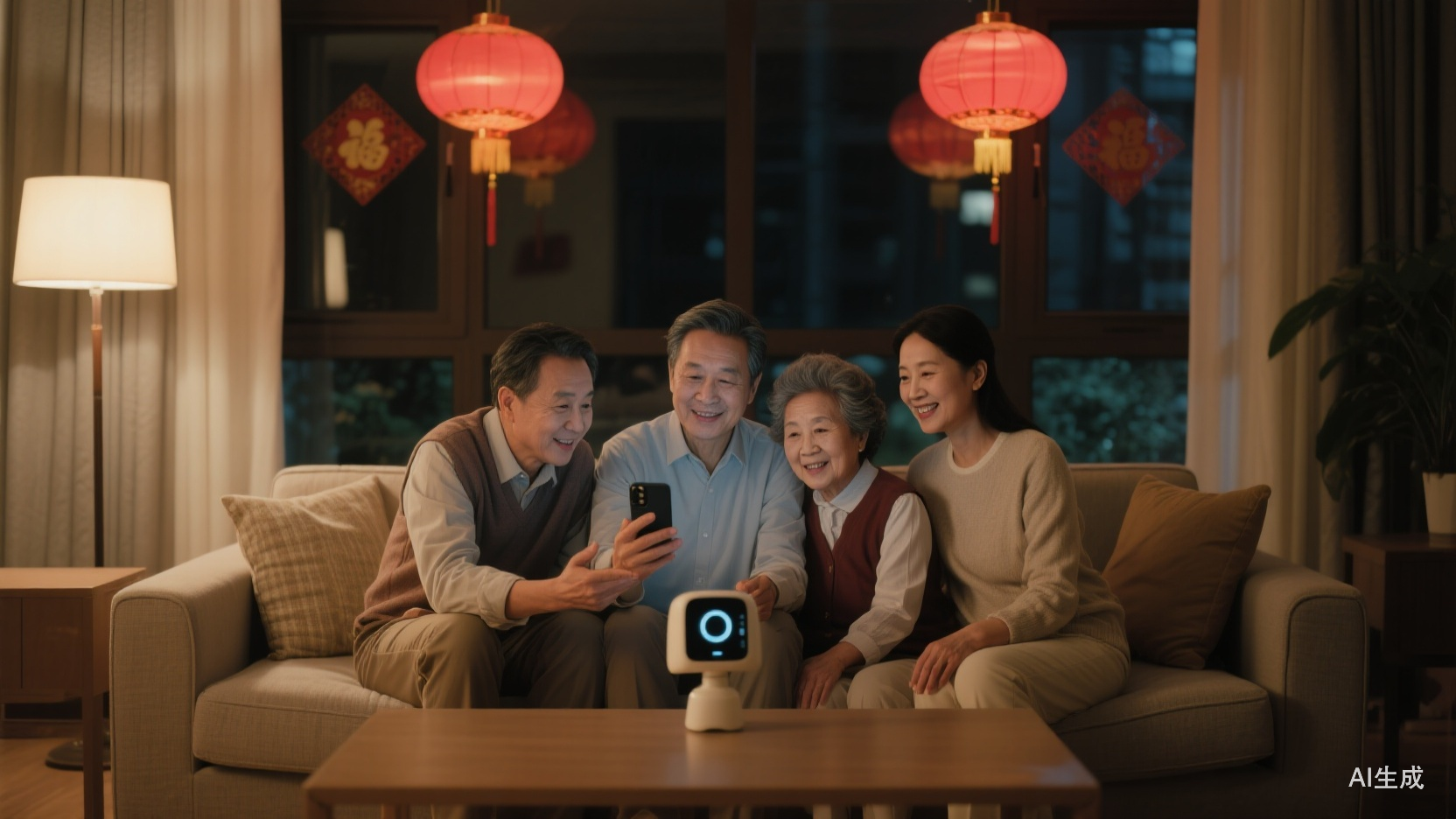
💡China AI hit billions of interactions in days via red envelopes—fastest adoption ever, growth playbook inside.
⚡ 30-Second TL;DR
What Changed
Alibaba Qianwen: 50B 'Qianwen help me' utterances in 11 days, 1.3B users ordered via AI, 4M seniors first-time.
Why It Matters
Unlocks China's AI population red利 2.0 by overcoming psychological barriers, expanding to 10B+ potential users in lower tiers. Shifts competition to habit retention and diverse use cases beyond early adopters.
What To Do Next
Replicate Qianwen/Doubao red envelope prompts in your AI app to test viral onboarding in emerging markets.
Key Points
- •Alibaba Qianwen: 50B 'Qianwen help me' utterances in 11 days, 1.3B users ordered via AI, 4M seniors first-time.
- •ByteDance Doubao: 1B blessing messages, 19B Eve interactions, peak 633B tokens throughput.
- •Tencent Yuanbao: 10B AI tasks completed, 49% users from tier-3+ cities.
- •AI user base sank to elderly, low-tier cities, mirroring but accelerating past tech adoptions.
🧠 Deep Insight
Background and context from public sources — not the original article. 9 sources cited.
🔑 Enhanced Key Takeaways
- •During the 2026 Spring Festival (Feb 15-23), three major Chinese AI assistants—Qianwen, Doubao, and Yuanbao—launched coordinated campaigns spending over $420 million USD combined, achieving unprecedented adoption velocity surpassing smartphone (5 years) and mobile payment (3 years) rollouts[1][3]
- •Alibaba's Qianwen integrated transaction capabilities across its entire ecosystem (Taobao, Tmall, Fliggy, Hema, Damai, Flash Sale) transforming AI from an 'information entry point' into a 'transaction entry point,' with the Feb 6 campaign exceeding 10 million orders within 9 hours[1][3]
- •ByteDance's Doubao secured exclusive AI partnership with CCTV Spring Festival Gala, reaching hundreds of millions of viewers and establishing itself as a mainstream consumer application rather than a niche tool[2][3]
- •Tencent's Yuanbao launched a 1 billion yuan ($144 million USD) red envelope campaign starting Feb 1, achieving first-place rankings on Apple App Store and demonstrating that direct financial incentives effectively drive AI adoption across demographic segments[3][4]
- •The 2026 Spring Festival AI battle represents a critical inflection point where AI applications transitioned from specialized tools to 'national-level applications' with mainstream adoption, with generative AI user base reaching 602 million (42.8% penetration rate) and advertising spending growth exceeding 16.6% during peak promotional periods[5]
📊 Competitor Analysis▸ Show
| Metric | Qianwen (Alibaba) | Doubao (ByteDance) | Yuanbao (Tencent) |
|---|---|---|---|
| Campaign Budget | $420M (3B yuan) | Undisclosed | $144M (1B yuan) |
| Launch Date | Feb 6, 2026 | Pre-Feb 6 | Feb 1, 2026 |
| Primary Strategy | Transaction integration + free orders | CCTV Gala sponsorship | Direct cash red envelopes |
| Ecosystem Integration | Taobao, Tmall, Fliggy, Hema, Damai, Flash Sale | Douyin e-commerce | Alipay, WeChat integration |
| Peak App Store Ranking | Top 3 (Feb 6) | Varied (sponsored CCTV) | #1 on multiple dates |
| User Acquisition Focus | Commerce-driven | Entertainment/media | Direct financial incentive |
| Geographic Penetration | Tier-1 to tier-3+ cities | Nationwide | 49% from tier-3+ cities |
🛠️ Technical Deep Dive
- Doubao achieved peak throughput of 633 billion tokens during Spring Festival peak hours, demonstrating infrastructure capable of handling 100x+ normal traffic loads[1]
- Qianwen's 50 billion 'Qianwen help me' utterances in 11 days represents approximately 4.5 billion daily interactions, requiring distributed inference architecture across Alibaba's cloud infrastructure[1]
- AI search transformation embedded transaction APIs directly into LLM outputs, enabling single-step purchase completion without traditional e-commerce navigation[1]
- Qianwen reached 30+ million monthly active users within 23 days of public beta, indicating rapid adoption curve acceleration[6]
- The three-way competition created a 'divide the market into three parts' scenario where traffic entry points became the primary battleground rather than model capability differentiation[5]
🔮 Future ImplicationsAI analysis grounded in cited sources
The 2026 Spring Festival AI campaigns establish a new paradigm for AI adoption in emerging markets: direct ecosystem integration and habit-formation through financial incentives prove more effective than pure capability demonstrations. This suggests future AI deployment will prioritize commerce and transaction embedding over standalone applications. Goldman Sachs projects China's tech giants will spend over $60 billion on AI in 2026[2], indicating sustained competitive intensity. The achievement of 602 million generative AI users (42.8% penetration) and double-digit advertising growth signals that AI has transitioned from experimental to mainstream infrastructure status in China. The ability to reach elderly users and tier-3+ city residents demonstrates that AI adoption barriers are primarily distribution and incentive-based rather than technical or educational, reshaping expectations for global AI rollout timelines.
⏳ Timeline
📎 Sources (9)
Factual claims are grounded in the sources below. Forward-looking analysis is AI-generated interpretation.
- eu.36kr.com — 3676032461546116
- longbridge.com — 275408721
- yicaiglobal.com — Alibaba Launches Usd420 Million Chinese New Year Campaign to Push AI App
- 100user.com — AI Spring Festival Battle Doubao Tech Red Envelope
- news.futunn.com — Guotai Haitong the AI Battle Is on the Verge of
- oreateai.com — B0a67dafd43c93ba12845f08ec04c5db
- pandaily.com — Tencent Yuanbao Rises to No 2 in App Store Rankings on Spring Festival Campaign and Pai Feature
- finance.biggo.com — 2eiropwby4yefzduiuvc
- businessengineer.ai — The Chinese AI Economy
Weekly AI Recap
Read this week's curated digest of top AI events →
👉Related Updates

AI-curated news aggregator. All content rights belong to original publishers.
Original source: 虎嗅 ↗
This is a summary, not the original. Read the source, or get the weekly briefing.
Weekly AI briefing
One email a week. Unsubscribe anytime.