AI to Upend All 20th-Century Jobs
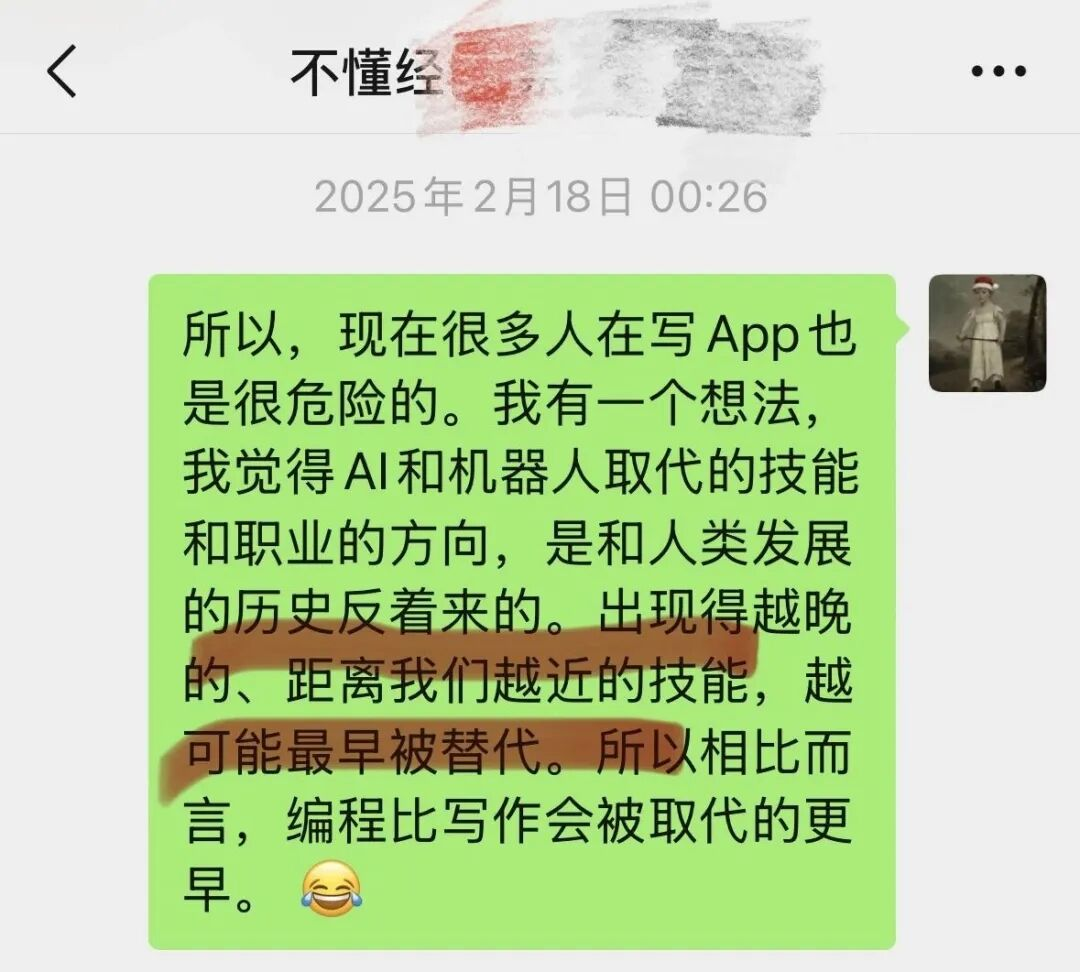
💡Taleb + Atlantic warn AI agents wipe out white-collar jobs; 90% Anthropic code already AI-generated.
⚡ 30-Second TL;DR
What Changed
Taleb's tweet: All 20th-century jobs face AI disruption.
Why It Matters
White-collar automation accelerates, widening skills gap; developers must adapt to agentic AI or risk obsolescence. Signals incoming job market turbulence for knowledge workers.
What To Do Next
Test Anthropic Claude's agentic coding by prompting it to build and debug a full app autonomously.
Key Points
- •Taleb's tweet: All 20th-century jobs face AI disruption.
- •AI reverses skill evolution—abstract cognition falls first, physical labor last.
- •Atlantic articles highlight AI agents causing white-collar unemployment spike.
- •Anthropic's Claude Code autonomously proposes and builds code, used in 90% of internal dev.
- •Two AI worlds: basic ChatGPT vs. agentic tools compressing months of work to days.
🧠 Deep Insight
Background and context from public sources — not the original article. 4 sources cited.
🔑 Enhanced Key Takeaways
- •Nassim Taleb's framework emphasizes that in volatile, complex systems, abstract cognitive work faces disruption before physical labor, as AI agents demonstrate increasing capability in white-collar tasks like coding and analysis[1][2]
- •The shift from tool-based AI (ChatGPT) to agentic AI systems represents a fundamental change in automation capability, compressing months of professional work into days and affecting knowledge worker productivity[2]
- •Early success in AI adoption can paradoxically create fragility by locking organizations into strategies that appear successful but may not adapt to changing conditions; the strongest players treat AI strategies as testable hypotheses rather than settled convictions[2]
- •AI-driven disruption is creating an 'anti-fragile portfolio' challenge for investors and organizations, as traditional blue-chip companies face existential questions about business model relevance in an AGI-capable world[3]
- •The disruption pattern mirrors historical precedents like Kodak (1996-2008), where technological shifts eliminate entire industries; companies must continuously disrupt themselves or face obsolescence in accelerating technological cycles[4]
🛠️ Technical Deep Dive
• Agentic AI systems operate in 'scientist mode,' treating strategies as falsifiable hypotheses rather than fixed convictions, enabling rapid iteration when market signals contradict assumptions[2] • Advanced code generation tools autonomously propose, build, and test solutions, compressing development cycles from months to days[1] • The distinction between basic LLM interfaces and agentic tools reflects architectural differences in autonomy, planning, and tool integration capabilities[2] • Multi-dimensional technological forces (automation, machine learning, robotics, blockchain, IoT) are building on and amplifying one another in compound disruption patterns[4]
🔮 Future ImplicationsAI analysis grounded in cited sources
Organizations face pressure to adopt anti-fragile strategies that embrace continuous learning and hypothesis testing rather than locking into early AI successes. The equity markets are grappling with poorly defined 'next order' effects of AI—while direct impacts on IT services and coding are clear, downstream industry obsolescence remains opaque. Companies must balance the efficiency gains from agentic AI against the risk that early competitive advantages harden into brittle strategies. The convergence of AI with other technologies (3D printing, IoT, blockchain) suggests compounding disruption across manufacturing, services, and knowledge work sectors. Talent markets face structural shifts as employability becomes tied to AI literacy rather than domain expertise alone.
⏳ Timeline
📎 Sources (4)
Factual claims are grounded in the sources below. Forward-looking analysis is AI-generated interpretation.
Weekly AI Recap
Read this week's curated digest of top AI events →
👉Related Updates
AI-curated news aggregator. All content rights belong to original publishers.
Original source: 虎嗅 ↗
This is a summary, not the original. Read the source, or get the weekly briefing.
Weekly AI briefing
One email a week. Unsubscribe anytime.