Spring Festival AI Model Surge

💡Chinese models top global charts on coding—GLM-5 beats Claude; explore agent shifts now
⚡ 30-Second TL;DR
What Changed
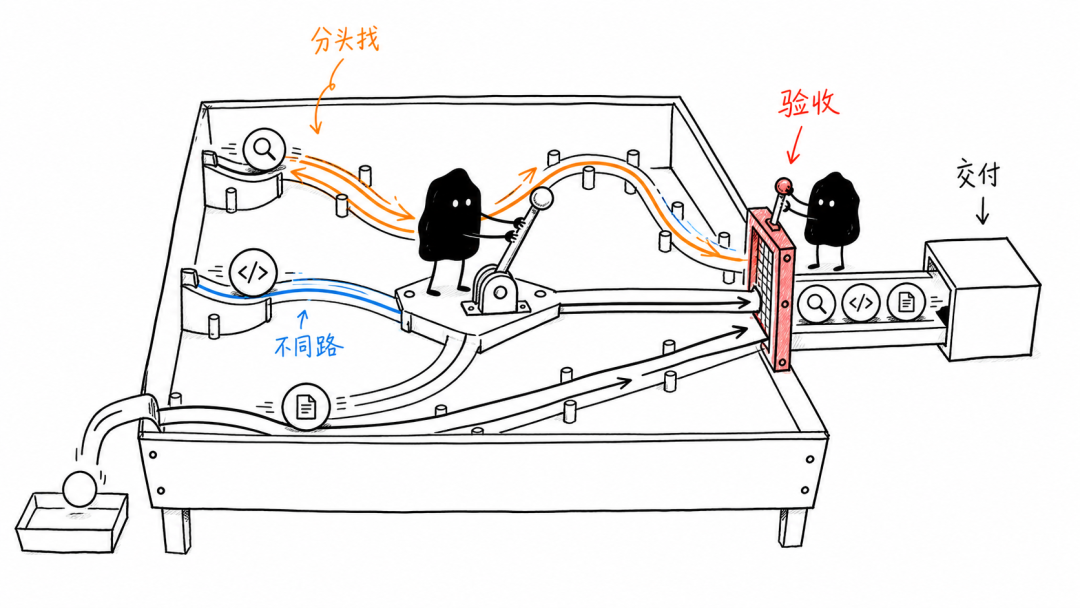
Kimi K2.5 uses Agent Swarm for 100 parallel sub-agents boosting task efficiency
Why It Matters
Marks shift from benchmark chasers to practical 'doers' in Chinese AI, enhancing commercial adoption via agentic execution in holiday scenarios. Haidian cluster accelerates regional dominance.
What To Do Next
Test GLM-5 on Artificial Analysis for coding benchmarks against Claude Opus.
Key Points
- •Kimi K2.5 uses Agent Swarm for 100 parallel sub-agents boosting task efficiency
- •Seedance 2.0 introduces multimodal references and native audio-video sync for creators
- •GLM-5 achieves 96.2% HumanEval, supports cross-file code refactoring
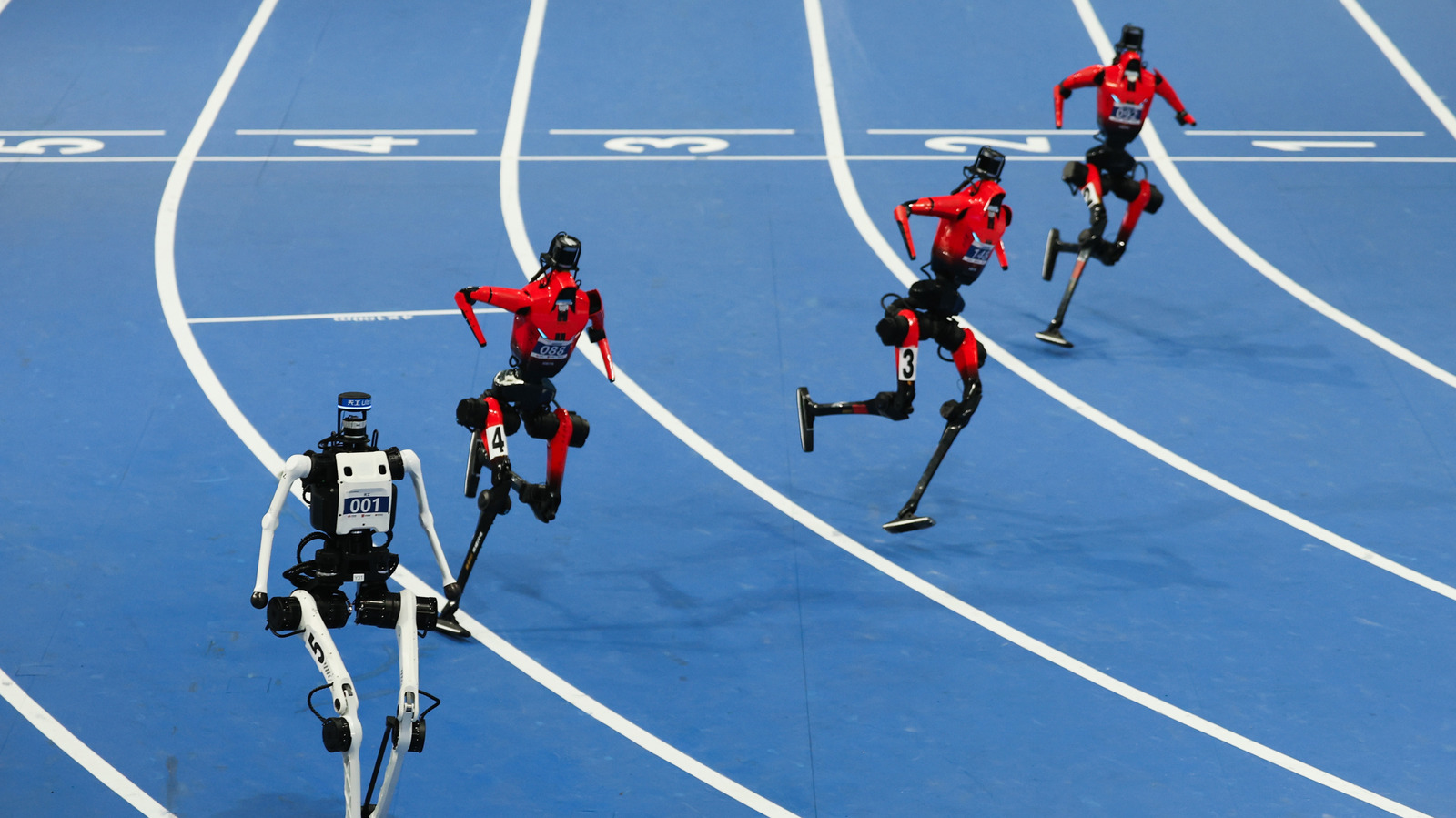
- •Galbot S1 robot enables zero-teleop heavy-load tasks with 50kg arm capacity
🧠 Deep Insight
Background and context from public sources — not the original article. 9 sources cited.
🔑 Enhanced Key Takeaways
- •Kimi K2.5 released January 26, 2026, features Agent Swarm technology coordinating up to 100 specialized AI agents in parallel, reducing execution time by 4.5x while achieving 50.2% on Humanity's Last Exam at 76% lower cost than Claude Opus 4.5[3]
- •Kimi K2.5 is the first flagship open-weights model from Moonshot AI to support native multimodal (image and video) inputs, removing a critical adoption barrier compared to proprietary frontier models[4]
- •Kimi K2.5 uses a hybrid Mixture-of-Experts architecture with 1 trillion total parameters but activates only 32 billion per request, enabling efficient local deployment while maintaining frontier-level capabilities[3]
- •Kimi K2.5 achieves benchmark performance comparable to frontier models like GPT-5 and Gemini on coding tasks, outperforming GPT-5.2 Pro on BrowseComp and Claude Opus 4.5 on WideSearch[1]
- •Kimi K2.5 costs approximately 200 times less than GPT-4 while matching or exceeding its capabilities, with pricing at $0.60/$2.50 per million tokens and a 256K context window[6]
📊 Competitor Analysis▸ Show
| Feature | Kimi K2.5 | GPT-5.2 Pro | Claude Opus 4.5 | Seedance 2.0 |
|---|---|---|---|---|
| Release Date | Jan 26, 2026 | 2025 | 2025 | Spring 2026 |
| Multimodal Support | Native (image, video, PDF) | Yes | Yes | Native audio-video sync |
| Agent Swarm | Up to 100 parallel agents | Not specified | Not specified | Not specified |
| Context Window | 256K tokens | Not specified | Not specified | Not specified |
| BrowseComp Performance | Outperforms GPT-5.2 Pro | Baseline | Not specified | Not specified |
| WideSearch Performance | Outperforms Claude Opus 4.5 | Not specified | Baseline | Not specified |
| Cost Efficiency | 200x cheaper than GPT-4 | Higher cost | 76% higher cost than K2.5 | Not specified |
| Architecture | MoE (1T params, 32B active) | Not specified | Not specified | Not specified |
| License | Modified MIT (open-source) | Proprietary | Proprietary | Not specified |
🛠️ Technical Deep Dive
• Architecture: Hybrid Mixture-of-Experts with 1 trillion total parameters, 384 experts, 8 selected experts per token, 1 shared expert, and 64 attention heads[5] • Vision Encoder: MoonViT with 400M parameters for native vision-language integration; visual features compressed via spatial-temporal pooling before projection into LLM[5] • Training: Continual pretraining on approximately 15 trillion mixed visual and text tokens atop Kimi K2 checkpoint, followed by supervised fine-tuning and reinforcement learning[1] • Quantization: Native INT4 quantization applied through Quantization-Aware Training (QAT) to MoE components, delivering 2x inference speed without accuracy degradation compared to FP16[3] • Context Window: 256K tokens enabling complex long-horizon multimodal agentic tasks[2] • Vocabulary: 160K vocabulary size with SwiGLU activation function and Multi-head Latent Attention (MLA) mechanism[5] • Operational Modes: Four modes—Instant (fast responses), Thinking (extended reasoning), Agent (office productivity), and Agent Swarm (research preview with parallel task decomposition)[1] • Tool Use: Maintains stable tool-use across 200–300 sequential calls, enabling long-horizon agency[2] • Input Types: Supports image, video, PDF, and text inputs in RGB and string formats[5] • Agent Swarm Training: Transitions from single-agent scaling to self-directed, coordinated swarm-like execution with parallel task decomposition and domain-specific agent instantiation[2]
🔮 Future ImplicationsAI analysis grounded in cited sources
Kimi K2.5's release signals a significant shift in the open-source AI landscape, with Chinese AI firms establishing competitive parity with frontier proprietary models at substantially lower costs. The Agent Swarm architecture represents a paradigm shift toward agentic AI systems capable of autonomous task decomposition and parallel execution, potentially accelerating enterprise adoption of AI for knowledge work and automation. The native multimodal capabilities and 256K context window enable new use cases in visual analysis, code generation from UI designs, and long-horizon agentic workflows. The 200x cost advantage over GPT-4 combined with open-source availability could democratize advanced AI capabilities, particularly benefiting developers and enterprises in cost-sensitive markets. The convergence of reasoning, coding, vision, and agentic capabilities in a single unified model suggests the industry is moving toward general-purpose AI agents rather than specialized task-specific models. Beijing's emergence as an innovation hub alongside these releases indicates China's growing influence in frontier AI development, potentially reshaping global AI competition dynamics.
⏳ Timeline
📎 Sources (9)
Factual claims are grounded in the sources below. Forward-looking analysis is AI-generated interpretation.
- infoq.com — Kimi K25 Swarm
- together.ai — Kimi K2 5
- codecademy.com — Kimi K 2 5 Complete Guide to Moonshots AI Model
- artificialanalysis.ai — Kimi K2.5 Everything You Need to Know
- build.nvidia.com — Modelcard
- nxcode.io — Kimi K2 5 vs Chatgpt 2026
- platform.moonshot.ai — Kimi K2 5 Quickstart
- kimi.com — Kimi K2 5
- techcommunity.microsoft.com — 4492321
Weekly AI Recap
Read this week's curated digest of top AI events →
👉Related Updates

AI-curated news aggregator. All content rights belong to original publishers.
Original source: 虎嗅 ↗
This is a summary, not the original. Read the source, or get the weekly briefing.
Weekly AI briefing
One email a week. Unsubscribe anytime.