AgentCore Payments Reaches General Availability

💡Learn how to give AI agents payment capabilities without abandoning spending controls or production observability.
⚡ 30-Second TL;DR
What Changed
Enables AI agents to conduct autonomous transactions at scale
Why It Matters
The launch lowers operational barriers for deploying agents that need to purchase services or complete payments independently. Spending controls and observability may help enterprises manage financial and operational risks as agentic workflows expand.
What To Do Next
Review Amazon Bedrock AgentCore payments documentation and prototype a sandbox agent flow with explicit spending limits and transaction monitoring.
Key Points
- •Enables AI agents to conduct autonomous transactions at scale
- •Adds built-in spending guardrails to control agent payment activity
- •Supports protocol-agnostic payment orchestration and production-ready observability
🧠 Deep Insight
AI-generated analysis for this event.
🔑 Enhanced Key Takeaways
- •Integrates directly with AWS Payment Cryptography to ensure end-to-end encryption and PCI-DSS compliance for agent-initiated transactions.
- •Utilizes a multi-signature authorization workflow that requires human-in-the-loop approval for transactions exceeding pre-defined risk thresholds.
- •Supports cross-border settlement through native integration with Amazon's global financial partner network, reducing latency in international agent commerce.
- •Features a 'Transaction Replay' debugging tool within the Amazon Bedrock console, allowing developers to simulate and audit failed agent payment attempts.
- •Implements a tokenization layer that abstracts sensitive financial data, ensuring that underlying AI models never process or store raw credit card information.
📊 Competitor Analysis▸ Show
| Feature | AgentCore Payments | Stripe Agent Connect | Adyen for AI Agents |
|---|---|---|---|
| Primary Focus | AWS Ecosystem Native | Multi-platform API | Enterprise Global Scale |
| Guardrails | Built-in Bedrock Policy | Custom Logic Required | Risk-based Rules Engine |
| Observability | Integrated CloudWatch | Dashboard-based | Transactional Logs |
| Pricing | Usage-based (per txn) | Percentage + Fixed | Interchange++ |
🛠️ Technical Deep Dive
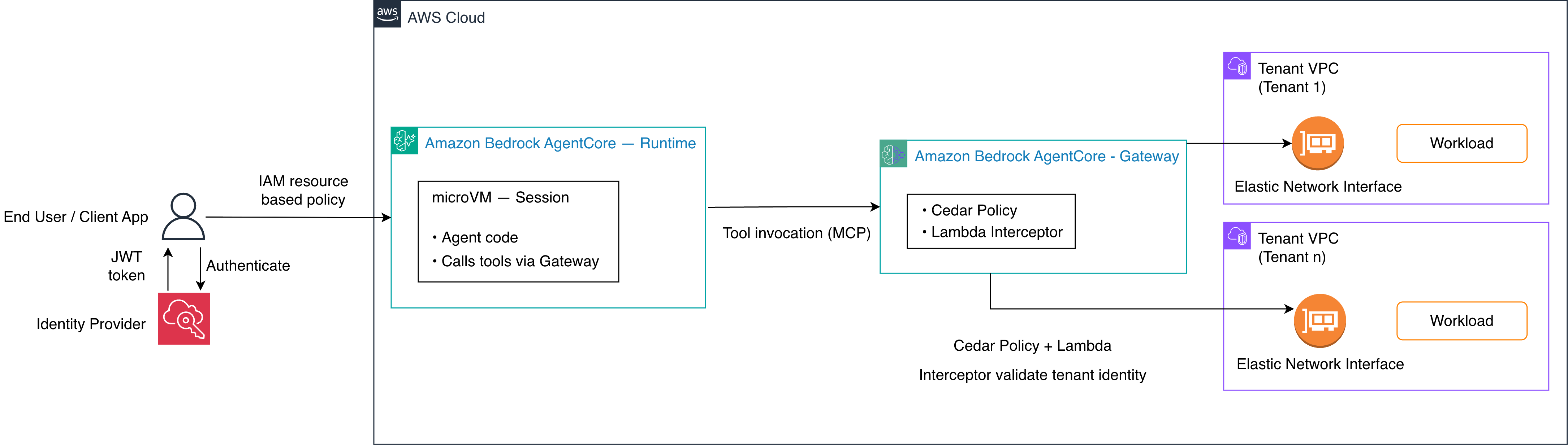
- Architecture: Built on a serverless event-driven framework utilizing AWS Lambda for transaction orchestration and Amazon EventBridge for real-time state management.
- Security: Employs Hardware Security Modules (HSM) via AWS Payment Cryptography to manage keys and perform cryptographic operations in isolation.
- Observability: Exposes custom metrics via Amazon CloudWatch, including 'Agent Spend Velocity' and 'Transaction Success Rate' (TSR).
- Protocol Support: Native support for ISO 20022 messaging standards and RESTful API hooks for legacy banking system integration.
- Identity: Leverages IAM roles for agents, enforcing the principle of least privilege for financial API access.
🔮 Future ImplicationsAI analysis grounded in cited sources
⏳ Timeline
Weekly AI Recap
Read this week's curated digest of top AI events →
👉Related Updates
AI-curated news aggregator. All content rights belong to original publishers.
Original source: AWS Machine Learning Blog ↗