Accelerating pharmaceutical discovery with GraphRAG and BYOKG
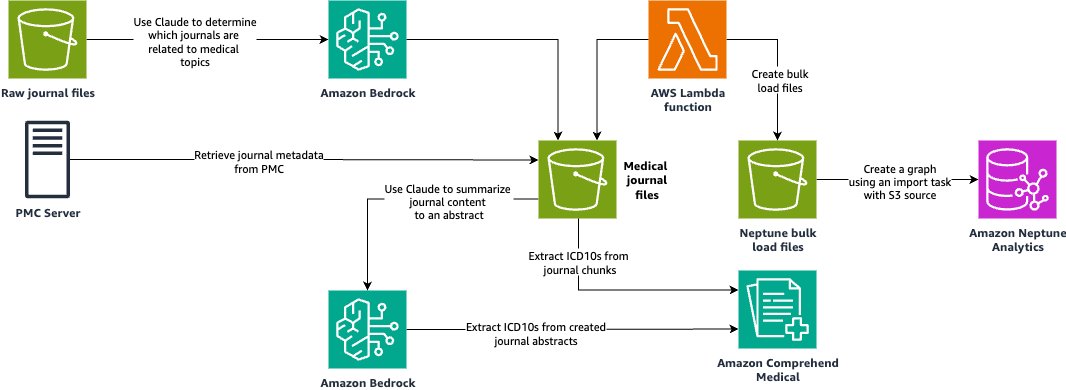
💡Learn how to ground LLMs in verified knowledge graphs to solve complex pharmaceutical research problems.
⚡ 30-Second TL;DR
What Changed
Combines graph databases with generative AI for complex data analysis
Why It Matters
Provides a framework for researchers to reduce hallucinations in AI-driven drug discovery by grounding models in verified knowledge graphs.
What To Do Next
Implement a GraphRAG pipeline using your existing domain-specific knowledge graph to improve RAG accuracy for scientific tasks.
Key Points
- •Combines graph databases with generative AI for complex data analysis
- •Improves scientific integrity in automated discovery workflows
- •Leverages BYOKG (Bring Your Own Knowledge Graph) for domain-specific insights
🧠 Deep Insight
AI-generated analysis for this event — not the original article.
🔑 Enhanced Key Takeaways
- •GraphRAG implementations in pharmaceutical R&D often utilize Amazon Neptune as the managed graph database to handle complex, multi-hop relationship queries that standard vector databases struggle to resolve.
- •The BYOKG framework specifically addresses the 'hallucination' problem in LLMs by grounding generated responses in verified, curated scientific ontologies like ChEMBL or UniProt.
- •Integration often involves a hybrid retrieval strategy where vector search handles unstructured text (e.g., clinical trial PDFs) while graph traversal handles structured entity relationships (e.g., protein-drug interactions).
- •AWS has introduced specific architectural patterns for this workflow that utilize Amazon Bedrock for the generative layer, ensuring data residency and compliance for sensitive healthcare information.
- •The approach significantly reduces the time required for 'target identification' by automating the synthesis of disparate data sources that researchers previously had to manually correlate.
📊 Competitor Analysis▸ Show
| Feature | AWS GraphRAG/BYOKG | Google Cloud Vertex AI Search + KG | NVIDIA BioNeMo |
|---|---|---|---|
| Primary Focus | Managed Graph/Cloud Integration | Enterprise Search/Data Synthesis | Generative Biology/Molecular Modeling |
| Graph Engine | Amazon Neptune | Vertex AI Agent Builder | Custom/Third-party |
| Pricing Model | Consumption-based (Neptune/Bedrock) | Consumption-based | Enterprise/Platform Licensing |
| Key Benchmark | High scalability for large KGs | Superior NLP/Semantic Search | Specialized for protein folding/docking |
🛠️ Technical Deep Dive
- Architecture utilizes a dual-retrieval pipeline: a vector index for semantic similarity and a graph index for structural relationship mapping.
- Employs LangChain or LlamaIndex frameworks to orchestrate the interaction between the LLM and the graph database via SPARQL or Gremlin query languages.
- Implements a 'Graph-to-Text' transformation layer that converts subgraph results into natural language prompts for the LLM to ensure context-aware generation.
- Utilizes RAG-fusion techniques to re-rank retrieved documents and graph nodes to prioritize high-confidence scientific evidence.
🔮 Future ImplicationsAI analysis grounded in cited sources
⏳ Timeline
Weekly AI Recap
Read this week's curated digest of top AI events →
👉Related Updates
AI-curated news aggregator. All content rights belong to original publishers.
Original source: AWS Machine Learning Blog ↗
This is a summary, not the original. Read the source, or get the weekly briefing.
The weekly digest
One email a week. Unsubscribe anytime.