來源AWS Machine Learning Blog•較早收集於 3m
利用 GraphRAG 與 BYOKG 加速藥物研發
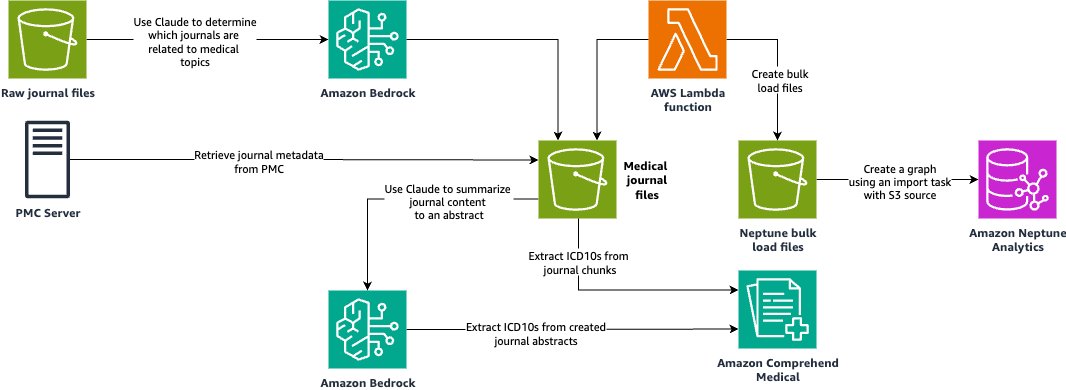
💡學習如何將 LLM 建立在經過驗證的知識圖譜上,以解決複雜的藥物研發問題。
⚡ 30 秒速覽
有什麼變化
結合圖資料庫與生成式 AI 進行複雜數據分析
為什麼重要
為研究人員提供了一個框架,透過將模型建立在經過驗證的知識圖譜上,減少 AI 驅動藥物研發中的幻覺問題。
下一步行動
利用現有的領域特定知識圖譜建構 GraphRAG 管線,以提升科學任務的 RAG 準確度。
誰應關注:Researchers & Academics
關鍵要點
- •結合圖資料庫與生成式 AI 進行複雜數據分析
- •在自動化研發流程中提升科學準確性
- •利用 BYOKG (Bring Your Own Knowledge Graph) 獲取領域特定洞察
🧠 深度解析
本篇為 AI 生成分析,非原文內容。
🔑 增強重點摘要
- •GraphRAG implementations in pharmaceutical R&D often utilize Amazon Neptune as the managed graph database to handle complex, multi-hop relationship queries that standard vector databases struggle to resolve.
- •The BYOKG framework specifically addresses the 'hallucination' problem in LLMs by grounding generated responses in verified, curated scientific ontologies like ChEMBL or UniProt.
- •Integration often involves a hybrid retrieval strategy where vector search handles unstructured text (e.g., clinical trial PDFs) while graph traversal handles structured entity relationships (e.g., protein-drug interactions).
- •AWS has introduced specific architectural patterns for this workflow that utilize Amazon Bedrock for the generative layer, ensuring data residency and compliance for sensitive healthcare information.
- •The approach significantly reduces the time required for 'target identification' by automating the synthesis of disparate data sources that researchers previously had to manually correlate.
📊 競品分析▸ Show
| Feature | AWS GraphRAG/BYOKG | Google Cloud Vertex AI Search + KG | NVIDIA BioNeMo |
|---|---|---|---|
| Primary Focus | Managed Graph/Cloud Integration | Enterprise Search/Data Synthesis | Generative Biology/Molecular Modeling |
| Graph Engine | Amazon Neptune | Vertex AI Agent Builder | Custom/Third-party |
| Pricing Model | Consumption-based (Neptune/Bedrock) | Consumption-based | Enterprise/Platform Licensing |
| Key Benchmark | High scalability for large KGs | Superior NLP/Semantic Search | Specialized for protein folding/docking |
🛠️ 技術深入
- Architecture utilizes a dual-retrieval pipeline: a vector index for semantic similarity and a graph index for structural relationship mapping.
- Employs LangChain or LlamaIndex frameworks to orchestrate the interaction between the LLM and the graph database via SPARQL or Gremlin query languages.
- Implements a 'Graph-to-Text' transformation layer that converts subgraph results into natural language prompts for the LLM to ensure context-aware generation.
- Utilizes RAG-fusion techniques to re-rank retrieved documents and graph nodes to prioritize high-confidence scientific evidence.
🔮 前景展望基於引用來源的 AI 分析
Automated hypothesis generation will become a standard feature in drug discovery pipelines by 2027.
The integration of GraphRAG allows systems to propose novel drug-target interactions that have not yet been documented in literature.
Regulatory bodies will mandate provenance tracking for AI-generated drug discovery data.
As GraphRAG provides a clear audit trail of the data sources used to generate a conclusion, it will likely become the standard for compliance in clinical trials.
⏳ 時間線
2020-05
AWS launches Amazon Neptune ML to add machine learning capabilities to graph databases.
2023-04
AWS announces Amazon Bedrock, enabling the generative AI foundation for RAG architectures.
2024-02
Microsoft and AWS begin formalizing GraphRAG patterns for enterprise knowledge management.
2025-09
AWS expands healthcare-specific generative AI services to support BYOKG workflows.
📰
AI 週報
閱讀本週精選 AI 大事摘要 →
👉相關動態
AI 策展新聞聚合。所有內容版權歸原始發布者所有。
原始來源: AWS Machine Learning Blog ↗
每週電子報
每週一封,可隨時退訂。