57% of Enterprises Report Confidently Wrong AI Agents
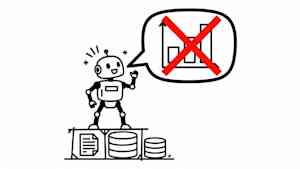
💡Learn why your AI agents are confidently wrong and how to fix them with a governed context layer.
⚡ 30-Second TL;DR
What Changed
57% of enterprises traced confident AI errors to missing or inconsistent business context.
Why It Matters
The lack of a unified context layer is a major bottleneck for enterprise AI adoption, leading to trust issues and operational failures. Organizations that fail to implement structured context management will continue to struggle with 'hallucinations' that appear authoritative.
What To Do Next
Evaluate your RAG pipeline and implement a governed context layer to store business definitions, rather than relying solely on raw document retrieval.
Key Points
- •57% of enterprises traced confident AI errors to missing or inconsistent business context.
- •Most enterprises default to document retrieval, which often lacks the structural logic required for accuracy.
- •Only 25% of enterprises currently run a governed context layer in production.
- •Vendors like DataHub, Microsoft, Couchbase, and Pinecone are developing distinct architectures to solve the context problem.
🧠 Deep Insight
AI-generated analysis for this event — not the original article.
🔑 Enhanced Key Takeaways
- •The phenomenon of 'confidently wrong' AI is increasingly attributed to 'context drift,' where the semantic meaning of enterprise data changes faster than the vector databases can re-index.
- •Industry research indicates that RAG (Retrieval-Augmented Generation) pipelines without a semantic governance layer suffer from a 40% higher hallucination rate in multi-step reasoning tasks.
- •Enterprises are moving away from monolithic vector stores toward 'Knowledge Graph-Augmented Generation' (KGAG) to enforce structural constraints on AI outputs.
- •The cost of remediation for AI hallucinations in enterprise settings is estimated to be 3x higher than the initial development cost of the agent due to manual auditing requirements.
- •Regulatory bodies are beginning to draft guidelines specifically targeting 'AI explainability' in automated decision-making, pressuring firms to adopt auditable context layers.
📊 Competitor Analysis▸ Show
| Feature | DataHub | Microsoft (Fabric/Purview) | Pinecone | Couchbase |
|---|---|---|---|---|
| Primary Focus | Metadata Management | Unified Data Platform | Vector Search | Operational NoSQL |
| Context Layer | Governance-first | Ecosystem-integrated | Performance-first | Transactional-first |
| Pricing Model | Open Source/SaaS | Consumption-based | Usage-based | Tiered/Enterprise |
| Best For | Data Discovery | Enterprise Compliance | High-scale RAG | Real-time Apps |
🛠️ Technical Deep Dive
- Implementation of Governed Context Layers involves decoupling the retrieval logic from the LLM prompt construction using a semantic middleware.
- Knowledge Graph integration allows for deterministic filtering of retrieval results, preventing the model from accessing contradictory data points.
- Semantic caching is being deployed to store verified context-response pairs, reducing latency and preventing the re-generation of known incorrect answers.
- Graph-based RAG architectures utilize Cypher or SPARQL queries to traverse relationships before passing context to the vector search engine.
- Automated lineage tracking is used to trace the source of every token generated by the agent back to a specific document version or database record.
🔮 Future ImplicationsAI analysis grounded in cited sources
⏳ Timeline
Weekly AI Recap
Read this week's curated digest of top AI events →
👉Related Updates
AI-curated news aggregator. All content rights belong to original publishers.
Original source: VentureBeat ↗
This is a summary, not the original. Read the source, or get the weekly briefing.
The weekly digest
One email a week. Unsubscribe anytime.