
Open Source community adopts OpenEnv for Agentic RL
OpenEnv is gaining traction as a standard for Agentic Reinforcement Learning (RL). The community is actively contributing to this framework to improve agent training and evaluation.
Tag: #framework11 results
OpenEnv is gaining traction as a standard for Agentic Reinforcement Learning (RL). The community is actively contributing to this framework to improve agent training and evaluation.
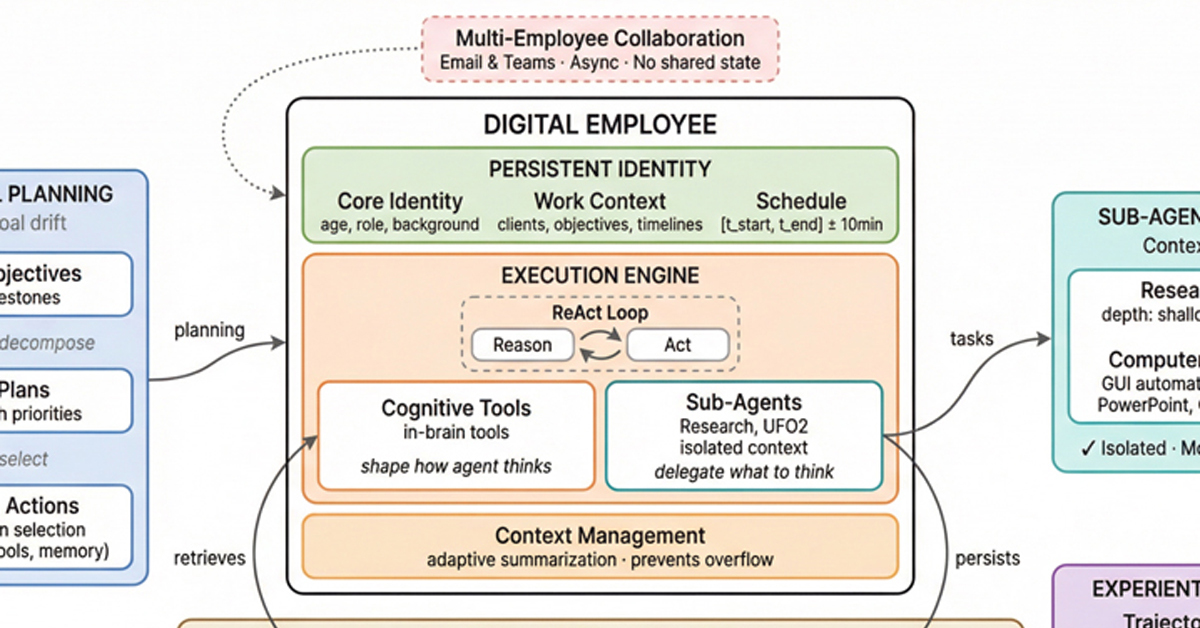
Microsoft's research team identifies four major challenges AI agents face in multitasking environments and proposes the CORPGEN framework. It deploys AI agents as 'digital employees' with realistic work schedules. This achieves up to 3.5 times higher task completion rates than conventional methods.
Open SWE is an open-source framework designed for building internal coding agents. Built on Deep Agents and LangGraph, it supplies essential architectural components for agent development.

AReaL 2.0 has been open-sourced to provide a dedicated reinforcement learning infrastructure for self-evolving AI agents. It aims to foster a community-driven ecosystem for continuous agent improvement.
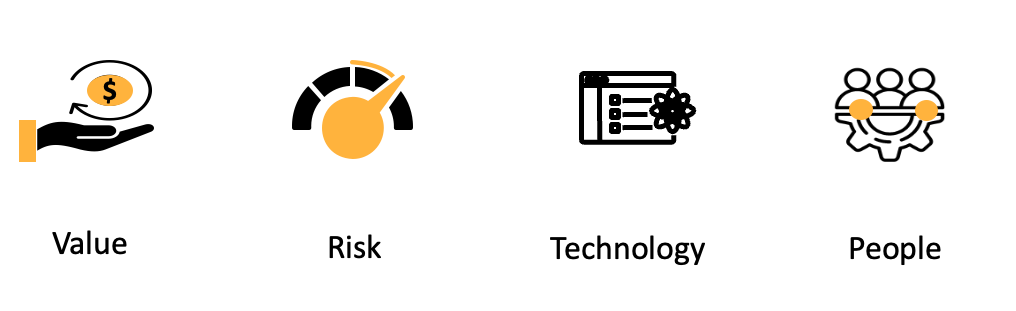
AWS introduces the Generative AI Path-to-Value (P2V) framework to guide initiatives from concept to production. It provides a structured approach for sustained value creation in generative AI projects. This helps organizations navigate the complexities of gen AI deployment.
SentiPulse partnered with Renmin University and Gaoling to open-source SentiAvatar, an interactive 3D digital human framework. It claims to outperform mainstream industry models in performance.

Meteor Software has released Meteor 3.0, the most significant update to the open-source framework in over a decade. Led by CTO Henrique Schmaiske, the release concludes a development cycle that began in April 2022.

AI agents have entered the Harness-driven era. This shift indicates Harness is now a core driver for agent development and deployment. The announcement highlights a new phase in agent technology evolution.

The article outlines 7 AI coding techniques the author uses to ship real, reliable products quickly. It differentiates casual coders from elite builders, emphasizing systems over mere prompts. The exact framework is shared for practical application.

University of Washington open-sources MoCo, a Python framework for model collaboration with 26 algorithms across API, text, logit, and weight levels. Supports building composable AI from diverse models via routing, debate, merging, and more.